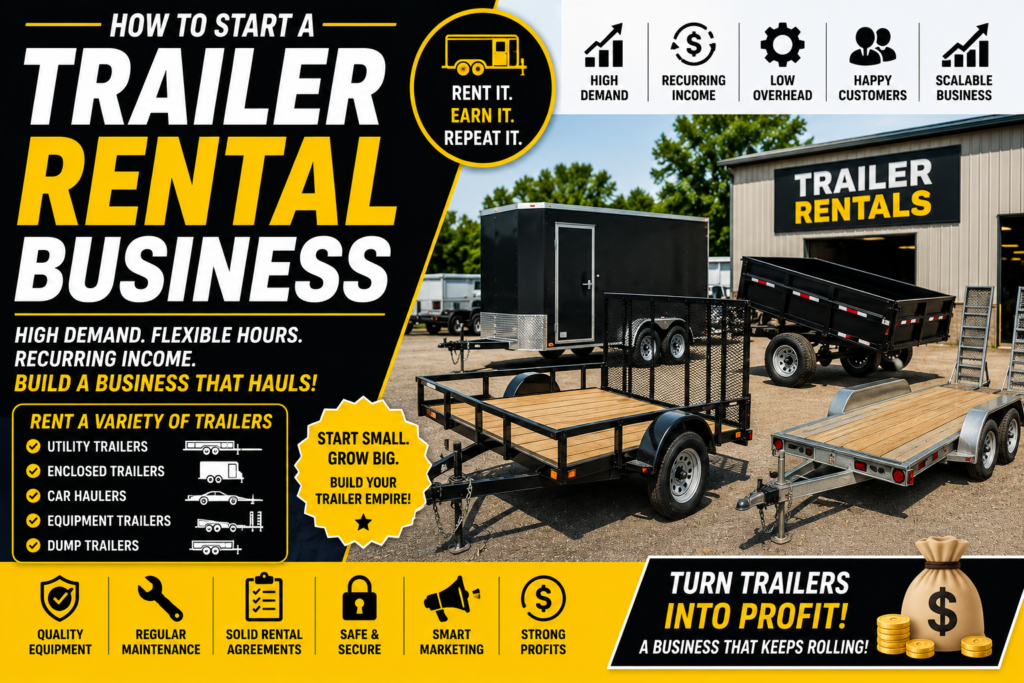
A trailer rental business can be a profitable way to generate recurring income by renting utility trailers, enclosed trailers, car haulers, dump trailers, and equipment trailers to homeowners, contractors, landscapers, movers, and small businesses. Instead of selling equipment once, each trailer can produce revenue hundreds of times throughout its lifespan, making trailer rentals an attractive business model with long-term earning potential.
Many entrepreneurs begin with one or two trailers before expanding into a fleet that serves residential and commercial customers. As demand grows, additional trailers can be added to increase revenue while serving a wider range of customer needs.
This guide explains everything you need to know about starting a trailer rental business, including startup costs, choosing trailers, pricing, insurance, maintenance, marketing, and strategies for building a successful equipment rental company.
What Is a Trailer Rental Business?
A trailer rental business owns trailers that are rented to customers for temporary use. Rental periods may range from a few hours to several weeks depending on the customer’s project.
Customers commonly rent trailers for:
- Moving household items
- Transporting lawn equipment
- Construction projects
- Hauling ATVs and UTVs
- Motorcycle transport
- Furniture delivery
- Debris removal
- Landscape material hauling
- Vehicle transportation
- Equipment hauling
Because trailers are durable assets with long service lives, a single trailer can generate recurring income for many years with proper maintenance.
Why Start a Trailer Rental Business?
Trailer rentals remain in high demand because many people only need a trailer occasionally. Renting allows customers to avoid the cost of purchasing, storing, and maintaining a trailer they may only use a few times each year.
Benefits of starting a trailer rental business include:
- Recurring income
- High demand from homeowners and businesses
- Flexible work schedule
- Scalable business model
- No retail storefront required
- Relatively low maintenance costs
- Long equipment lifespan
- Can begin part-time
Many successful trailer rental businesses eventually expand into multiple trailer types while serving residential, commercial, and industrial customers.
Types of Trailers You Can Rent
Offering several trailer types allows you to serve a broader customer base and increase rental opportunities.
Utility Trailers
Utility trailers are among the most popular rentals because they are versatile, affordable, and suitable for hauling furniture, landscaping materials, appliances, and household items.
Enclosed Trailers
Enclosed trailers protect cargo from weather and theft, making them popular for moving, equipment transportation, and business deliveries.
Car Haulers
Car hauler trailers are used to transport vehicles, classic cars, race cars, and project vehicles.
Equipment Trailers
Equipment trailers transport skid steers, compact tractors, mini excavators, and other heavy machinery.
Dump Trailers
Dump trailers are commonly rented by contractors, landscapers, and homeowners for hauling dirt, gravel, mulch, demolition debris, and construction materials.
How Much Does It Cost to Start a Trailer Rental Business?
Your startup investment depends on the number and type of trailers you purchase.
| Expense | Estimated Cost |
|---|---|
| Utility Trailer | $2,000–$6,000 |
| Enclosed Trailer | $4,000–$12,000 |
| Car Hauler | $3,500–$10,000 |
| Equipment Trailer | $5,000–$15,000 |
| Dump Trailer | $8,000–$20,000+ |
| Business Registration & Insurance | $500–$3,000+ |
Many owners begin with one utility trailer before expanding into larger specialty trailers as rental demand increases.
Choosing the Right Trailers
Selecting durable, commercial-grade trailers helps reduce maintenance costs while increasing customer satisfaction.
Look for trailers with:
- Heavy-duty steel frames
- Quality axles
- Electric brakes (where applicable)
- LED lighting
- Treated wood or steel flooring
- Radial trailer tires
- Reliable couplers
- Manufacturer warranty
Investing in dependable equipment helps maximize uptime and long-term profitability.
Setting Rental Prices
Your pricing should remain competitive while generating enough revenue to cover maintenance, insurance, depreciation, and future equipment purchases.
Many rental companies offer:
- Hourly rentals
- Half-day rentals
- Daily rentals
- Weekend specials
- Weekly rentals
- Monthly rentals
Offering flexible rental options makes your business attractive to both homeowners and commercial customers.
Storage and Security
Your trailers represent valuable business assets and should be protected when not in use.
Many trailer rental businesses use:
- Fenced storage yards
- Security cameras
- GPS tracking devices
- Wheel locks
- Tongue locks
- Motion lighting
- Alarm systems
Strong security measures help reduce theft and lower insurance risks while protecting your investment.
Creating a Trailer Rental Agreement
A professionally written rental agreement helps protect both your business and your customers. Every rental should clearly explain the terms and conditions before the trailer leaves your property.
Your rental agreement should include:
- Rental start and return dates
- Rental rates and payment terms
- Security deposit requirements
- Late return fees
- Customer responsibilities
- Damage reporting procedures
- Authorized towing vehicle requirements
- Insurance requirements
- Emergency contact information
- Equipment inspection checklist
Before every rental, inspect the trailer with the customer and document its condition using photos or videos. This helps prevent disputes over damage when the trailer is returned.
Customer Requirements
Establishing minimum rental requirements helps reduce risk while ensuring customers can safely tow your trailers.
Many trailer rental businesses require customers to:
- Present a valid driver’s license
- Provide proof of insurance when applicable
- Verify their towing vehicle’s capacity
- Provide a valid payment method
- Sign the rental agreement
- Complete a trailer inspection before departure
You should also verify that the customer’s vehicle has the proper hitch, electrical connector, and towing capacity for the trailer being rented.
Insurance for a Trailer Rental Business
Insurance is essential because trailers are valuable assets that spend much of their time being operated by customers. Proper coverage can help protect your business from theft, accidents, and liability claims.
Policies commonly considered include:
- General liability insurance
- Commercial property insurance
- Trailer and equipment coverage
- Commercial auto insurance (for delivery vehicles)
- Umbrella liability coverage
- Workers’ compensation insurance (if hiring employees)
Discuss your business model with an insurance professional to determine the most appropriate coverage for your rental fleet.
Maintaining Your Rental Trailers
Routine maintenance helps extend the life of your trailers while providing customers with safe, reliable equipment.
Regular maintenance should include:
- Inspecting tires and tire pressure
- Checking wheel bearings
- Inspecting brakes
- Testing lights and wiring
- Lubricating moving parts
- Inspecting safety chains and couplers
- Repairing damaged flooring
- Touching up paint to prevent rust
Maintaining detailed service records also helps schedule preventative maintenance and identify recurring repair issues.
Marketing Your Trailer Rental Business
Marketing helps attract both residential and commercial customers who need trailers for moving, construction, landscaping, and equipment transport.
Effective marketing strategies include:
- Create a professional website.
- Optimize your Google Business Profile.
- Use local SEO to target nearby searches.
- Advertise on Facebook Marketplace.
- Run Google Ads targeting trailer rentals.
- Partner with moving companies and contractors.
- Build relationships with landscapers and equipment dealers.
- Encourage satisfied customers to leave online reviews.
Providing clean, dependable trailers and outstanding customer service often results in repeat business and valuable referrals.
Growing Your Trailer Rental Business
As your customer base grows, reinvesting profits into additional trailers allows you to increase revenue while serving more customers.
Growth opportunities include:
- Add additional utility trailers.
- Purchase enclosed cargo trailers.
- Expand into equipment trailers.
- Add dump trailers.
- Offer trailer delivery and pickup.
- Provide moving accessories and towing equipment.
- Open additional rental locations.
Many successful operators gradually build fleets consisting of dozens of trailers serving residential and commercial customers throughout their region.
Common Mistakes to Avoid
Avoiding common mistakes helps improve customer satisfaction and long-term profitability.
- Buying trailers with little local demand.
- Ignoring preventative maintenance.
- Failing to verify towing capacity.
- Using weak rental agreements.
- Operating without adequate insurance.
- Underpricing rentals.
- Neglecting trailer inspections.
- Expanding too quickly.
Successful trailer rental businesses focus on dependable equipment, excellent customer service, and efficient fleet management.
Frequently Asked Questions
Is a trailer rental business profitable?
Yes. A trailer rental business can generate recurring income because each trailer may be rented hundreds of times during its lifespan. Profitability depends on trailer utilization, pricing, maintenance, and customer demand.
What type of trailer is best for beginners?
Utility trailers are often the best starting point because they are affordable, versatile, and popular with homeowners and contractors for a wide variety of hauling jobs.
Do I need a commercial location?
Not necessarily. Many small trailer rental businesses begin from a secure storage yard or commercial property before expanding into larger rental facilities.
Should I require a security deposit?
Many rental businesses collect a refundable security deposit to help cover damage, excessive cleaning, or late returns. Deposit policies vary depending on trailer type and value.
Can I operate the business part-time?
Absolutely. Many entrepreneurs begin with one or two trailers while maintaining another job. As demand increases, they often expand into a full-time rental business.
Related Articles
- How to Start an Equipment Rental Business
- How to Start a Pressure Washer Rental Business
- How to Start a Lawn Equipment Rental Business
- How to Start a Generator Rental Business
- How to Start a Carpet Cleaner Rental Business
- How to Start a Portable Toilet Rental Business
Continue Learning
Previous Article: How to Start an Equipment Rental Business
Next Article: How to Start a Pressure Washer Rental Business
Final Thoughts
A trailer rental business offers an excellent opportunity to build recurring income with equipment that can provide years of reliable service. Whether you start with a single utility trailer or invest in a fleet of enclosed, dump, and equipment trailers, success comes from purchasing quality equipment, maintaining it properly, and delivering outstanding customer service.
Many successful rental companies begin small and expand steadily by reinvesting profits into additional trailers and related rental services. With strong marketing, dependable equipment, and efficient operations, a trailer rental business can become a scalable and profitable long-term investment.