A pressure washer rental business is an affordable way to enter the equipment rental industry while generating recurring income from equipment that can be rented hundreds of times throughout its lifespan. Homeowners, contractors, painters, landscapers, property managers, and business owners regularly rent pressure washers for cleaning driveways, sidewalks, decks, fences, siding, patios, vehicles, and commercial buildings.
Many entrepreneurs begin with one or two commercial-grade pressure washers before expanding into a fleet of gas-powered, electric, hot water, and industrial cleaning equipment. Because pressure washers require relatively little storage space and consistent demand exists throughout much of the year, they can become a profitable addition to an equipment rental business.
This guide explains everything you need to know about starting a pressure washer rental business, including startup costs, selecting equipment, pricing, maintenance, insurance, marketing, and long-term growth strategies
What Is a Pressure Washer Rental Business?
A pressure washer rental business owns commercial cleaning equipment and rents it to customers for temporary use. Rental periods may range from a few hours to several weeks depending on the project.
Customers commonly rent pressure washers for:
- Driveway cleaning
- House washing
- Deck cleaning
- Fence restoration
- Concrete cleaning
- Roof cleaning (using appropriate equipment)
- Commercial building maintenance
- Fleet vehicle cleaning
- Graffiti removal
- Construction site cleanup
Instead of purchasing expensive equipment that may only be used occasionally, many customers prefer renting professional-grade pressure washers when needed.
Why Start a Pressure Washer Rental Business?
Pressure washer rentals remain popular because they provide customers with access to powerful cleaning equipment without the cost of ownership, storage, or maintenance.
Benefits include:
- Recurring rental income
- Affordable startup costs
- Strong homeowner demand
- Commercial customer opportunities
- Flexible work schedule
- No storefront required
- Scalable equipment inventory
- Can operate as a part-time business
Many rental businesses eventually add accessories, surface cleaners, hoses, and cleaning chemicals to increase revenue per rental.
Types of Pressure Washers to Rent
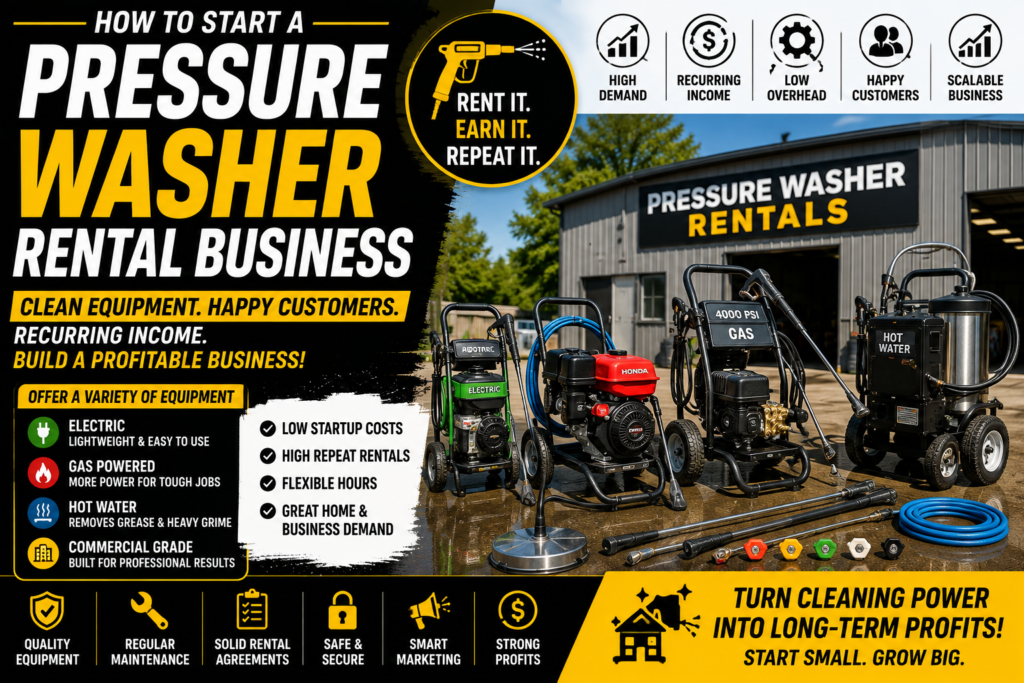
Offering multiple types of pressure washers allows you to serve a wider range of customers and cleaning projects.
Electric Pressure Washers
Electric units are lightweight, easy to operate, and ideal for homeowners cleaning patios, decks, vehicles, and outdoor furniture.
Gas Pressure Washers
Gas-powered machines provide greater cleaning power and are commonly rented for driveways, sidewalks, siding, fences, and commercial projects.
Hot Water Pressure Washers
Hot water units remove grease, oil, and heavy grime, making them popular with automotive shops, contractors, and industrial customers.
Commercial Pressure Washers
Heavy-duty commercial units are designed for daily use and can handle demanding cleaning jobs at construction sites, warehouses, and commercial properties.
How Much Does It Cost to Start a Pressure Washer Rental Business?
Startup costs vary depending on the size of your rental fleet and the type of equipment you purchase.
| Expense | Estimated Cost |
|---|---|
| Electric Pressure Washer | $300–$1,000 |
| Gas Pressure Washer | $700–$2,500 |
| Hot Water Pressure Washer | $2,500–$8,000+ |
| Accessories & Hoses | $500–$2,000 |
| Business Registration & Insurance | $500–$3,000+ |
Many entrepreneurs begin with one or two commercial gas-powered units before expanding into additional specialty equipment.
Choosing the Right Equipment
Investing in dependable commercial equipment helps reduce repairs while improving customer satisfaction.
Look for pressure washers with:
- Commercial-grade pumps
- Reliable engines
- Adjustable pressure settings
- Quick-connect nozzles
- Heavy-duty hoses
- Large pneumatic tires
- Thermal pump protection
- Manufacturer warranty
You may also want to offer accessories such as surface cleaners, extension wands, turbo nozzles, foam cannons, and hose extensions to increase rental value.
Setting Rental Prices
Your pricing should cover equipment depreciation, maintenance, insurance, cleaning, and future equipment purchases while remaining competitive within your market.
Many rental companies offer:
- Four-hour rentals
- Daily rentals
- Weekend specials
- Weekly rentals
- Monthly rentals
- Accessory packages
Bundling accessories with each rental can increase revenue while making the rental more convenient for customers.
Equipment Storage
Proper storage protects your pressure washers from weather, theft, and unnecessary wear between rentals.
Many businesses store equipment in:
- Commercial warehouses
- Storage buildings
- Secure garages
- Locked equipment trailers
- Climate-controlled storage areas
Keeping equipment clean and properly stored helps extend its lifespan while ensuring it is ready for the next customer.
Creating a Rental Agreement
A clear rental agreement protects your business while helping customers understand their responsibilities. Every customer should review and sign the agreement before taking possession of a pressure washer.
Your rental agreement should include:
- Rental period and return date
- Rental fees and payment terms
- Security deposit requirements
- Late return fees
- Fuel requirements for gas-powered units
- Cleaning expectations
- Customer responsibility for damage
- Proper operating instructions
- Emergency contact information
- Equipment inspection checklist
Document the condition of each machine before and after every rental using photos or videos to help avoid disputes over damage.
Customer Safety and Operating Instructions
Pressure washers are powerful machines that can cause injury or property damage if used improperly. Providing basic operating instructions helps protect both your customers and your business.
Before each rental:
- Explain how to start and shut down the machine.
- Review proper nozzle selection.
- Demonstrate safe spray distances.
- Warn against spraying electrical equipment.
- Recommend appropriate personal protective equipment.
- Provide the manufacturer’s operating manual.
A brief safety demonstration can reduce accidents and improve customer confidence.
Insurance for a Pressure Washer Rental Business
Commercial insurance helps protect your business against theft, equipment damage, accidents, and liability claims.
Policies commonly considered include:
- General liability insurance
- Commercial property insurance
- Equipment coverage
- Commercial auto insurance (for delivery vehicles)
- Inland marine insurance
- Workers’ compensation insurance (if hiring employees)
Consult an insurance professional to determine the appropriate coverage for your rental equipment and business operations.
Maintaining Your Pressure Washers
Routine maintenance extends equipment life and helps ensure customers receive reliable, high-performing machines.
Maintenance tasks include:
- Changing engine oil
- Cleaning or replacing air filters
- Inspecting high-pressure hoses
- Checking spray guns and nozzles
- Inspecting pumps for leaks
- Winterizing equipment when necessary
- Cleaning exterior surfaces
- Keeping maintenance records
Inspect every machine before and after each rental to identify repairs before the next customer arrives.
Marketing Your Pressure Washer Rental Business
Effective marketing helps attract homeowners, contractors, property managers, and commercial clients looking for temporary access to professional cleaning equipment.
Marketing strategies include:
- Create a professional website.
- Optimize your Google Business Profile.
- Use local SEO to target nearby searches.
- Advertise on Facebook Marketplace.
- Run seasonal Google Ads campaigns.
- Partner with painters, landscapers, and contractors.
- Offer package discounts with accessories.
- Collect customer reviews and testimonials.
Many successful businesses experience increased demand during spring and summer when outdoor cleaning projects are most common.
How to Grow a Pressure Washer Rental Business
Once your first machines are generating consistent revenue, reinvesting profits into additional equipment allows you to expand your business.
Growth strategies include:
- Add more commercial pressure washers.
- Purchase hot water units.
- Offer trailer-mounted systems.
- Add soft washing equipment.
- Rent surface cleaners and specialty attachments.
- Expand delivery services.
- Serve commercial contractors.
Expanding into complementary cleaning equipment can increase revenue while serving a broader range of customers.
Common Mistakes to Avoid
Avoiding these common mistakes can improve profitability and reduce repair expenses.
- Buying homeowner-grade equipment.
- Ignoring routine maintenance.
- Failing to inspect equipment after rentals.
- Providing poor operating instructions.
- Underpricing rentals.
- Operating without proper insurance.
- Not stocking replacement parts.
- Expanding too quickly.
Successful rental businesses focus on dependable equipment, excellent customer service, and preventative maintenance.
Frequently Asked Questions
Is a pressure washer rental business profitable?
Yes. Pressure washer rentals can generate recurring income because each machine can be rented many times throughout its service life. Profitability depends on equipment utilization, pricing, maintenance, and local demand.
Should I rent gas or electric pressure washers?
Offering both electric and gas-powered machines allows you to serve homeowners as well as contractors who require higher cleaning power.
Can I rent accessories?
Absolutely. Surface cleaners, extension wands, turbo nozzles, foam cannons, hoses, and cleaning chemicals can increase revenue while improving customer convenience.
Do I need a storefront?
No. Many pressure washer rental businesses operate from a warehouse, storage building, or commercial property without maintaining a traditional retail storefront.
Can I start part-time?
Yes. Many entrepreneurs begin with a small rental fleet while working another job and gradually expand as demand increases.
Related Articles
- How to Start an Equipment Rental Business
- How to Start a Trailer Rental Business
- How to Start a Lawn Equipment Rental Business
- How to Start a Generator Rental Business
- How to Start a Carpet Cleaner Rental Business
- How to Start a Portable Toilet Rental Business
Continue Learning
Previous Article: How to Start a Trailer Rental Business
Next Article: How to Start a Lawn Equipment Rental Business
Final Thoughts
A pressure washer rental business is an affordable and scalable way to enter the equipment rental industry. By investing in commercial-grade equipment, providing excellent customer service, and maintaining your machines properly, you can build a business that generates recurring income year after year.
Many successful operators begin with a few pressure washers before expanding into hot water units, trailer-mounted systems, soft washing equipment, and other specialty cleaning tools. With careful planning, smart marketing, and consistent maintenance, a pressure washer rental business can become a profitable long-term investment.