Construction projects, outdoor festivals, sporting events, weddings, fairs, parks, disaster relief operations, and road construction all have one thing in common—they need clean, reliable restroom facilities. Since permanent restrooms aren’t always available, portable toilet rental companies provide an essential service that customers depend on every day.
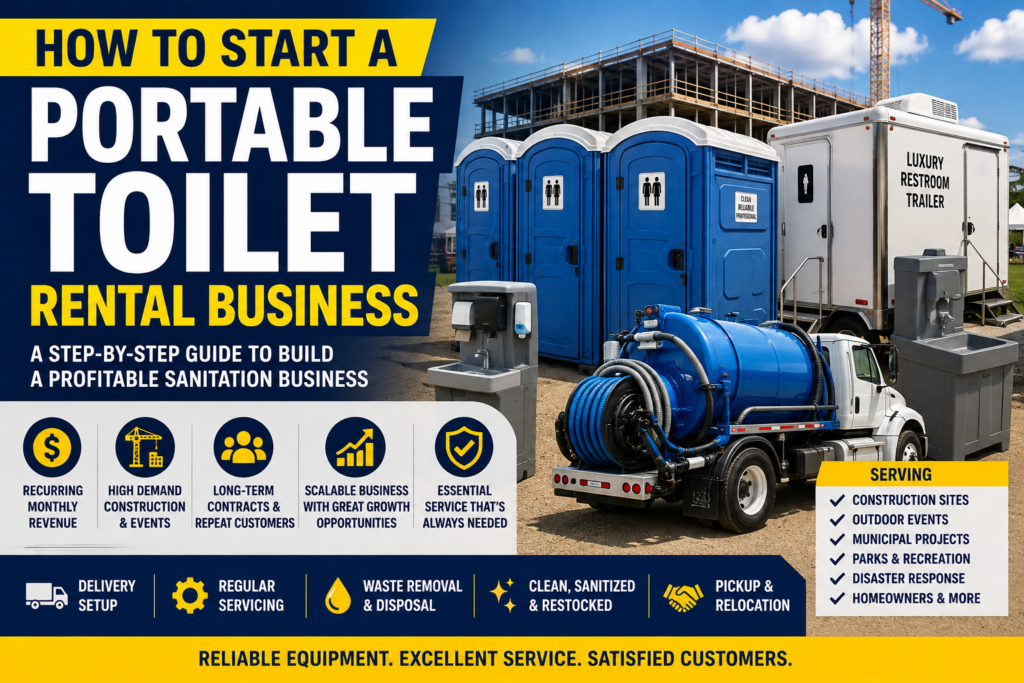
A portable toilet rental business rents portable restrooms, handwashing stations, and sanitation equipment to contractors, event organizers, municipalities, and homeowners. Unlike many rental businesses that earn income from one-time rentals, portable toilet companies generate recurring revenue because customers typically pay for delivery, weekly servicing, cleaning, waste removal, and pickup.
Although startup costs are higher than some equipment rental businesses, portable toilet rentals can become highly profitable once you build a fleet of units and establish efficient service routes. If you’re looking for a business with repeat customers, long-term contracts, and opportunities to scale, this industry is worth serious consideration.
What Does a Portable Toilet Rental Business Do?
A portable toilet rental company delivers temporary restroom facilities wherever permanent bathrooms are unavailable. The business is responsible for transporting the units, setting them up, servicing them regularly, pumping waste, restocking supplies, sanitizing the interiors, and removing the units when the rental period ends.
Most companies also provide:
- Handwashing stations
- Portable sinks
- ADA-compliant accessible restrooms
- Luxury flushing portable toilets
- Restroom trailers
- Construction site sanitation
- Festival restroom services
- Emergency sanitation services
Why Start a Portable Toilet Rental Business?
Portable sanitation is required on thousands of construction sites and outdoor events every day. Because most customers need ongoing weekly service instead of a one-time rental, the business creates predictable recurring income. Industry guides also note that construction and event customers account for the majority of demand. :contentReference[oaicite:1]{index=1}
Benefits include:
- Recurring monthly revenue
- Steady year-round demand
- Long-term commercial contracts
- Repeat construction customers
- High equipment lifespan
- Limited local competition in many markets
- Scalable business model
- Excellent expansion opportunities
Who Are Your Customers?
Construction Companies
Construction contractors are often your most valuable customers because projects can last several months and require weekly servicing.
Event Organizers
Concerts, festivals, fairs, sporting events, charity walks, food festivals, and outdoor weddings regularly require portable restroom rentals.
Municipalities
Cities and counties often rent portable restrooms for parks, public works projects, and community events.
Homeowners
Customers remodeling their homes, hosting backyard weddings, family reunions, or large outdoor parties may rent portable toilets for several days.
Disaster Recovery Companies
Emergency response organizations often need temporary sanitation facilities after hurricanes, floods, fires, and other disasters.
Skills You’ll Need
You don’t need prior sanitation industry experience, but these skills will help you succeed.
- Customer service
- Route planning
- Equipment maintenance
- Scheduling
- Truck operation
- Sales and marketing
- Business management
- Time management
Equipment You’ll Need
Portable Toilet Units
- Standard portable toilets
- Deluxe flushing units
- ADA-compliant units
- High-rise construction units
- Children’s portable toilets
Sanitation Equipment
- Vacuum service truck
- Waste storage tank
- Pressure washer
- Water tank
- Chemical tanks
- Cleaning supplies
- Replacement parts
Additional Rental Equipment
- Portable sinks
- Handwashing stations
- Hand sanitizer stands
- Luxury restroom trailers
- Crowd barriers
Startup Costs
Your startup costs depend largely on the number of units you purchase and whether you buy new or used equipment. A vacuum service truck is typically the largest expense, while operators often begin with a modest fleet and expand over time. Industry estimates vary widely based on fleet size and equipment choices.
| Expense | Estimated Cost |
|---|---|
| Portable toilet units | $8,000–$40,000+ |
| Vacuum service truck | $20,000–$90,000+ |
| Pressure washer | $500–$2,500 |
| Cleaning chemicals | $1,000–$3,000 |
| Business registration | $100–$500 |
| Insurance | $2,000–$8,000 annually |
| Website and marketing | $1,000–$5,000 |
Choosing the Right Portable Toilets
Not every customer needs the same type of restroom. Construction companies often choose standard units because they are durable and affordable. Weddings and corporate events frequently request deluxe flushing toilets or luxury restroom trailers that provide a more comfortable experience.
Offering several options allows you to serve different customer segments and increase your average rental value.
Pricing Your Rentals
Portable toilet rentals generally include delivery, setup, scheduled servicing, waste removal, restocking toilet paper and hand sanitizer, and pickup. Pricing typically varies depending on the rental duration, number of units, travel distance, and servicing frequency.
You may also charge extra for:
- Additional weekly cleanings
- Emergency service calls
- Holiday service
- Weekend delivery
- Remote job sites
- Luxury restroom upgrades
Daily Operations
Most of your work revolves around maintaining scheduled service routes. Each stop typically includes pumping waste, refilling fresh water where needed, sanitizing the interior, replacing supplies, inspecting the unit for damage, and documenting service before moving to the next customer.
Efficient route planning reduces fuel costs and helps maximize the number of units each truck can service in a day.
Health, Safety, and Waste Disposal
Portable sanitation businesses must follow applicable local, state, and federal regulations for transporting and disposing of waste. Work with approved wastewater treatment facilities and ensure employees use proper protective equipment, follow sanitation procedures, and receive appropriate safety training.
Insurance You’ll Need
- General liability insurance
- Commercial vehicle insurance
- Equipment insurance
- Workers’ compensation
- Commercial property insurance
- Environmental liability coverage (where applicable)
Marketing Your Portable Toilet Rental Business
Your customers are usually searching for portable restroom rentals when they have an immediate need. A strong online presence and local business relationships are essential.
Create a Professional Website
Your website should include rental options, pricing information, service areas, photos, online quote requests, frequently asked questions, and customer testimonials.
Google Business Profile
Optimize your profile with photos, accurate business hours, customer reviews, and service descriptions to improve local search visibility.
Build Local Relationships
Network with:
- Construction companies
- General contractors
- Event planners
- Wedding venues
- Parks departments
- Festival organizers
- Municipal governments
- Disaster restoration companies
Ways to Increase Revenue
Once your business is established, you can expand beyond standard portable toilets.
- Luxury restroom trailers
- Portable handwashing stations
- Portable sinks
- Temporary fencing rentals
- Generator rentals
- Light tower rentals
- Dumpster rentals
- Water tank rentals
Common Mistakes to Avoid
- Buying too many units before securing customers
- Poor service scheduling
- Ignoring sanitation standards
- Underpricing rentals
- Skipping preventive maintenance
- Not documenting damage
- Providing slow customer service
- Failing to market consistently
Is a Portable Toilet Rental Business Right for You?
If you don’t mind operating service equipment, managing scheduled routes, and providing an essential service, a portable toilet rental business can produce dependable recurring income. As your fleet grows, adding restroom trailers, handwashing stations, generators, and event rental equipment can transform your company into a full-service construction and event rental business.
Frequently Asked Questions
How much can a portable toilet rental business make?
A small portable toilet rental business with 50 to 100 units can generate steady recurring revenue from construction sites, special events, and municipal contracts. As your fleet expands and you add restroom trailers, handwashing stations, and premium services, annual revenue can grow into the hundreds of thousands of dollars. Profitability depends on equipment utilization, efficient service routes, and recurring contracts.
Do I need a special license to operate?
Business licensing requirements vary by state and municipality. You may also need permits related to waste transportation and disposal. Contact your local business licensing office and environmental agencies to understand the regulations that apply in your area before starting operations.
How often do portable toilets need servicing?
Most construction site rentals are serviced once each week, while high-traffic events may require daily or even multiple cleanings each day. Servicing usually includes pumping waste, cleaning and disinfecting the unit, refilling supplies, and inspecting for damage.
Can I start with used portable toilets?
Yes. Many successful companies begin with quality used units to reduce startup costs. Carefully inspect used equipment for structural damage, leaks, door operation, ventilation, and overall condition before purchasing.
Who rents portable toilets the most?
Construction companies are often the largest source of recurring business. Other common customers include event organizers, parks departments, municipalities, wedding venues, disaster recovery companies, and homeowners hosting outdoor gatherings.
Startup Checklist
- Register your business and choose a business name.
- Obtain all required licenses and permits.
- Purchase portable toilet units.
- Acquire or lease a vacuum service truck.
- Buy cleaning chemicals, supplies, and safety equipment.
- Obtain business and commercial vehicle insurance.
- Create rental contracts and service agreements.
- Build a professional website.
- Create and optimize your Google Business Profile.
- Develop regular service routes.
- Market to contractors, event planners, and municipalities.
- Track maintenance and servicing for every unit.
How Profitable Is a Portable Toilet Rental Business?
Portable toilet rental businesses can be highly profitable because customers typically pay not only for the initial rental but also for recurring servicing throughout the rental period. Weekly cleaning, waste removal, delivery, pickup, and premium upgrades all create multiple income streams from the same equipment.
As your customer base grows, route density improves, allowing each service truck to maintain more units while reducing travel time and fuel costs. Adding luxury restroom trailers, handwashing stations, temporary fencing, generators, and other construction or event rental equipment can significantly increase revenue while serving the same customers.
Final Thoughts
A portable toilet rental business provides an essential service that is always in demand for construction projects, outdoor events, public gatherings, and emergency situations. Although startup costs are higher than some rental businesses, recurring contracts and long equipment life can create dependable cash flow and long-term growth. By focusing on reliable service, clean equipment, efficient scheduling, and strong customer relationships, you can build a business that continues generating recurring income year after year.
Previous Article
How to Start a Carpet Cleaner Rental Business
Next Article
How to Start a Floor Sander Rental Business