A lawn equipment rental business allows homeowners, landscapers, property managers, and contractors to rent professional-grade outdoor power equipment without the high cost of purchasing and maintaining it. Many customers only need specialized equipment for seasonal projects, making rentals an affordable and practical solution.
From lawn mowers and tillers to aerators, dethatchers, brush cutters, stump grinders, and leaf blowers, lawn equipment rentals serve both residential and commercial customers throughout the year. Many entrepreneurs begin with a few popular machines before expanding into a complete rental fleet that generates recurring income from repeat customers.
This guide explains everything you need to know about starting a lawn equipment rental business, including startup costs, selecting equipment, pricing, maintenance, insurance, marketing, and long-term growth strategies.
What Is a Lawn Equipment Rental Business?
A lawn equipment rental business owns outdoor power equipment and rents it to customers for temporary use. Rental periods typically range from a few hours to several days, depending on the size of the project.
Customers commonly rent equipment for:
- Lawn mowing
- Spring yard cleanup
- Fall leaf removal
- Lawn aeration
- Dethatching
- Garden preparation
- Brush clearing
- Stump removal
- Tree trimming
- Landscape renovation
By renting instead of buying, customers save money while gaining access to commercial-grade equipment that may only be needed occasionally.
Why Start a Lawn Equipment Rental Business?
Demand for lawn and landscape equipment remains strong because homeowners and contractors regularly need specialized machines for seasonal outdoor projects.
Benefits include:
- Recurring rental income
- Seasonal demand with repeat customers
- Relatively affordable startup costs
- Scalable equipment inventory
- No retail storefront required
- Flexible work schedule
- Can begin part-time
- Opportunities to rent accessories and attachments
As your inventory grows, you can serve a wider range of customers while increasing revenue throughout the year.
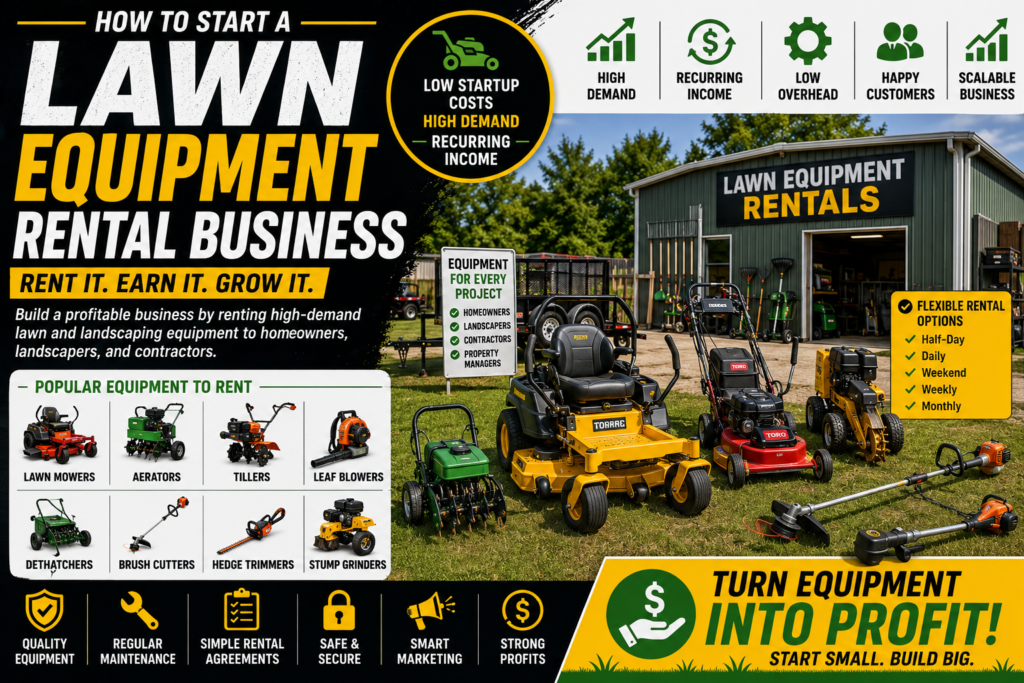
Popular Lawn Equipment to Rent
Offering a variety of equipment allows you to meet the needs of homeowners, landscapers, and commercial property managers.
Lawn Mowers
Commercial walk-behind and zero-turn mowers are among the most frequently rented pieces of lawn equipment, especially during the growing season.
Aerators
Lawn aerators improve soil health by allowing air, water, and nutrients to reach grass roots. Many homeowners rent aerators once or twice each year.
Dethatchers
Dethatchers remove excess thatch buildup, helping lawns grow healthier and absorb nutrients more effectively.
Garden Tillers
Tillers are commonly rented for preparing vegetable gardens, flower beds, and landscaping projects.
Leaf Blowers
Commercial backpack and walk-behind blowers are popular during fall cleanup and for year-round property maintenance.
Brush Cutters
Brush cutters help clear overgrown vegetation, weeds, and small saplings in areas that traditional lawn mowers cannot reach.
Stump Grinders
Stump grinders allow customers to remove tree stumps after tree removal projects without hiring a contractor.
How Much Does It Cost to Start a Lawn Equipment Rental Business?
Your startup investment depends on the types and quantity of equipment you purchase.
| Equipment | Estimated Cost |
|---|---|
| Commercial Lawn Mower | $2,000–$12,000 |
| Aerator | $1,500–$5,000 |
| Dethatcher | $800–$3,000 |
| Garden Tiller | $600–$2,500 |
| Leaf Blower | $300–$1,000 |
| Brush Cutter | $500–$2,000 |
| Stump Grinder | $2,500–$10,000+ |
| Business Registration & Insurance | $500–$3,000+ |
Many owners begin with high-demand equipment such as mowers, tillers, and aerators before expanding into specialty machines.
Choosing the Right Equipment
Commercial-grade equipment typically provides greater durability, longer service life, and lower maintenance costs than homeowner-grade models.
When selecting equipment, look for:
- Commercial engines
- Heavy-duty construction
- Easy maintenance access
- Available replacement parts
- Strong manufacturer support
- Fuel-efficient operation
- Safety features
- Manufacturer warranty
Purchasing dependable equipment reduces downtime and improves customer satisfaction.
Setting Rental Prices
Your pricing should cover maintenance, insurance, depreciation, storage, and future equipment purchases while remaining competitive within your market.
Many rental companies offer:
- Half-day rentals
- Daily rentals
- Weekend specials
- Weekly rentals
- Monthly rentals
- Accessory packages
Flexible pricing allows customers to choose the rental period that best fits their project while helping maximize equipment utilization.
Equipment Storage
Proper storage protects your investment and helps keep equipment in excellent working condition.
Many rental businesses use:
- Commercial warehouses
- Storage buildings
- Equipment sheds
- Locked trailers
- Climate-controlled storage for sensitive equipment
- Security cameras and alarm systems
Keeping equipment clean, fueled appropriately, and protected from weather extends its lifespan and reduces repair costs.
Creating a Lawn Equipment Rental Agreement
A well-written rental agreement helps protect your business while setting clear expectations for customers. Every rental should include terms that explain equipment use, payment, return procedures, and customer responsibilities.
Your rental agreement should include:
- Rental period and return date
- Rental rates and payment terms
- Security deposit requirements
- Late return fees
- Fuel requirements
- Cleaning expectations
- Customer responsibility for damage
- Safe operating instructions
- Emergency contact information
- Equipment inspection checklist
Before every rental, inspect the equipment with the customer and document its condition using photos or videos. This helps prevent disputes regarding damage when the equipment is returned.
Customer Safety and Equipment Training
Many lawn equipment rentals include powerful machines that require safe operation. Providing customers with basic instructions can reduce accidents and improve customer satisfaction.
Before each rental:
- Explain how to safely start and stop the equipment.
- Review all safety controls and emergency shutoffs.
- Recommend proper personal protective equipment.
- Demonstrate safe operating techniques.
- Provide the manufacturer’s operating manual.
- Answer any customer questions before they leave.
Taking a few minutes to review proper operation helps protect your equipment while reducing the risk of injuries or damage.
Insurance for a Lawn Equipment Rental Business
Insurance helps protect your business from theft, equipment damage, accidents, and liability claims.
Policies commonly considered include:
- General liability insurance
- Commercial property insurance
- Equipment coverage
- Commercial auto insurance (for delivery vehicles)
- Inland marine insurance
- Workers’ compensation insurance (if hiring employees)
Speak with an insurance professional to determine the most appropriate coverage for your rental fleet and business operations.
Maintaining Your Rental Equipment
Routine maintenance helps extend equipment life while ensuring every customer receives safe, dependable machines.
Maintenance tasks include:
- Changing engine oil
- Replacing air filters
- Sharpening mower blades
- Inspecting belts and cables
- Checking tires and wheels
- Lubricating moving parts
- Cleaning equipment after every rental
- Maintaining detailed service records
Preventative maintenance reduces downtime and helps maximize the return on your equipment investment.
Marketing Your Lawn Equipment Rental Business
Marketing helps attract homeowners, landscapers, contractors, and property managers looking for temporary access to professional lawn equipment.
Effective marketing strategies include:
- Create a professional website.
- Optimize your Google Business Profile.
- Target local SEO keywords.
- Advertise on Facebook Marketplace.
- Run seasonal Google Ads campaigns.
- Partner with landscapers and garden centers.
- Offer package discounts for multiple rentals.
- Encourage customers to leave online reviews.
Demand typically increases during spring, summer, and fall, making seasonal marketing campaigns especially effective.
How to Grow a Lawn Equipment Rental Business
Once your first equipment begins generating consistent revenue, expanding your inventory allows you to serve more customers while increasing rental income.
Growth strategies include:
- Add additional lawn mowers.
- Expand into specialty landscaping equipment.
- Offer trailer delivery.
- Rent landscaping attachments and accessories.
- Serve commercial landscaping companies.
- Purchase additional equipment categories.
- Open additional rental locations.
Many successful rental businesses expand by offering complementary equipment that customers frequently need together.
Common Mistakes to Avoid
Avoiding common mistakes helps reduce repair costs and improve customer satisfaction.
- Buying homeowner-grade equipment.
- Ignoring preventative maintenance.
- Failing to inspect equipment after rentals.
- Providing little or no operating instruction.
- Setting rental prices too low.
- Operating without adequate insurance.
- Neglecting seasonal marketing.
- Expanding too quickly.
Successful businesses focus on dependable equipment, routine maintenance, and outstanding customer service.
Frequently Asked Questions
Is a lawn equipment rental business profitable?
Yes. Lawn equipment can be rented repeatedly throughout its service life, creating recurring income from the same investment. Profitability depends on equipment utilization, pricing, maintenance, and customer demand.
What equipment should I buy first?
Commercial lawn mowers, aerators, tillers, and leaf blowers are often excellent starting points because they are in high demand among homeowners and landscapers.
Can I rent attachments and accessories?
Absolutely. Fuel containers, trailers, mower attachments, aerator tines, leaf collection systems, and safety equipment can increase revenue while providing additional value to customers.
Do I need a storefront?
No. Many lawn equipment rental businesses operate from warehouses, storage buildings, or commercial properties without maintaining a traditional retail location.
Can I operate part-time?
Yes. Many entrepreneurs begin with a small inventory while working another job and gradually expand into a full-time business.
Related Articles
- How to Start an Equipment Rental Business
- How to Start a Trailer Rental Business
- How to Start a Pressure Washer Rental Business
- How to Start a Generator Rental Business
- How to Start a Carpet Cleaner Rental Business
- How to Start a Portable Toilet Rental Business
Continue Learning
Previous Article: How to Start a Pressure Washer Rental Business
Next Article: How to Start a Generator Rental Business
Final Thoughts
A lawn equipment rental business is an excellent way to build recurring income while serving homeowners, landscapers, contractors, and property managers. By investing in commercial-grade equipment, maintaining it properly, and providing exceptional customer service, you can create a rental business that generates reliable revenue year after year.
Many successful operators begin with only a few high-demand machines before expanding into a complete fleet of landscaping equipment. With strategic marketing, preventative maintenance, and careful reinvestment of profits, a lawn equipment rental business can become a scalable and profitable long-term investment.