
A generator rental business provides homeowners, contractors, event organizers, and businesses with temporary power solutions when electricity is unavailable or unreliable. Whether customers need backup power during outages, generators for construction sites, or portable power for outdoor events, generator rentals offer a practical alternative to purchasing expensive equipment.
Because generators are durable assets that can be rented repeatedly over many years, this business offers excellent potential for recurring income. Many entrepreneurs begin with a few portable generators before expanding into a fleet of inverter generators, towable generators, and large commercial units that serve residential, commercial, and industrial customers.
This guide explains everything you need to know about starting a generator rental business, including startup costs, selecting equipment, pricing, maintenance, insurance, marketing, and strategies for long-term growth.
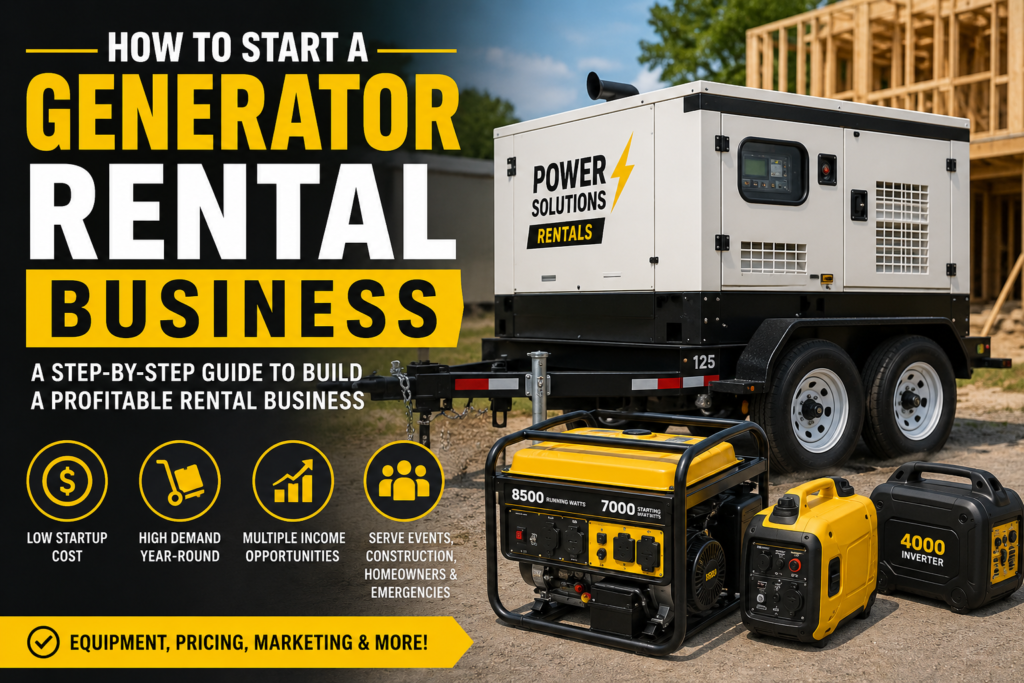
What Is a Generator Rental Business?
A generator rental business owns generators that are rented to customers for temporary use. Rental periods may range from several hours to multiple months depending on the customer’s needs.
Common customers include:
- Homeowners
- Construction contractors
- Disaster recovery companies
- Event planners
- Wedding venues
- Food truck operators
- Property managers
- Small businesses
- Government agencies
- Industrial facilities
Generator rentals provide reliable temporary electricity without requiring customers to purchase equipment they may only need occasionally.
Why Start a Generator Rental Business?
Demand for portable power continues to grow due to severe weather, expanding construction activity, outdoor events, and increasing awareness of emergency preparedness.
Advantages include:
- Recurring rental income
- Year-round demand
- Commercial and residential customers
- Scalable business model
- High-value rental inventory
- No retail storefront required
- Flexible work schedule
- Opportunities for long-term contracts
Many successful operators expand by adding larger generators, delivery services, and maintenance plans as demand increases.
Types of Generators to Rent
Offering multiple generator types allows you to serve a wider variety of customers and applications.
Portable Generators
Portable generators are commonly rented by homeowners, campers, and contractors who need temporary electricity for small projects or emergency backup power.
Inverter Generators
Inverter generators provide clean, stable electricity for sensitive electronics such as computers, televisions, medical devices, and mobile offices.
Towable Generators
Tow-behind generators supply power to construction sites, outdoor festivals, sporting events, and remote work locations where higher electrical output is required.
Commercial Standby Generators
Large commercial generators are often rented by businesses, hospitals, manufacturing facilities, and emergency response organizations requiring dependable backup power.
How Much Does It Cost to Start a Generator Rental Business?
Startup costs vary depending on the size and type of generators you purchase.
| Equipment | Estimated Cost |
|---|---|
| Portable Generator | $500–$2,500 |
| Inverter Generator | $800–$4,000 |
| Towable Generator | $8,000–$40,000+ |
| Commercial Generator | $20,000–$100,000+ |
| Delivery Equipment | $2,000–$20,000+ |
| Business Registration & Insurance | $500–$3,000+ |
Many entrepreneurs begin with several portable and inverter generators before expanding into larger commercial units.
Choosing the Right Equipment
Investing in commercial-grade generators helps reduce maintenance costs while improving customer satisfaction and equipment reliability.
When purchasing generators, consider:
- Power output
- Fuel efficiency
- Run time
- Noise level
- Portability
- Ease of maintenance
- Replacement parts availability
- Manufacturer warranty
Offering accessories such as extension cords, transfer switches, fuel tanks, and distribution panels can increase rental revenue while providing added convenience for customers.
Setting Rental Prices
Your rental rates should reflect equipment value, maintenance costs, fuel consumption, insurance, transportation, and local market demand.
Many generator rental companies offer:
- Daily rentals
- Weekend rentals
- Weekly rentals
- Monthly rentals
- Emergency outage pricing
- Delivery and setup services
Offering flexible rental periods helps serve both homeowners needing short-term backup power and contractors requiring generators for long-term projects.
Equipment Storage
Proper storage protects your generators from theft, weather, and unnecessary wear while ensuring they remain ready for the next rental.
Many businesses use:
- Commercial warehouses
- Locked storage buildings
- Fenced equipment yards
- Security cameras
- Climate-controlled storage for smaller units
- GPS tracking for towable generators
Routine inspections while equipment is in storage help identify maintenance issues before the next rental begins.
Creating a Generator Rental Agreement
A detailed rental agreement protects both your business and your customers by clearly explaining the rental terms, equipment responsibilities, and return procedures. Every customer should review and sign the agreement before taking possession of a generator.
Your rental agreement should include:
- Rental period and return date
- Rental fees and payment terms
- Security deposit requirements
- Late return fees
- Fuel requirements
- Delivery and pickup terms (if offered)
- Customer responsibility for damage
- Operating instructions and safety requirements
- Emergency contact information
- Equipment inspection checklist
Inspect each generator with the customer before and after every rental. Document its condition with photos and written inspection reports to reduce disputes regarding damage or excessive wear.
Customer Safety and Generator Operation
Generators can present serious safety hazards if used improperly. Educating customers on safe operation helps prevent accidents and protects your business.
Before each rental:
- Explain how to safely start and shut down the generator.
- Review proper fuel handling procedures.
- Warn customers never to operate generators indoors or in enclosed spaces.
- Explain carbon monoxide risks.
- Review electrical load limits.
- Provide the manufacturer’s operating manual.
Encouraging safe operation reduces liability while helping customers use the equipment correctly.
Insurance for a Generator Rental Business
Commercial insurance helps protect your rental fleet, business property, and financial investment from unexpected events.
Policies commonly considered include:
- General liability insurance
- Commercial property insurance
- Equipment coverage
- Commercial auto insurance (for delivery vehicles)
- Inland marine insurance
- Workers’ compensation insurance (if hiring employees)
Work with an insurance professional to determine the most appropriate coverage for your business and equipment inventory.
Maintaining Your Rental Generators
Routine maintenance helps ensure every generator operates safely and reliably while extending equipment life.
Maintenance tasks include:
- Changing engine oil and filters
- Inspecting spark plugs
- Testing battery systems
- Checking fuel systems for leaks
- Inspecting electrical outlets and breakers
- Running generators regularly during storage
- Cleaning exterior surfaces
- Maintaining detailed service records
Perform a complete inspection before every rental to identify maintenance issues before the equipment reaches your customer.
Marketing Your Generator Rental Business
Effective marketing helps attract homeowners, contractors, event organizers, and businesses that require dependable temporary power.
Marketing strategies include:
- Create a professional website.
- Optimize your Google Business Profile.
- Use local SEO targeting generator rentals.
- Advertise before storm season.
- Partner with construction companies.
- Build relationships with event planners.
- Offer emergency delivery services.
- Encourage satisfied customers to leave online reviews.
Seasonal advertising before hurricane, tornado, wildfire, or winter storm seasons can significantly increase demand in many areas.
How to Grow a Generator Rental Business
As demand increases, reinvesting profits into additional equipment allows you to serve more customers while increasing recurring revenue.
Growth strategies include:
- Add larger commercial generators.
- Expand into towable generator rentals.
- Offer delivery and on-site setup.
- Rent electrical distribution equipment.
- Serve construction companies.
- Provide emergency response contracts.
- Expand into neighboring communities.
Many successful businesses diversify by offering both residential backup generators and large commercial power solutions.
Common Mistakes to Avoid
Avoiding common mistakes can improve customer satisfaction while reducing costly repairs and liability risks.
- Buying unreliable equipment.
- Ignoring preventative maintenance.
- Failing to educate customers on safe operation.
- Operating without proper insurance.
- Underpricing rentals.
- Neglecting storm-season marketing.
- Not testing generators between rentals.
- Expanding too quickly.
Successful generator rental businesses focus on dependable equipment, customer education, and preventative maintenance.
Frequently Asked Questions
Is a generator rental business profitable?
Yes. Generator rentals can generate recurring income because the same equipment can be rented repeatedly for construction projects, emergencies, and special events. Profitability depends on equipment utilization, pricing, maintenance, and customer demand.
What type of generator should I buy first?
Many new rental businesses begin with portable and inverter generators because they require a lower investment while serving a wide variety of residential and commercial customers.
Should I offer delivery?
Yes. Delivery and setup services provide additional revenue while making your business more convenient for customers who may not have the ability to transport heavy equipment.
Do I need a storefront?
No. Many generator rental businesses operate from warehouses, equipment yards, or commercial storage facilities without maintaining a traditional retail location.
Can I operate the business part-time?
Absolutely. Many entrepreneurs begin with a small inventory while working another job and expand into a full-time business as demand grows.
Related Articles
- How to Start an Equipment Rental Business
- How to Start a Trailer Rental Business
- How to Start a Pressure Washer Rental Business
- How to Start a Lawn Equipment Rental Business
- How to Start a Carpet Cleaner Rental Business
- How to Start a Portable Toilet Rental Business
Continue Learning
Previous Article: How to Start a Lawn Equipment Rental Business
Next Article: How to Start a Carpet Cleaner Rental Business
Final Thoughts
A generator rental business can provide dependable recurring income while serving homeowners, contractors, businesses, and event organizers who need temporary power. By investing in reliable commercial-grade generators, maintaining them properly, and providing excellent customer service, you can build a trusted rental business that serves your community for years.
Many successful operators start with a few portable generators before expanding into larger commercial units, delivery services, and emergency power contracts. With strategic planning, preventative maintenance, and consistent marketing, a generator rental business can become a scalable and profitable long-term investment.