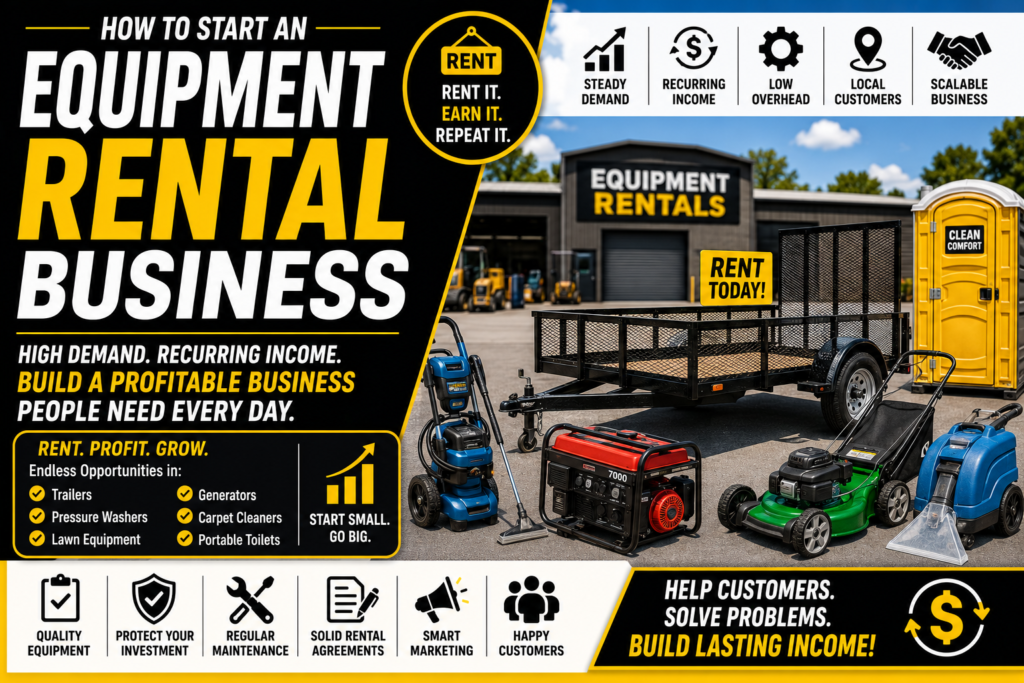
An equipment rental business can be an excellent way to generate recurring income while helping homeowners, contractors, landscapers, and businesses complete projects without purchasing expensive equipment. Instead of selling products once, rental businesses earn money by renting the same equipment repeatedly, creating multiple revenue opportunities from a single investment.
From utility trailers and pressure washers to lawn equipment, generators, carpet cleaners, and portable toilets, equipment rental businesses serve a wide range of industries and customers. Many entrepreneurs begin with just a few pieces of equipment and gradually expand into a large rental fleet as profits grow.
This guide explains everything you need to know about starting an equipment rental business, including startup costs, choosing equipment, pricing strategies, insurance, marketing, and how to build a profitable rental operation.
What Is an Equipment Rental Business?
An equipment rental business owns tools, machinery, or specialty equipment and rents those items to customers for hourly, daily, weekly, or monthly use. Customers gain access to expensive equipment without the high cost of ownership, maintenance, or storage.
Equipment rental businesses often serve:
- Homeowners
- Landscaping companies
- Construction contractors
- Property managers
- DIY homeowners
- Event organizers
- Commercial businesses
- Government agencies
Because rental equipment can be rented repeatedly, a single purchase can continue generating revenue for many years with proper maintenance.
Why Start an Equipment Rental Business?
Equipment rental continues to grow as more people choose renting over buying expensive equipment they may only use occasionally.
Benefits include:
- Recurring income from the same equipment
- High demand across many industries
- Scalable business model
- No retail storefront required
- Flexible working hours
- Can begin as a part-time business
- Multiple equipment categories to choose from
- Long equipment lifespan with proper maintenance
Many successful rental companies begin with a small inventory before expanding into specialized equipment categories that generate even higher profits.
Popular Equipment Rental Business Ideas
There are many profitable equipment rental opportunities depending on your budget and local market.
Trailer Rental Business
Utility trailers are rented for moving, hauling landscaping materials, transporting motorcycles, hauling ATVs, construction projects, and countless other uses.
Read our complete guide: How to Start a Trailer Rental Business
Pressure Washer Rental Business
Pressure washers remain popular with homeowners, contractors, painters, and property managers who need temporary access to professional cleaning equipment.
Learn more: How to Start a Pressure Washer Rental Business
Lawn Equipment Rental Business
Lawn mowers, aerators, dethatchers, tillers, brush cutters, and other landscaping equipment are frequently rented for seasonal property maintenance.
Learn more: How to Start a Lawn Equipment Rental Business
Generator Rental Business
Portable generators are commonly rented during power outages, construction projects, festivals, sporting events, weddings, and emergency situations.
Learn more: How to Start a Generator Rental Business
Carpet Cleaner Rental Business
Professional carpet cleaning machines are rented by homeowners, landlords, property managers, and cleaning companies looking to save money on equipment purchases.
Learn more: How to Start a Carpet Cleaner Rental Business
Portable Toilet Rental Business
Portable restroom rentals are in constant demand for construction sites, festivals, sporting events, weddings, outdoor concerts, and emergency response operations.
Learn more: How to Start a Portable Toilet Rental Business
How Much Does It Cost to Start an Equipment Rental Business?
Your startup costs depend largely on the type of equipment you plan to rent.
| Equipment Type | Estimated Startup Cost |
|---|---|
| Trailer Rentals | $3,000–$25,000+ |
| Pressure Washers | $2,000–$15,000+ |
| Lawn Equipment | $5,000–$30,000+ |
| Generators | $5,000–$50,000+ |
| Carpet Cleaners | $2,000–$15,000+ |
| Portable Toilets | $10,000–$100,000+ |
Many entrepreneurs begin with one equipment category and expand into additional rental services as profits increase.
Choosing the Right Equipment
Purchasing reliable, commercial-grade equipment is one of the most important decisions you’ll make. Quality equipment typically lasts longer, requires fewer repairs, and provides a better customer experience.
When selecting equipment, consider:
- Customer demand
- Purchase price
- Maintenance requirements
- Replacement parts availability
- Manufacturer reputation
- Expected lifespan
- Storage requirements
- Transportation needs
Buying dependable equipment helps reduce downtime and improves customer satisfaction.
Setting Rental Prices
Pricing should allow you to recover your equipment investment while remaining competitive within your local market.
Many rental businesses offer:
- Hourly rates
- Half-day rentals
- Daily rentals
- Weekend specials
- Weekly rentals
- Monthly rentals
Offering multiple pricing options allows customers to choose the rental period that best fits their project while maximizing your equipment utilization.
Equipment Storage and Security
Your rental inventory represents a significant investment and should be stored securely when not in use.
Many rental businesses use:
- Commercial warehouses
- Storage buildings
- Fenced storage yards
- Security cameras
- Alarm systems
- GPS tracking devices
- Heavy-duty locks
Proper storage helps protect equipment from theft, vandalism, and weather damage while extending its useful life.
Creating Rental Agreements
A well-written rental agreement helps protect both your business and your customers. Every rental should include clear terms explaining how the equipment may be used, who is responsible for damages, payment requirements, and when the equipment must be returned.
Your rental agreement should address:
- Rental period and return date
- Rental fees and payment terms
- Security deposits (if required)
- Late return fees
- Damage responsibility
- Equipment inspection procedures
- Cleaning requirements
- Fuel requirements (if applicable)
- Customer liability
- Emergency contact information
Having customers inspect equipment before leaving and documenting its condition with photos can help prevent disputes when the equipment is returned.
Business Licenses and Permits
Equipment rental businesses are regulated differently depending on your state and local government. Before opening, verify the licenses and permits required in your area.
You may need:
- Business registration (LLC or Corporation)
- Employer Identification Number (EIN)
- Local business license
- Sales tax registration
- Zoning approval
- Commercial vehicle registration (if offering delivery)
Consult your state and local government agencies to ensure your business complies with all applicable regulations.
Insurance for an Equipment Rental Business
Insurance is one of the most important investments you’ll make. Rental equipment can be expensive to repair or replace, and accidents involving rented equipment can create significant liability.
Policies commonly considered include:
- General liability insurance
- Commercial property insurance
- Equipment coverage
- Commercial auto insurance
- Inland marine insurance
- Workers’ compensation insurance (if hiring employees)
Review your coverage with an insurance professional to ensure your rental fleet, storage facilities, and business operations are adequately protected.
Maintaining Your Rental Equipment
Routine maintenance protects your investment, reduces breakdowns, and helps ensure customers receive equipment that is safe and reliable.
Maintenance should include:
- Cleaning equipment after every rental
- Inspecting moving parts
- Replacing worn components
- Lubricating equipment
- Changing engine oil and filters when applicable
- Testing safety features
- Keeping maintenance records
- Scheduling preventative maintenance
Well-maintained equipment lasts longer, experiences fewer repairs, and helps generate positive customer reviews.
Marketing Your Equipment Rental Business
Marketing helps attract new customers while building repeat business from homeowners, contractors, and commercial clients.
Effective marketing strategies include:
- Create a professional website.
- Optimize your Google Business Profile.
- Use local SEO to target nearby customers.
- Advertise on Facebook and Google Ads.
- Partner with contractors and landscapers.
- Network with real estate investors and property managers.
- Offer package discounts for multiple rentals.
- Encourage satisfied customers to leave online reviews.
Excellent customer service and dependable equipment often generate referrals, helping your business grow through word-of-mouth marketing.
How to Grow an Equipment Rental Business
One of the biggest advantages of an equipment rental business is the ability to expand gradually by adding new equipment categories and increasing your inventory.
Growth strategies include:
- Purchase additional rental equipment.
- Expand into neighboring communities.
- Add delivery and pickup services.
- Offer online reservations.
- Serve commercial customers.
- Specialize in high-demand equipment categories.
- Hire employees as demand increases.
Many successful rental companies begin with one specialty before expanding into several complementary rental categories.
Common Mistakes to Avoid
Avoiding these common mistakes can save money and improve long-term profitability.
- Buying equipment with little customer demand.
- Failing to inspect equipment between rentals.
- Setting rental prices too low.
- Ignoring preventative maintenance.
- Operating without proper insurance.
- Using weak rental agreements.
- Expanding too quickly.
- Neglecting online marketing.
Successful rental businesses focus on dependable equipment, excellent customer service, and efficient operations.
Frequently Asked Questions
Is an equipment rental business profitable?
Yes. Equipment rental businesses can generate recurring income because the same equipment is rented multiple times over its lifespan. Profitability depends on choosing the right equipment, maintaining it properly, and keeping it rented as often as possible.
What equipment is most profitable to rent?
Popular rental categories include utility trailers, pressure washers, lawn equipment, generators, carpet cleaners, and portable toilets. The best choice depends on your local market, startup budget, and customer demand.
Do I need a storefront?
No. Many equipment rental businesses operate from a warehouse, storage yard, or commercial property without maintaining a traditional retail storefront.
Should I require a security deposit?
Many rental businesses collect a refundable security deposit to help cover potential damage, excessive cleaning, or late returns. Deposit policies vary depending on the type and value of the equipment.
Can I start an equipment rental business part-time?
Absolutely. Many entrepreneurs begin with a small inventory while working another job. As demand grows, they gradually expand into a full-time business.
Related Articles
- How to Start a Trailer Rental Business
- How to Start a Pressure Washer Rental Business
- How to Start a Lawn Equipment Rental Business
- How to Start a Generator Rental Business
- How to Start a Carpet Cleaner Rental Business
- How to Start a Portable Toilet Rental Business
- How To Start A Sander Rental Business
Continue Learning
Previous Article: How to Start a Route-Based Business
Next Article: How to Start a Trailer Rental Business
Final Thoughts
An equipment rental business offers an excellent opportunity to build recurring income while helping customers complete projects without purchasing expensive equipment. Whether you focus on trailers, pressure washers, lawn equipment, generators, carpet cleaners, portable toilets, or a combination of rental categories, success comes from investing in dependable equipment, maintaining it properly, and providing outstanding customer service.
Many successful rental companies start with only a few pieces of equipment before expanding into multiple categories and serving residential, commercial, and industrial customers. By reinvesting profits, building strong customer relationships, and continuously improving your operations, you can create a scalable business that generates reliable income for many years.