
Hardwood floors remain one of the most desirable flooring options for homeowners and commercial property owners. Over time, however, these floors become scratched, dull, stained, or uneven and require refinishing to restore their appearance. Purchasing professional floor sanding equipment can cost thousands of dollars, making rentals an attractive option for homeowners completing DIY renovations and contractors who only need specialized equipment for occasional projects.
A floor sander rental business provides drum sanders, orbital sanders, edgers, buffers, and dust collection systems to customers by the day, weekend, or week. With relatively few machines, strong maintenance practices, and effective local marketing, this business can generate consistent income while serving homeowners, flooring installers, remodeling contractors, and property managers.
This guide explains how to start a floor sander rental business, including startup costs, equipment, pricing strategies, maintenance, marketing, and ways to increase profits.
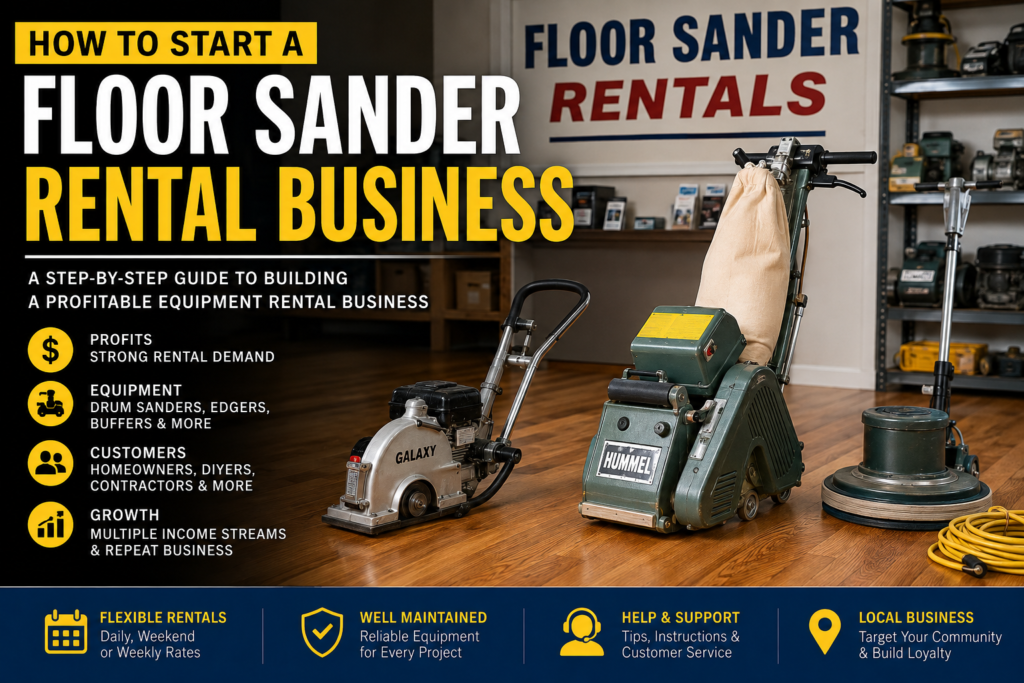
Why Start a Floor Sander Rental Business?
Many people only refinish hardwood floors once every several years. Buying expensive commercial sanding equipment rarely makes financial sense for these customers. Renting allows them to complete projects professionally without making a large investment.
Flooring contractors also benefit from rentals when demand temporarily exceeds their equipment inventory or when they need specialty machines for unique jobs.
Advantages include:
- High-value equipment with excellent rental rates
- Repeat contractor customers
- Weekend rental demand
- Few employees required
- Expandable inventory over time
- Cross-selling opportunities
- Long equipment lifespan with proper maintenance
Services You Can Offer
Drum Floor Sander Rentals
Heavy-duty drum sanders quickly remove old finishes, stains, and imperfections from hardwood floors. These are among the most requested rental machines.
Orbital Floor Sander Rentals
Orbital sanders are easier for beginners to operate and reduce the chance of damaging hardwood floors.
Floor Edger Rentals
Edgers sand areas along walls, under cabinets, and in corners where large machines cannot reach.
Floor Buffer Rentals
Buffers provide final smoothing before staining or sealing the floor.
Dust Collection System Rentals
Professional dust containment systems reduce airborne dust, improve cleanup, and create safer working conditions.
Floor Sanding Supply Sales
Increase profits by selling:
- Sandpaper discs
- Sanding belts
- Edger discs
- Wood filler
- Tack cloths
- Plastic sheeting
- Floor stain
- Polyurethane finishes
- Protective equipment
Who Uses Floor Sander Rentals?
- Homeowners
- DIY renovators
- Flooring contractors
- General contractors
- Property managers
- House flippers
- Historic home restorers
- Commercial maintenance companies
- Apartment maintenance departments
Equipment You’ll Need
Drum Floor Sanders
These machines perform aggressive sanding and are the backbone of most floor refinishing jobs.
Orbital Sanders
Ideal for finish sanding and beginners looking for greater control.
Floor Edgers
Necessary for sanding edges, corners, closets, and tight spaces.
Buffers
Used between coats and during final finishing.
Industrial Vacuums
Essential for dust collection and job site cleanup.
Extension Cords
Heavy-duty commercial extension cords prevent voltage drops during operation.
Hand Sanders
Useful for stairs, trim, and detail work.
Moving Dollies
Help customers safely load and unload heavy sanding equipment.
Estimated Startup Costs
| Expense | Estimated Cost |
|---|---|
| Commercial drum sanders | $8,000–$18,000 |
| Orbital sanders | $2,000–$5,000 |
| Edgers | $1,500–$4,000 |
| Buffers | $2,000–$5,000 |
| Dust collection systems | $2,000–$6,000 |
| Insurance | $1,500–$4,000 annually |
| Storage or warehouse | $500–$2,500 monthly |
| Website and marketing | $1,000–$3,000 |
| Repair tools and spare parts | $1,000–$3,000 |
| Working capital | $5,000–$15,000 |
Most businesses can start with an investment between $25,000 and $60,000, depending on inventory size.
Choosing the Right Equipment
Select commercial-grade machines from reputable manufacturers that are known for reliability and readily available replacement parts. Equipment that breaks down frequently leads to unhappy customers and lost rental income.
Keep multiple sanding grits in stock so customers can complete an entire refinishing project without visiting another supplier.
How Much Can You Charge?
| Equipment | Daily Rental |
|---|---|
| Drum floor sander | $80–$150 |
| Orbital sander | $60–$120 |
| Edger | $40–$80 |
| Buffer | $50–$100 |
| Dust collection system | $30–$75 |
Offer discounted weekend and weekly rental packages to encourage longer bookings and improve equipment utilization.
Legal Requirements
Register your business according to your state and local requirements. Obtain any necessary business licenses and ensure you carry adequate liability insurance to protect against equipment-related accidents or property damage.
Create clear rental agreements that explain deposits, late fees, cleaning expectations, equipment inspection procedures, and customer responsibilities. Always inspect equipment before and after each rental and document its condition with photos when appropriate.
Maintaining Your Rental Equipment
Your floor sanders are the heart of your business. Regular maintenance extends their lifespan, improves safety, and reduces costly downtime. Develop a maintenance schedule for every machine and inspect equipment after each rental before returning it to inventory.
Maintenance tasks should include:
- Inspect sanding drums for wear or damage
- Replace worn belts and bearings
- Clean dust collection systems
- Lubricate moving components
- Inspect electrical cords and plugs
- Test switches and safety features
- Check wheel alignment and handles
- Replace worn vacuum filters
Keep common replacement parts in stock so repairs can be completed quickly without taking equipment out of service for extended periods.
Insurance You’ll Need
Since customers will be transporting and operating expensive equipment, proper insurance is essential. Speak with an insurance provider familiar with rental businesses to ensure you have adequate protection.
- General liability insurance
- Commercial property insurance
- Equipment coverage
- Commercial auto insurance (if offering delivery)
- Workers’ compensation (if hiring employees)
Marketing Your Floor Sander Rental Business
Most customers begin searching online when planning a flooring project. A professional website combined with strong local marketing can keep your equipment booked throughout the year.
Create a Professional Website
Your website should include:
- Rental rates
- Equipment photos
- Online reservation requests
- Operating instructions
- Safety guidelines
- Frequently asked questions
- Customer reviews
- Contact information
Optimize for Local SEO
Create pages targeting searches such as:
- Floor sander rental near me
- Hardwood floor sander rental
- Drum sander rental
- Floor refinishing equipment rental
- Wood floor sanding equipment rental
Build Contractor Relationships
Partner with flooring installers, remodeling contractors, painters, and property management companies that may need additional equipment during busy periods. Repeat contractor customers often provide the most reliable revenue.
Use Social Media
Post before-and-after hardwood floor restoration photos, sanding tips, equipment demonstrations, customer success stories, and seasonal promotions to attract homeowners planning renovation projects.
Additional Revenue Opportunities
Increase profits by expanding your inventory and selling complementary products.
- Floor nailers
- Moisture meters
- Industrial vacuums
- Air movers
- Dehumidifiers
- Protective floor coverings
- Hand tools
- Floor finishing supplies
- Equipment delivery service
- Training sessions for first-time users
How Much Can You Earn?
Your earnings depend on the size of your inventory, rental utilization, pricing, and local demand. A small operation with only a handful of machines can generate a steady side income, while a larger fleet serving contractors and homeowners can become a highly profitable full-time business.
Many successful rental businesses generate annual revenues ranging from $100,000 to more than $400,000. Businesses that also sell sanding supplies, offer equipment delivery, and maintain strong contractor relationships often achieve even higher profits.
Common Mistakes to Avoid
- Buying low-quality equipment
- Skipping regular maintenance
- Failing to inspect machines before rentals
- Not collecting security deposits
- Providing unclear operating instructions
- Ignoring local SEO marketing
- Keeping too little sanding paper in stock
- Underpricing rentals
- Failing to document equipment condition
Frequently Asked Questions
How much does it cost to start a floor sander rental business?
Most businesses require an initial investment of approximately $25,000 to $60,000, depending on the number of machines purchased, storage costs, insurance, and marketing.
Who typically rents floor sanders?
Customers include homeowners, DIY renovators, flooring contractors, remodeling companies, apartment maintenance departments, property managers, and house flippers.
Can this business be operated from home?
Yes. Many owners begin from a home garage or workshop if local zoning permits equipment storage and customer pickups. As inventory grows, moving into a warehouse or commercial space may become necessary.
Should I offer delivery?
Offering delivery can create an additional income stream and make your business more attractive to customers who do not own trucks or trailers capable of transporting heavy equipment.
How long do commercial floor sanders last?
With proper maintenance and timely repairs, commercial-grade floor sanders can remain in service for many years while generating thousands of dollars in rental income.
Conclusion
A floor sander rental business provides an excellent opportunity to serve homeowners and contractors without performing the labor yourself. By investing in quality commercial equipment, maintaining your inventory, building relationships with local contractors, and marketing your services online, you can build a dependable rental business with recurring customers and long-term profitability.
Previous Article
How to Start a Portable Toilet Rental Business
Return To
Start an Equipment Rental Business Guide