Buying the right embroidery machine is one of the biggest decisions you’ll make when starting an embroidery business. The right machine can help you produce professional-quality apparel, complete jobs faster, and build a reputation for consistent workmanship. The wrong machine can slow production, create unnecessary repairs, and limit your ability to grow.
Fortunately, you don’t need the most expensive commercial machine to build a successful business. Many embroidery businesses start with a single machine and upgrade only after demand increases.
The goal is simple: buy equipment that matches your current business needs while leaving room for future growth.
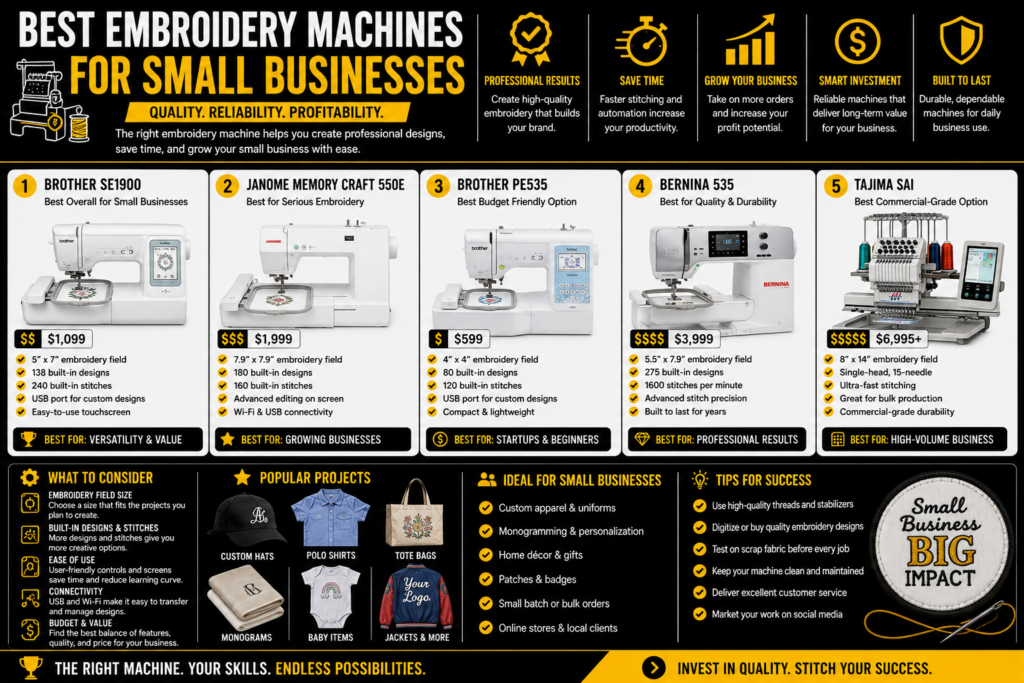
Why Choosing the Right Machine Matters
A quality embroidery machine helps you:
- Produce cleaner embroidery
- Reduce thread breaks
- Improve stitch quality
- Complete orders faster
- Minimize machine downtime
- Increase customer satisfaction
- Build a professional reputation
Reliable equipment also reduces wasted materials and expensive repairs.
Types of Embroidery Machines
Single-Needle Machines
Single-needle machines are designed primarily for hobbyists and beginners.
Pros
- Lower cost
- Easy to learn
- Compact size
Cons
- Frequent thread changes
- Slower production
- Not ideal for commercial work
Best For: Learning embroidery and occasional custom orders.
Single-Head Commercial Machines
These machines have multiple needles and automatically switch thread colors.
Pros
- Faster production
- Professional results
- Less downtime
- Handles larger orders
Cons
- Higher purchase price
Best For: Small businesses planning to produce embroidery regularly.
Multi-Head Commercial Machines
Multi-head machines embroider several garments at the same time.
Pros
- High production capacity
- Faster completion of bulk orders
- Lower labor cost per item
Cons
- Significant investment
- Requires more workspace
Best For: Established embroidery businesses with large commercial accounts.
What Size Machine Should You Buy?
Most new business owners should purchase equipment based on expected production—not future dreams.
If you’re just starting:
- Single-head commercial machine
- Multiple needle colors
- Large embroidery area
- Reliable warranty
- Strong dealer support
Buying more machine than you currently need often delays profitability.
Features to Look For
Look for machines that offer:
- Multiple needles
- Large embroidery field
- Automatic thread trimming
- USB file transfer
- LCD touchscreen
- Adjustable speed
- Automatic thread tension
- Built-in lettering fonts
- Good warranty
- Readily available replacement parts
These features improve efficiency and reduce operator frustration.
How Much Should You Spend?
Your budget should match your business goals.
Entry Level
Estimated Price: $700–$2,000
Suitable for:
- Hobby embroidery
- Learning the craft
- Small custom projects
Small Business
Estimated Price: $4,000–$10,000
Suitable for:
- Home-based businesses
- Commercial customers
- Uniforms
- Hats
- Team apparel
Commercial Production
Estimated Price: $10,000+
Suitable for:
- Large production runs
- Multiple employees
- Wholesale embroidery
- Corporate contracts
Start with equipment that pays for itself rather than purchasing the largest machine available.
Other Equipment You’ll Need
Your embroidery machine is only part of your business.
You’ll also need:
- Computer
- Embroidery software
- Hoops
- Stabilizers
- Bobbins
- Needles
- Thread
- Blank apparel
- Scissors
- Packaging supplies
- Shipping scale
- Storage shelving
Purchasing quality accessories improves production efficiency.
Common Mistakes to Avoid
Many beginners make these mistakes:
- Buying based only on price
- Purchasing more machine than needed
- Ignoring dealer support
- Using low-quality thread
- Skipping regular maintenance
- Forgetting software costs
- Buying without training
A dependable dealer and good customer support can be just as valuable as the machine itself.
Which Embroidery Machine Is Best for Beginners?
For most small businesses, a single-head commercial embroidery machine provides the best balance between affordability, speed, and long-term growth.
It allows you to produce professional-quality work while keeping startup costs manageable. As your customer base grows, you can always expand by adding additional machines.
Frequently Asked Questions:
Should I buy a single-needle or commercial embroidery machine?
If you’re starting a business, a commercial multi-needle machine is usually the better long-term investment because it increases production speed and reduces manual thread changes.
How much should I spend on an embroidery machine?
Most small businesses invest between $4,000 and $10,000 for a dependable commercial machine.
Can I start an embroidery business with one machine?
Yes. Many successful embroidery businesses begin with a single commercial machine and expand as demand increases.
Do embroidery machines require maintenance?
Yes. Regular cleaning, oiling, and replacing worn needles help maintain stitch quality and extend machine life.
Can I embroider hats and jackets?
Most commercial embroidery machines can handle hats, jackets, polos, hoodies, bags, and many other products when used with the proper hoops and accessories.
Is financing an embroidery machine a good idea?
Financing can make sense if your expected sales comfortably cover the monthly payment and you have a realistic business plan.
Final Thoughts
The best embroidery machine isn’t necessarily the most expensive model—it’s the one that fits your budget, production goals, and customer demand. Investing in dependable equipment allows you to produce professional-quality embroidery while building a profitable business one customer at a time.
As your business grows, you can upgrade your equipment, increase production capacity, and expand your services without replacing the foundation you’ve already built.
Continue Your Manufacturing Journey
If you’re still exploring manufacturing opportunities, start with our complete guide to How to Start a Small Manufacturing Business to see how embroidery fits into the larger manufacturing industry and compare it with other profitable business ideas.
Read More: