
A laundromat business can provide an essential service to customers who need access to commercial washing machines and dryers. Unlike many service businesses that depend heavily on appointments, a laundromat can generate revenue from customers throughout the day and potentially operate with limited staffing.
However, starting a laundromat requires careful planning because commercial laundry equipment, utilities, renovations, and a suitable location can require a significant investment. The success of the business depends heavily on choosing the right location, controlling operating expenses, maintaining equipment, and providing customers with a clean, safe, and convenient place to do their laundry.
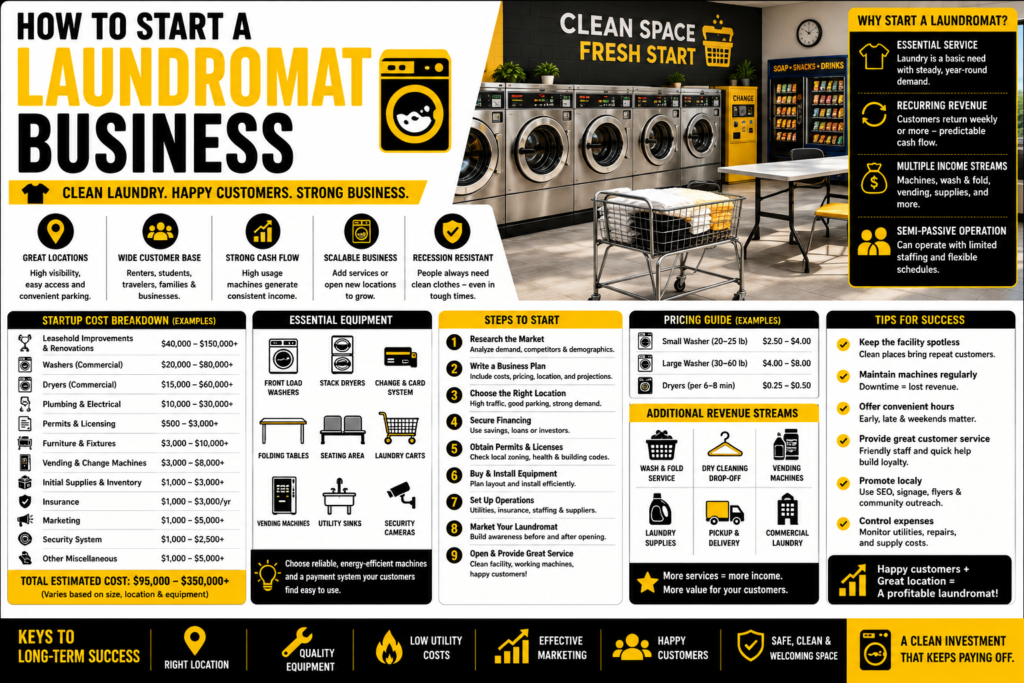
What Is a Laundromat Business?
A laundromat is a self-service laundry facility where customers pay to use commercial washing machines and dryers. Some laundromats also provide additional services such as wash-and-fold, dry cleaning drop-off, vending machines, laundry supplies, and commercial laundry services.
Common Laundromat Services
- Self-service washing machines
- Commercial dryers
- Large-capacity washers
- Wash-and-fold service
- Laundry supply sales
- Vending machines
- Dry cleaning drop-off
- Commercial laundry services
- Pickup and delivery laundry services
- Seating and customer waiting areas
Why Start a Laundromat Business?
Laundromats provide an essential service and can generate revenue from a broad customer base. People who do not own washing machines, have limited laundry capacity, or need large commercial machines may rely on laundromats regularly.
Essential Service
Clean clothing and household laundry are basic needs. This can create consistent demand even when customers reduce spending on nonessential products and services.
Potential for Recurring Customers
Customers may visit a laundromat weekly or even several times per week. Building a convenient, clean, and reliable facility can encourage repeat visits.
Multiple Revenue Streams
A laundromat does not have to rely exclusively on washer and dryer revenue. Additional services and products can increase the amount of revenue generated from each customer.
Potential for Limited Staffing
Some laundromats can operate with relatively few employees compared with traditional retail or restaurant businesses. However, regular cleaning, maintenance, customer service, and management are still necessary.
How Much Does It Cost to Start a Laundromat?
A laundromat can require a substantial startup investment. The total cost depends on whether you purchase an existing laundromat, build a new facility, lease an existing location, renovate a space, or construct a new building.
Common Startup Expenses
- Commercial washers
- Commercial dryers
- Payment systems
- Building lease or purchase
- Plumbing installation
- Electrical upgrades
- Gas infrastructure where applicable
- Ventilation
- Water heaters
- Interior renovations
- Lighting
- Security cameras
- Signage
- Seating and folding tables
- Change machines where applicable
- Vending machines
- Business registration
- Insurance
- Permits and inspections
- Marketing
Commercial laundry equipment and utility infrastructure can represent a large portion of the investment. Conduct detailed financial research before signing a lease or purchasing a property.
Choosing a Laundromat Location
Location is one of the most important factors in laundromat success. Customers generally want a facility that is convenient to reach and easy to use.
Look for Areas With Strong Demand
Potential customers may include renters, apartment residents, students, workers, and households that do not have adequate laundry equipment.
Evaluate Nearby Housing
Study the types of housing near potential locations. Apartment communities and rental properties can provide a significant customer base, particularly in areas where many residents do not have convenient access to washers and dryers.
Consider Parking
Customers may carry large loads of laundry, so convenient parking can be important. A location with easy vehicle access can make the facility more attractive.
Check Visibility
A visible location can help customers discover the business. Clear signage can make the laundromat easier to identify from nearby roads.
How to Research a Laundromat Location
Study Competitors
Visit nearby laundromats and observe their prices, machine availability, cleanliness, operating hours, parking, customer traffic, and overall condition.
Analyze Customer Demographics
Research population density, rental housing, household income, apartment occupancy, student populations, and other factors that may influence demand.
Study Utility Costs
Laundromats consume significant amounts of water, electricity, and potentially gas. Obtain realistic utility estimates before making a location decision.
Check Zoning and Permits
Verify that the property can legally operate as a laundromat and determine what permits, inspections, plumbing requirements, and other approvals may be required.
Commercial Laundry Equipment
Commercial machines are designed to handle much greater usage than typical residential equipment. The right equipment mix depends on your customer base and available space.
Washing Machines
Consider offering several machine sizes. Small machines can serve individual customers, while larger machines can attract families and customers with bulky loads.
Dryers
Provide enough dryer capacity to prevent customers from waiting excessively during busy periods. Dryer size should be matched appropriately with your washer capacity.
Payment Systems
Modern laundromats may accept coins, cards, mobile payments, or other electronic payment methods. A convenient payment system can improve the customer experience.
Folding Tables
Customers need clean, durable surfaces where they can sort and fold clothing.
Seating
Comfortable seating can make waiting easier for customers who remain at the facility while their laundry is being processed.
How to Start a Laundromat Business
1. Research the Market
Study your target community, competitors, customer demographics, rental housing, traffic patterns, and potential locations.
2. Develop a Business Plan
Your business plan should include startup costs, equipment expenses, rent or property costs, utilities, maintenance, insurance, labor, pricing, expected customer volume, and marketing expenses.
3. Choose a Location
Evaluate several potential properties instead of choosing the first available location. Location can have a major impact on customer volume and long-term profitability.
4. Determine Your Equipment Needs
Choose equipment based on the size of the facility, expected customer demand, available utility capacity, and your budget.
5. Review Utility Requirements
Make sure the property has sufficient water, drainage, electrical service, gas service where applicable, ventilation, and other infrastructure needed for commercial laundry equipment.
6. Set Up the Business
Choose your business structure, register the company where required, establish business banking, and obtain appropriate insurance.
7. Obtain Permits and Inspections
Contact local authorities to determine the permits, inspections, construction requirements, and other approvals required before opening.
8. Install Equipment
Work with qualified professionals to install commercial washers, dryers, plumbing, electrical systems, ventilation, and other equipment.
9. Market the Laundromat
Begin marketing before the grand opening and continue promoting the business after launch.
How to Price Laundromat Services
Your pricing should cover equipment costs, utilities, rent, maintenance, labor, insurance, supplies, payment processing, taxes, and other operating expenses.
Washer Pricing
Set prices based on machine capacity, local competition, utility costs, and customer demand.
Dryer Pricing
Dryer pricing can be based on time or another local pricing structure. Monitor energy costs carefully when determining rates.
Wash-and-Fold Pricing
If you offer wash-and-fold services, you can charge based on weight, individual items, or another appropriate method.
How to Find Laundromat Customers
Create a Professional Website
Your website should display the location, operating hours, available services, pricing information where appropriate, contact information, parking information, and any special features.
Use Local SEO
Optimize your website for searches related to laundromats and laundry services in your city or service area.
Create a Local Business Profile
Make sure your business information is accurate and easy for customers to find online. Include your hours, address, phone number, website, and available services.
Use Signage
Clear exterior signage can help nearby residents identify the laundromat and understand what services are available.
How to Build Customer Loyalty
Customers have many options in some markets, so providing a clean and convenient experience can help you stand out.
Keep the Facility Clean
Clean floors, machines, folding tables, bathrooms, and customer areas can make a major difference in how customers perceive your business.
Maintain the Machines
Broken machines can frustrate customers and reduce revenue. Establish a maintenance schedule and repair problems quickly.
Provide Good Lighting
Bright, comfortable lighting can make the facility feel cleaner and safer.
Offer Convenient Hours
Extended hours can provide an advantage in markets where customers have different work schedules.
Additional Revenue Streams
Adding complementary services can increase revenue without requiring customers to leave the facility.
Wash-and-Fold Service
Customers who are too busy to do their own laundry may pay for professional washing and folding.
Pickup and Delivery
Depending on your local market, pickup and delivery can expand your customer base beyond people who physically visit the laundromat.
Vending Machines
Vending machines can provide laundry products, snacks, drinks, or other items customers may need.
Laundry Supplies
You can sell detergent, dryer sheets, fabric softener, laundry bags, and other commonly needed supplies.
Commercial Laundry
Local businesses such as salons, restaurants, cleaning companies, gyms, and other organizations may need laundry services.
How to Manage Laundromat Expenses
Utility and maintenance costs can significantly affect profitability, so expense management should be a major part of your business plan.
Monitor Water Usage
Track water consumption and investigate unusual increases. Leaks and inefficient equipment can significantly increase costs.
Monitor Energy Usage
Efficient dryers and other equipment may help control utility costs. Review energy consumption regularly.
Maintain Equipment
Regular maintenance can reduce unexpected breakdowns and extend equipment life.
Control Labor Costs
Schedule employees according to actual customer demand and the amount of cleaning and maintenance required.
Security and Customer Safety
A laundromat should provide customers with a clean and comfortable environment.
Security Cameras
Security cameras can help deter theft and provide documentation when incidents occur. Follow applicable privacy and surveillance laws.
Good Lighting
Well-lit entrances, parking areas, and interior spaces can improve the customer experience.
Regular Cleaning
Establish a cleaning schedule for floors, machines, bathrooms, folding tables, and other customer areas.
Common Laundromat Business Mistakes
Choosing a Location Based Only on Cheap Rent
A low-rent location may not generate enough customers to support the business. Demand should be more important than rent alone.
Underestimating Utility Costs
Water, electricity, gas, sewer, and other utility costs can have a significant effect on profitability.
Buying the Wrong Equipment
Equipment should match the needs of the market. Too many machines or the wrong mix of capacities can waste valuable space and capital.
Ignoring Maintenance
Broken machines mean lost revenue and frustrated customers. Preventive maintenance should be part of your operating system.
Poor Customer Experience
A dirty, poorly lit, or uncomfortable laundromat can quickly lose customers to competitors.
How to Grow a Laundromat Business
Add Wash-and-Fold Services
Adding wash-and-fold can provide another revenue stream and allow you to serve customers who value convenience.
Offer Pickup and Delivery
A pickup and delivery service can expand your market and create opportunities to serve busy households and businesses.
Upgrade Equipment
Modern equipment may improve efficiency, customer convenience, and operating costs. Evaluate the return on investment before replacing functioning machines.
Add Commercial Accounts
Commercial customers can provide recurring laundry volume. Target businesses whose operations require regular washing and drying.
Open Additional Locations
Once the first laundromat is consistently profitable and operating efficiently, opening another location can provide a path for expansion.
Is a Laundromat Business Profitable?
A laundromat can be profitable when it has strong customer demand, an appropriate location, efficient equipment, controlled utility costs, and effective management.
However, laundromats can require significant upfront investment and ongoing maintenance. Revenue alone does not determine profitability. You need to carefully track rent, utilities, equipment financing, repairs, labor, insurance, supplies, taxes, and other operating costs.
Final Thoughts
Starting a laundromat business can provide an opportunity to build a business around an essential service with recurring customer demand. The biggest decisions involve choosing the right location, understanding utility requirements, selecting appropriate equipment, and developing a customer-friendly facility.
Take the time to research the local market before investing in equipment or signing a lease. If you establish a convenient location, maintain clean and reliable equipment, control expenses, and provide excellent customer service, you can build a laundromat with the potential for long-term revenue and expansion.
Related Articles
- How to Start a Specialty Service Business: Complete Guide
- Pet Waste Removal Business
- Bicycle Repair Business
- Tool Sharpening Business
- Firewood Delivery Business
- Pet House Assembly Business
- Food Truck Business
Previous Article: How to Start a Food Truck Business
Return To: Start A Specialty Service Business