A tool sharpening business can be a practical specialty service for someone who enjoys working with tools and wants to build a local service company. Knives, lawn mower blades, garden tools, woodworking tools, scissors, and other cutting tools eventually become dull and need to be sharpened or serviced.
Many customers would rather pay a professional than purchase replacement tools or spend time sharpening them themselves. This creates an opportunity for a specialized business that provides convenient sharpening services to homeowners, tradespeople, restaurants, landscapers, barbers, salons, woodworkers, and other customers.
What Does a Tool Sharpening Business Do?
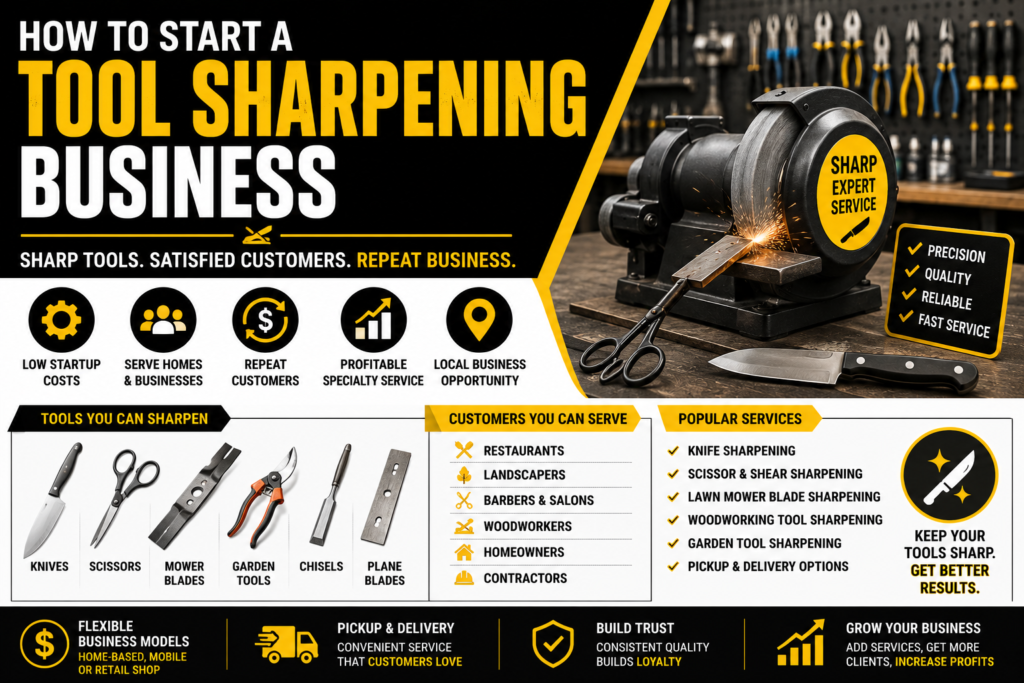
A tool sharpening business restores the cutting edge of tools and equipment. Depending on your skills and equipment, you can specialize in specific tools or offer a broader sharpening service.
Common Tool Sharpening Services
- Kitchen knife sharpening
- Scissor sharpening
- Lawn mower blade sharpening
- Garden tool sharpening
- Hedge trimmer blade sharpening
- Woodworking tool sharpening
- Chisel sharpening
- Plane blade sharpening
- Pruning tool sharpening
- Shear sharpening
- Professional tool sharpening
- Commercial sharpening services
Why Start a Tool Sharpening Business?
Tool sharpening is a specialty service because it requires knowledge, equipment, and attention to detail. Customers may have valuable tools that they want to continue using instead of replacing.
Specialized Service
Instead of competing with every general service business, you can focus on a specific skill. Becoming known locally for reliable sharpening can help differentiate your company.
Potentially Low Overhead
A small sharpening operation may not require a traditional storefront. Depending on local regulations, you could potentially operate from a workshop or provide mobile sharpening services.
Repeat Customers
Tools become dull through normal use, which means customers may return periodically. Professional customers who use tools every day can become especially valuable repeat customers.
Multiple Customer Markets
You can serve residential customers as well as businesses. Restaurants, landscapers, barbers, salons, contractors, woodworkers, and other professionals may regularly need sharpening services.
Types of Tool Sharpening Businesses
There are several ways to structure a sharpening business. Your choice will affect your startup costs, equipment, service area, and marketing strategy.
Home-Based Sharpening Business
A home workshop can provide a relatively inexpensive way to begin. Customers can drop off tools, or you can arrange pickup and delivery if permitted in your area.
Mobile Sharpening Business
A mobile sharpening business travels directly to customers. This can be particularly useful for commercial customers who cannot easily operate without their tools.
Retail Sharpening Shop
A commercial location can provide a visible place for customers to drop off and collect tools. A storefront may also allow you to sell related products and accessories.
Pickup and Delivery Service
Another model is to collect tools from customers, sharpen them at your workshop, and return them when completed. This can be convenient for both residential and commercial customers.
How Much Does It Cost to Start a Tool Sharpening Business?
Startup costs depend heavily on the type of sharpening services you plan to offer. A basic operation may require only a limited selection of sharpening equipment, while a professional shop serving multiple industries may require considerably more specialized machinery.
Common Startup Expenses
- Sharpening machines
- Grinding wheels
- Sharpening stones
- Honing equipment
- Bench grinder
- Workbenches
- Clamps and fixtures
- Safety equipment
- Replacement wheels and abrasives
- Storage containers
- Business registration
- Insurance
- Vehicle expenses
- Website and domain
- Advertising
It is usually better to start with equipment that matches the services you actually plan to sell. You can add specialized machines as customer demand develops.
Tool Sharpening Equipment
The equipment you need depends on the tools you plan to sharpen. Different tools require different sharpening methods, angles, fixtures, and levels of precision.
Basic Equipment
- Bench grinder
- Sharpening stones
- Honing equipment
- Grinding wheels
- Workholding fixtures
- Files
- Measuring tools
- Cleaning equipment
- Workbench
- Safety glasses
- Hearing protection
- Protective gloves where appropriate
Specialized Equipment
As you expand your service menu, you may need specialized equipment for specific blades, woodworking tools, scissors, industrial tools, or other cutting equipment.
Learn the correct procedures for each type of tool before offering the service. Improper sharpening can damage a tool or create a safety problem for the customer.
How to Start a Tool Sharpening Business
Starting a sharpening business requires more than purchasing a grinder. You need to develop the skills to produce consistent results and build a system for accepting, tracking, sharpening, and returning customer tools.
1. Research Your Local Market
Look for existing sharpening businesses in your area and identify the services they provide. Pay attention to customer reviews, service areas, pricing, turnaround times, and the types of customers they serve.
Look for underserved markets. There may be opportunities to provide mobile service, faster turnaround, pickup and delivery, or specialized sharpening that local competitors do not offer.
2. Choose Your Specialty
Consider starting with a limited selection of tools. Becoming highly proficient at a few services can be better than offering dozens of services before you have the necessary skills and equipment.
3. Develop Your Skills
Sharpening requires practice and consistency. Learn how different materials and cutting edges behave and how to maintain appropriate angles and finishes.
4. Set Up Your Workspace
Create a clean, organized workspace with adequate lighting, ventilation, electrical capacity, work surfaces, storage, and safety equipment.
5. Set Up the Business
Choose a business name and structure, register the business where required, establish separate business financial accounts, and check local requirements that apply to your operation.
6. Purchase Equipment
Purchase the equipment needed for your initial service menu. Avoid buying expensive specialty machinery until you have established demand for the related service.
7. Start Marketing
Promote your services to homeowners and businesses that regularly use cutting tools. Demonstrations and before-and-after examples can be particularly effective marketing tools.
How to Price Tool Sharpening Services
Sharpening services are often priced per item, although commercial customers may receive volume pricing or customized service agreements.
Factors That Affect Pricing
- Type of tool
- Size of the tool
- Condition of the cutting edge
- Amount of work required
- Number of items
- Turnaround time
- Pickup and delivery
- Commercial versus residential service
Price Per Item
Per-item pricing is easy for customers to understand. You might have separate prices for knives, scissors, mower blades, garden tools, and other common items.
Volume Pricing
Businesses with many tools may be more interested in volume pricing. A restaurant, landscaping company, salon, or woodworking business could provide multiple items during each service visit.
Pickup and Delivery Fees
If you provide pickup and delivery, consider charging a fee or building the transportation cost into your pricing. Do not overlook the time and fuel required to travel between customers.
How to Find Tool Sharpening Customers
Your marketing strategy should target people and businesses that regularly use cutting tools.
Homeowners
Homeowners may need kitchen knives, garden tools, scissors, pruning tools, mower blades, and other household equipment sharpened.
Landscaping Businesses
Landscapers and lawn care companies may regularly use mower blades, hedge trimmer blades, pruning tools, and other cutting equipment.
Restaurants
Restaurants rely heavily on kitchen knives and other cutting tools. A reliable sharpening service can save employees time and help maintain equipment.
Barbers and Salons
Barbers, hairstylists, groomers, and other professionals may need scissors or shears sharpened periodically.
Woodworkers and Contractors
Woodworkers, carpenters, cabinetmakers, and other tradespeople may need chisels, plane blades, saw blades, and other tools maintained.
How to Market a Tool Sharpening Business
Create a Professional Website
Your website should clearly explain which tools you sharpen, where you provide service, how customers submit tools, and how they can contact you.
Individual service pages can also help your website target searches for specific services such as knife sharpening, scissor sharpening, mower blade sharpening, or garden tool sharpening.
Use Local SEO
Optimize your website and local business listings for searches related to sharpening services in your service area. Include your service area naturally rather than filling pages with repetitive location keywords.
Show Before-and-After Results
Photos and videos can demonstrate the value of professional sharpening. Show tools before sharpening and the finished result whenever practical.
Use Local Networking
Visit businesses that use sharpening services and introduce your company. Commercial customers can become valuable sources of repeat revenue.
How to Get Your First Customers
Your first customers may come from your personal network, local businesses, community groups, online searches, referrals, and introductory promotions.
Offer a First-Time Customer Promotion
A limited promotion can encourage customers to test your service. Avoid setting the promotional price so low that you cannot cover your time and operating costs.
Target Businesses Directly
Visit local businesses that use cutting tools and explain how your service can save them time and money compared with replacing tools.
Ask for Referrals
Customers who are satisfied with the quality of your sharpening may recommend you to coworkers, friends, neighbors, and other businesses.
How to Build Recurring Revenue
Recurring customers can make a sharpening business more predictable. Instead of waiting for individual customers to contact you, develop relationships with businesses that need sharpening on a regular schedule.
Create Regular Service Routes
For commercial customers, you may be able to create weekly, biweekly, or monthly pickup and delivery routes.
Offer Maintenance Programs
A scheduled sharpening program can help businesses keep their tools maintained without having to remember when they need service.
Target High-Use Customers
Businesses that use cutting tools every day can potentially generate more repeat business than occasional residential customers.
How to Operate a Tool Sharpening Business Efficiently
Use Customer Tags or Work Orders
Every tool should be clearly identified so it can be returned to the correct customer. Use a work order or tracking system to record the customer’s information, items received, services requested, and completion date.
Inspect Tools Before Sharpening
Inspect each item before beginning work. Look for damage, excessive wear, cracks, missing components, or other conditions that may affect whether the item can be safely serviced.
Communicate About Problems
If an item requires more work than expected or cannot be safely sharpened, contact the customer before proceeding.
Keep Your Workspace Organized
Sharpening involves abrasive equipment, small parts, tools, and potentially sharp objects. An organized workspace can improve productivity and reduce mistakes.
Safety Considerations
Tool sharpening involves rotating equipment, sparks, sharp edges, dust, and other hazards. Safety should be a major part of your business operations.
Use Appropriate Protective Equipment
Use appropriate eye, hearing, respiratory, and other protection based on the equipment and materials involved. Follow manufacturer instructions for your machinery.
Maintain Your Equipment
Inspect grinders, wheels, guards, electrical connections, and other equipment regularly. Replace worn or damaged components according to manufacturer recommendations.
Keep Sharp Tools Secure
Use appropriate containers and handling procedures when transporting customer tools. Make sure sharp items cannot injure employees, customers, or delivery personnel.
Common Tool Sharpening Business Mistakes
Offering Too Many Services Too Soon
Do not offer sharpening services you cannot perform consistently. Start with a manageable selection and expand as your skills and equipment improve.
Underpricing Your Work
Sharpening may look simple to customers, but your price needs to cover equipment, abrasives, electricity, labor, setup, cleanup, insurance, taxes, and other costs.
Ignoring Tool Condition
Some tools may be too damaged or worn to sharpen economically. Inspect every item before promising a particular result.
Poor Customer Tracking
Misplacing customer tools can quickly damage your reputation. Develop a reliable intake and labeling system from the beginning.
Ignoring Commercial Customers
Residential customers can provide valuable business, but commercial accounts may offer larger and more consistent orders.
How to Grow a Tool Sharpening Business
Add New Sharpening Services
Once you have mastered your initial services, consider adding additional tool categories that fit your equipment and customer base.
Build Commercial Accounts
Develop relationships with restaurants, landscaping companies, salons, woodworking shops, contractors, and other businesses that regularly need sharpening.
Offer Pickup and Delivery
Pickup and delivery can make your service more convenient while creating opportunities to develop regular commercial routes.
Hire and Train Employees
When demand grows beyond your personal capacity, trained employees can help increase production. Because sharpening quality is important, establish clear procedures and quality-control standards before expanding your team.
Expand Your Service Area
Once your local customer base is strong, you can expand into nearby communities. Route density should remain a priority so transportation costs do not consume your profits.
Is a Tool Sharpening Business Profitable?
A tool sharpening business can be profitable when you develop the necessary skills, price services appropriately, control operating expenses, and build a steady customer base.
Commercial customers and recurring service arrangements can be particularly valuable because they may provide larger orders and more predictable demand. However, profitability will depend on your local market, equipment costs, labor requirements, pricing, competition, and customer volume.
Final Thoughts
Starting a tool sharpening business can be an attractive specialty service opportunity for someone who enjoys working with tools and wants to develop a focused local business. You can start with a small selection of sharpening services and expand as your skills, equipment, and customer base grow.
The key is to provide consistent results, maintain safe work practices, price your services correctly, and build relationships with customers who need sharpening regularly. A combination of residential customers, commercial accounts, and pickup-and-delivery services can create multiple revenue opportunities as the business develops.
Related Articles
- How to Start a Specialty Service Business: Complete Guide
- Pet Waste Removal Business
- Bicycle Repair Business
- Firewood Delivery Business
- Pet House Assembly Business
Previous Article: How to Start a Bicycle Repair Business
Next Article: How to Start a Firewood Delivery Business