
A firewood delivery business can be a practical local service for entrepreneurs who want to sell and deliver a product that customers regularly need. Homeowners with fireplaces, wood stoves, fire pits, outdoor ovens, and other wood-burning appliances may purchase firewood throughout the year, with demand often increasing during colder months.
A firewood business can be operated on a small scale or developed into a larger delivery operation. You can start by sourcing, splitting, stacking, and delivering firewood locally, then expand your inventory, equipment, service area, and customer base as demand grows.
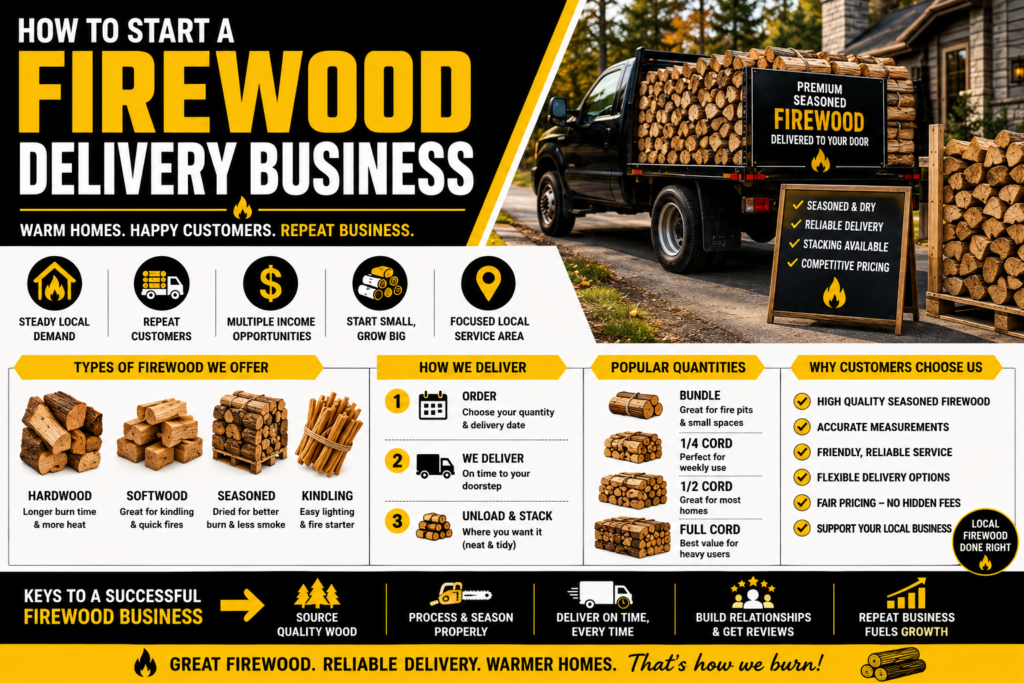
What Does a Firewood Delivery Business Do?
A firewood delivery business supplies customers with cut and split firewood and delivers it to their homes or other locations. Some businesses purchase already-processed firewood, while others process logs themselves.
Common Firewood Services
- Firewood delivery
- Seasoned firewood sales
- Bundled firewood
- Full-cord firewood
- Half-cord firewood
- Face-cord or rack delivery
- Kindling sales
- Firewood stacking
- Local firewood pickup
- Restaurant and commercial firewood delivery
- Seasonal firewood supply
The exact products and measurements you offer should be clearly explained to customers. Firewood quantities can be described differently in different markets, so make sure customers understand exactly what they are purchasing.
Why Start a Firewood Delivery Business?
Firewood is a physical product that can be difficult for customers to transport and process themselves. This creates an opportunity to make the purchase more convenient through delivery.
Local Customer Base
Firewood is generally purchased close to where it will be used. This makes it possible to build a business around a defined local service area.
Repeat Customers
Customers who regularly use fireplaces, wood stoves, or outdoor fire pits may purchase firewood repeatedly. Building relationships with these customers can create repeat sales each season.
Multiple Revenue Opportunities
You can potentially earn revenue from firewood, kindling, delivery, stacking, bundled wood, and commercial accounts.
Can Start Small
You do not necessarily need a large commercial operation to begin. Depending on your location and available resources, you may be able to start with a pickup or trailer and a relatively small inventory.
How Much Does It Cost to Start a Firewood Delivery Business?
Startup costs depend on how you obtain and process your firewood. A delivery business that purchases already-split wood may require less equipment than a business that purchases logs and processes everything itself.
Common Startup Expenses
- Pickup truck or delivery vehicle
- Utility trailer
- Chainsaw
- Log splitter
- Firewood racks
- Tarps and covers
- Handling equipment
- Safety equipment
- Fuel
- Business registration
- Insurance
- Website and domain
- Advertising
- Firewood inventory
If you already own a suitable vehicle or some of the required equipment, your initial investment may be lower. Start with equipment that matches the size of your operation and expand as sales increase.
Firewood Equipment You May Need
The equipment required will depend on whether you simply deliver firewood or process logs yourself.
Basic Delivery Equipment
- Pickup truck
- Utility trailer
- Firewood racks
- Tarps
- Straps and tie-downs
- Hand truck or cart
- Measuring equipment
- Work gloves
- Work boots
Firewood Processing Equipment
If you process your own firewood, additional equipment may include a chainsaw, log splitter, saw horses, wedges, handling equipment, and storage structures.
Follow the manufacturer’s safety instructions for all equipment and use appropriate protective equipment when cutting and processing wood.
How to Start a Firewood Delivery Business
1. Research Your Local Market
Begin by researching local demand. Look at competitors and determine what types of firewood they sell, how they package it, their delivery areas, their customer reviews, and how they advertise.
Consider the number of homes in your area that use fireplaces, wood stoves, fire pits, outdoor ovens, and other wood-burning equipment.
2. Determine Your Firewood Source
You need a reliable source of wood before accepting large numbers of orders. Potential sources may include tree service companies, land clearing operations, sawmills, timber operations, or other legitimate sources.
Make sure the wood you purchase and sell complies with applicable local and state regulations.
3. Decide Whether to Process the Wood
You can purchase firewood that is already cut and split or process logs yourself. Processing your own wood can provide greater control over the product but requires additional equipment, labor, storage, and safety considerations.
4. Establish a Storage Area
You need adequate space to store your inventory. Keep firewood organized and allow appropriate airflow to support drying and seasoning.
5. Set Up Your Business
Choose a business name and structure, register the business where required, establish separate business financial accounts, and check local zoning and licensing requirements.
6. Purchase Equipment
Start with the vehicle, trailer, tools, storage, and safety equipment necessary for your initial operation. Add larger equipment as your sales volume justifies the investment.
7. Build Your Customer Base
Begin marketing to homeowners and businesses that use firewood. Focus on building a reputation for reliable delivery, accurate quantities, good-quality wood, and professional service.
Understanding Firewood Types
Customers may have different preferences depending on how they use their firewood. Learn about the characteristics of the types of wood commonly available in your area.
Hardwood
Hardwoods are commonly valued for producing longer-lasting fires and good heat output. The specific characteristics vary by species.
Softwood
Softwoods can be useful for starting fires and may be appropriate for certain outdoor applications. They often burn differently from hardwoods.
Seasoned Firewood
Seasoned firewood has been allowed to dry after being cut and split. Properly dried firewood generally burns more efficiently than freshly cut wood.
Dry Firewood
Moisture content matters when selling firewood. Customers should understand what they are purchasing and how the wood has been stored and prepared.
How to Price Firewood
Pricing should account for the cost of the wood, processing, labor, storage, transportation, equipment, fuel, insurance, and other operating expenses.
Price by Quantity
Firewood can be sold in different quantities depending on local practices. Clearly explain the quantity customers will receive before accepting an order.
Charge for Delivery
Delivery can be included in the price or charged separately. If customers are located farther away, a delivery fee can help cover additional fuel and travel time.
Charge for Stacking
Stacking firewood is an additional service that requires labor. If you offer it, consider charging separately or including it in a premium delivery package.
How to Find Firewood Delivery Customers
Firewood is a local product, so your marketing should focus on customers within a reasonable delivery distance.
Create a Professional Website
Your website should clearly show the types of firewood you sell, available quantities, service area, delivery options, and how customers can place an order.
Use Local SEO
Optimize your website for searches related to firewood delivery in your service area. Create useful pages that explain your firewood types, delivery options, and ordering process.
Use Local Business Listings
Make sure your business name, phone number, service area, hours, and website are accurate across your online business profiles.
Use Social Media
Photos of your firewood inventory, delivery vehicles, neatly stacked wood, and preparation process can help customers understand what they are buying.
How to Get Your First Firewood Customers
Target Homeowners
Homeowners with fireplaces, wood stoves, and outdoor fire pits are natural customers. Focus your advertising on communities where these types of properties are common.
Offer an Introductory Delivery Special
A limited-time promotion can encourage customers to place their first order. Make sure your promotional price still covers delivery and operating expenses.
Build Referral Relationships
Potential referral sources include chimney professionals, fireplace installers, landscaping companies, property managers, campgrounds, and other businesses that serve customers who use firewood.
Ask for Reviews
After completing successful deliveries, ask satisfied customers to leave honest reviews. Reviews can help new customers feel more comfortable ordering from a local company.
How to Build Repeat Firewood Customers
Repeat customers can be extremely valuable because they already understand your service and may need firewood every season.
Keep Customer Records
Record customer information, delivery locations, quantities purchased, preferred firewood types, and previous orders. This allows you to contact customers when the next season approaches.
Offer Seasonal Ordering
Encourage customers to order early before cold weather increases demand. Early ordering can also help you plan your inventory and delivery schedule.
Create Customer Loyalty Offers
You may offer discounts or other incentives to repeat customers while still maintaining profitable pricing.
Firewood Storage and Inventory Management
Inventory management is one of the most important parts of the business. Firewood takes up considerable space, and poor storage can result in lost product or reduced quality.
Keep Wood Off the Ground
Use racks, pallets, or other suitable methods to keep firewood elevated and improve airflow.
Protect Against Excess Moisture
Protect the top of the wood from excessive rain while allowing sufficient airflow around the sides. Avoid creating conditions that trap moisture inside the wood pile.
Rotate Your Inventory
Organize your inventory so older wood is sold appropriately and customers receive the type of firewood you advertise.
How to Deliver Firewood Efficiently
Group Deliveries by Area
Schedule customers in nearby communities on the same day when possible. This can reduce fuel expenses and increase the number of deliveries you can complete.
Plan Your Delivery Routes
Use route planning to reduce unnecessary driving. A well-organized delivery schedule can significantly improve your daily productivity.
Confirm Delivery Details
Before leaving for a delivery, confirm the customer’s address, quantity, access instructions, preferred drop-off location, and any stacking service.
Additional Services You Can Offer
Adding related services can increase the amount of revenue generated from each customer.
Firewood Stacking
Some customers may be willing to pay for you to stack the firewood after delivery.
Kindling
Bundled kindling can provide an additional product that customers can purchase with their firewood.
Firewood Bundles
Smaller bundles may be useful for customers who only need a small amount of wood for outdoor fire pits or occasional fires.
Commercial Delivery
Restaurants, campgrounds, lodges, outdoor event venues, and other businesses may require larger quantities of firewood.
Common Firewood Delivery Business Mistakes
Buying Too Much Inventory
Large inventory purchases can tie up cash and require significant storage space. Build inventory according to realistic demand.
Underestimating Delivery Costs
Fuel, vehicle maintenance, loading, unloading, and driving time can significantly affect profitability. Include these expenses when setting prices.
Not Explaining Quantities Clearly
Customers should know exactly how much firewood they are purchasing. Clearly describe your measurement and delivery standards.
Poorly Stored Firewood
Improper storage can affect wood quality and create customer complaints. Establish a consistent storage system.
Ignoring Local Regulations
Firewood transportation and sales can be subject to local or state requirements, including rules intended to prevent the spread of pests and diseases. Check applicable regulations before transporting firewood across jurisdictional boundaries.
How to Grow a Firewood Delivery Business
Increase Your Delivery Capacity
As demand increases, a larger trailer or additional delivery vehicle may allow you to handle more orders.
Expand Your Customer Base
Target homeowners, businesses, campgrounds, restaurants, property managers, and other customers that regularly use firewood.
Add More Products
Kindling, bundled wood, and related fire-starting products can increase average order value.
Hire Delivery Help
When order volume becomes too large for one person, employees can help with loading, delivery, stacking, and customer service.
Expand Your Service Area Carefully
Expanding into nearby communities can increase sales, but make sure additional travel produces enough revenue to justify the increased fuel and labor costs.
Is a Firewood Delivery Business Profitable?
A firewood delivery business can be profitable when you have access to affordable inventory, control processing and storage costs, price delivery properly, and build a strong local customer base.
Profitability can vary significantly based on the cost of wood, equipment, labor, storage, transportation, seasonality, local competition, and customer demand. Efficient delivery routes and repeat customers can have a major impact on the bottom line.
Final Thoughts
Starting a firewood delivery business can be a practical way to build a local specialty service company around a product customers need. You can begin with a relatively small inventory and a basic delivery setup, then expand as demand grows.
Success depends on reliable firewood quality, accurate quantities, competitive pricing, efficient delivery, proper storage, and excellent customer service. Build a strong local reputation and focus on repeat customers, and the business can develop into a dependable seasonal and year-round source of income.
Related Articles
- How to Start a Specialty Service Business: Complete Guide
- Pet Waste Removal Business
- Bicycle Repair Business
- Tool Sharpening Business
- Pet House Assembly Business
Previous Article: How to Start a Tool Sharpening Business
Next Article: How to Start a Pet House Assembly Business