
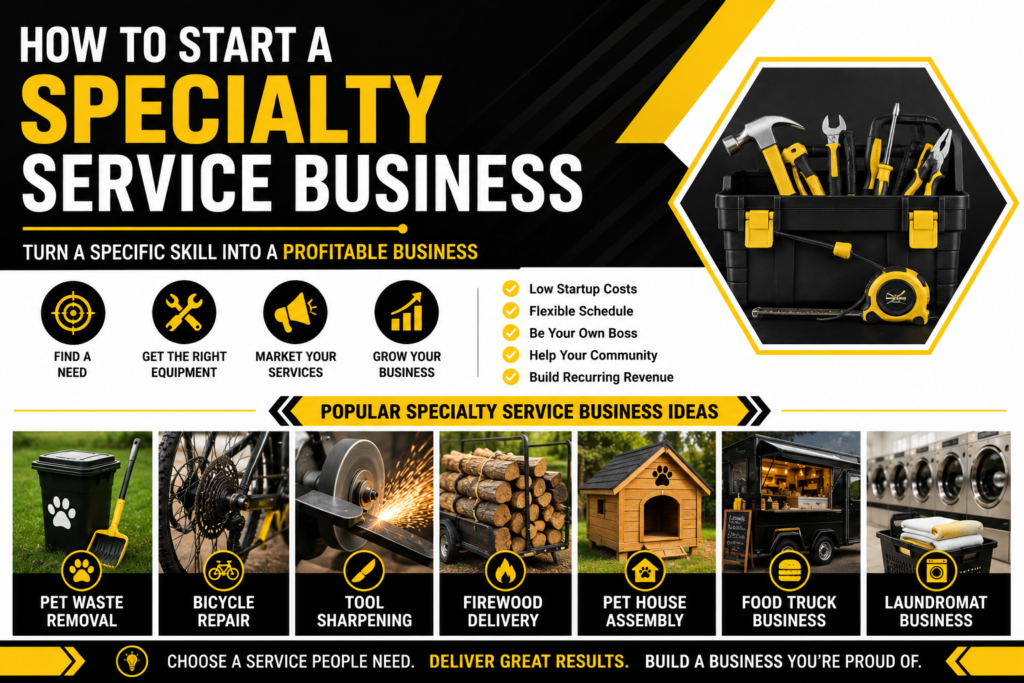
Starting a specialty service business can be a practical way to become your own boss without the high startup costs associated with many traditional businesses. Specialty service businesses focus on solving specific problems for homeowners, businesses, property owners, or other customers. Examples include pet waste removal, bicycle repair, tool sharpening, firewood delivery, pet house assembly, and many other specialized services.
One of the biggest advantages of a specialty service business is that you can build your company around a specific customer need rather than trying to serve everyone. With the right service, pricing strategy, equipment, and marketing plan, a small specialty service company can grow from a one-person operation into a larger business with employees and recurring customers.
What Is a Specialty Service Business?
A specialty service business provides a specific service that customers need but may not want or know how to handle themselves. Instead of offering a wide range of general services, the business concentrates on one particular problem or customer need.
Many specialty services can be started with relatively little equipment and a small service area. This makes them attractive to entrepreneurs who want to start small and expand as demand increases.
Examples of Specialty Service Businesses
- Pet waste removal
- Bicycle repair
- Tool sharpening
- Firewood delivery
- Pet house assembly
- Mobile equipment services
- Specialty cleaning services
- Small equipment repair
- Property maintenance services
- Delivery and pickup services
- Seasonal specialty services
- Assembly and installation services
Why Start a Specialty Service Business?
Specialty service businesses can offer several advantages over businesses that require a large storefront, extensive inventory, or expensive equipment.
Lower Startup Costs
Many specialty services can be started with basic tools, transportation, supplies, insurance, and marketing. Depending on the service, you may be able to operate from home or use a vehicle as your mobile workspace.
Less Competition
A specialized business can sometimes face less direct competition than a general service company. Instead of competing with every business in a broad category, you can focus your marketing on customers who specifically need your service.
Simple Business Model
Many specialty businesses have straightforward pricing. You may charge customers by the job, hour, item, delivery, service call, or recurring service package.
Opportunity for Recurring Revenue
Some specialty services naturally lead to repeat business. For example, customers may need pet waste removal every week, tool sharpening regularly, firewood delivered seasonally, or maintenance services throughout the year.
How to Choose the Right Specialty Service
The service you choose will have a major impact on your chances of building a successful business. A good specialty service should solve a real problem and have enough potential customers in the area you plan to serve.
Look for an Existing Customer Need
Start by identifying tasks that people regularly need completed but may not want to do themselves. Convenience is often one of the biggest reasons customers hire specialty service providers.
Consider services that save customers time, require specialized equipment, involve unpleasant work, or require skills that the average customer does not have.
Research Your Local Market
Before investing heavily in equipment, research the demand in your area. Search online for competitors and see what services they offer, how they describe their services, and what areas they serve.
You should also consider the size of your potential customer base. A service that works well in a large metropolitan area may have limited demand in a small rural community.
Consider Your Skills and Experience
Your existing skills can help determine which specialty service is right for you. If you already know how to repair bicycles, sharpen tools, assemble structures, maintain property, or perform another specialized task, you may be able to start with less training.
You do not necessarily need years of professional experience, but you should understand the service well enough to provide reliable results safely and consistently.
How Much Does It Cost to Start a Specialty Service Business?
Startup costs vary significantly depending on the type of specialty service you choose. A simple mobile service may require only a few thousand dollars or less, while a business requiring specialized machinery, vehicles, or a commercial location can cost substantially more.
Common Startup Expenses
- Business registration
- Licenses and permits
- General liability insurance
- Tools and equipment
- Vehicle or transportation
- Work clothing and safety equipment
- Business phone
- Website and domain name
- Business cards and promotional materials
- Online advertising
- Software for scheduling and invoicing
- Initial supplies and inventory
One advantage of starting a specialty service business is that you can often purchase equipment gradually. Start with the equipment required to complete your first jobs and reinvest some of your profits into additional tools and equipment as the business grows.
Equipment You May Need
The equipment required will depend entirely on your specialty. Some businesses can operate with hand tools and a vehicle, while others require specialized machinery.
Basic Business Equipment
- Reliable vehicle
- Hand tools
- Storage containers
- Work gloves
- Safety equipment
- Cleaning supplies
- Portable lighting
- Phone or tablet
Do not purchase expensive equipment simply because it is available. Determine what equipment is actually necessary to perform the services customers are willing to pay for.
Creating Your Specialty Service Business Plan
You do not need a complicated business plan to get started. A simple plan can help you understand your market, expenses, pricing, and expected revenue.
Define Your Services
Write down exactly what your company will do. Avoid making your service description too broad when you are first starting.
For example, instead of advertising yourself as a general home service company, you might specialize in one specific service and become known locally for doing that service well.
Define Your Service Area
Decide how far you are willing to travel for customers. A smaller service area can reduce fuel expenses and allow you to complete more jobs each day.
As your customer base grows, you can expand into nearby communities or create additional service areas.
Identify Your Target Customers
Your customers will depend on the specialty you choose. Potential customers could include homeowners, landlords, property managers, businesses, contractors, apartment communities, restaurants, farms, or other organizations.
How to Price Specialty Services
Pricing is one of the most important decisions when starting a specialty service business. Your prices need to cover your operating costs while providing enough profit to make the business worthwhile.
Calculate Your Operating Costs
Consider fuel, equipment maintenance, insurance, supplies, advertising, vehicle expenses, payment processing fees, taxes, and other ongoing costs.
Choose a Pricing Structure
Depending on the service, you may charge:
- By the hour
- By the job
- By item
- By square foot
- By delivery
- By service call
- By recurring service package
Make sure your pricing accounts for travel time and other work that customers may not see. A job that takes one hour to perform may require additional time for driving, loading equipment, purchasing supplies, and communicating with the customer.
Registering Your Business
Once you have chosen your specialty and developed a basic plan, you can begin setting up the business legally.
Choose a Business Structure
Common business structures include sole proprietorships and limited liability companies. The best structure depends on your circumstances, business activities, taxes, and liability considerations.
Consider speaking with a qualified accountant or attorney if you are unsure which structure is appropriate for your business.
Check Local Licensing Requirements
Some specialty services may require specific licenses, permits, certifications, or inspections. Requirements can vary by state, county, and city.
Check with the appropriate local and state agencies before offering services to customers.
Get Business Insurance
Insurance can help protect your business from certain financial losses associated with accidents, property damage, injuries, and other risks. The type and amount of coverage you need will depend on the services you provide.
How to Find Customers for a Specialty Service Business
Marketing is especially important for a specialty service because customers need to know that your business exists and understand exactly what problem you solve.
Create a Professional Website
Your website should clearly explain your services, service area, pricing approach, contact information, and why customers should choose your company.
Create individual pages for important services whenever appropriate. This can also help your website appear in search results when potential customers search for specific services.
Use Local SEO
Local search can be extremely valuable for service businesses. Optimize your website around the communities you serve and create useful content that answers questions potential customers are searching for.
Set Up a Business Profile
A local business profile can help customers discover your company when searching for services in your area. Keep your business name, phone number, service area, hours, and website information accurate.
Use Social Media
Social media can provide an easy way to demonstrate your work. Before-and-after photos, completed projects, customer reviews, service explanations, and short videos can all help potential customers understand what you offer.
Ask for Customer Reviews
Positive reviews can help establish trust with new customers. After completing a job successfully, politely ask satisfied customers if they would be willing to leave an honest review.
How to Get Your First Customers
Your first customers may come from people you already know, local networking, online searches, neighborhood groups, referrals, or direct marketing.
Start With Your Local Area
Focus on a manageable service area when you first start. This allows you to build a reputation without spending excessive amounts of money on advertising.
Offer a Simple Introductory Promotion
A limited introductory offer can help generate your first few jobs. Avoid pricing your service so low that you lose money. The goal is to attract customers while still operating profitably.
Build Referral Relationships
Other businesses can become valuable sources of customers. Depending on your specialty, potential referral partners could include contractors, property managers, real estate professionals, pet businesses, hardware stores, landscapers, apartment communities, and other local businesses.
How to Operate a Specialty Service Business
Once you start getting customers, organization becomes increasingly important. A simple scheduling and bookkeeping system can help prevent missed appointments and keep track of revenue and expenses.
Schedule Jobs Efficiently
Group jobs geographically whenever possible. Completing several jobs in the same area can reduce driving time and fuel costs.
Track Every Expense
Keep records of business purchases, fuel, equipment, advertising, insurance, supplies, and other expenses. Accurate records can make financial management and tax preparation much easier.
Provide Consistent Customer Service
Being dependable can be one of your biggest competitive advantages. Answer customer messages promptly, arrive when promised, communicate clearly, and complete the work as agreed.
How to Grow a Specialty Service Business
After establishing a steady customer base, you can look for ways to increase revenue without dramatically increasing your workload.
Add Related Services
Once customers trust your business, you may be able to add services that naturally complement your primary specialty.
Offer Recurring Service Plans
Recurring service plans can create more predictable revenue. If your service is something customers need regularly, consider offering weekly, monthly, seasonal, or annual packages.
Hire Employees
When demand exceeds your personal capacity, hiring employees can allow the company to complete more jobs. Before hiring, make sure your pricing and cash flow can support payroll and related employment expenses.
Expand Your Service Area
Once your original market is established, expanding into nearby communities can create additional growth opportunities. Expansion should be based on actual demand rather than simply increasing the number of areas you advertise.
Common Mistakes to Avoid
Many specialty service businesses fail to reach their potential because of avoidable mistakes.
Buying Too Much Equipment
Buying expensive equipment before establishing demand can put unnecessary pressure on your finances. Start with the equipment you actually need and expand as revenue increases.
Underpricing Your Services
Trying to be the cheapest provider can make it difficult to cover your expenses and pay yourself properly. Calculate your costs before setting prices.
Ignoring Marketing
Even an excellent service business can struggle if potential customers cannot find it. Marketing should be treated as an ongoing part of operating the company.
Serving Too Large of an Area
Travel costs can quickly reduce profitability. Start with a focused service area and expand only when the additional revenue justifies the extra travel.
Failing to Track Finances
Knowing how much money comes into the business is not enough. You need to understand how much you spend to generate that revenue and how much profit remains after expenses.
Is a Specialty Service Business Profitable?
A specialty service business can be profitable when there is sufficient demand, pricing covers operating expenses, and the business is managed efficiently. Profitability depends heavily on the specific service, local competition, customer demand, labor requirements, equipment costs, and pricing.
Businesses that require relatively little equipment and can generate repeat customers may have an attractive path to profitability. However, every specialty service should be evaluated individually before investing significant money.
Final Thoughts
Starting a specialty service business can be a practical way to turn a specific skill, service, or customer need into a business. You do not necessarily need a large building, a large staff, or expensive equipment to get started.
The key is choosing a service with real demand, keeping startup costs under control, pricing the work properly, providing dependable customer service, and consistently marketing the business. Start small, build a reputation, reinvest your profits, and expand when the demand supports it.
Related Articles
- Pet Waste Removal Business
- Bicycle Repair Business
- Tool Sharpening Business
- Firewood Delivery Business
- Pet House Assembly Business
- Food Truck Business
- Laundromat Business
Previous Article: None — This is the first article in this series.
Next Article: How to Start a Pet Waste Removal Business