
A bicycle repair business can be a practical specialty service for entrepreneurs who enjoy working with bikes and want to build a local service business. Bicycles require regular maintenance, repairs, adjustments, and replacement parts, and many riders prefer to have a professional handle the work.
You can start a bicycle repair business from a small workshop, garage, commercial location, or even operate as a mobile bicycle repair service. Starting small can allow you to keep overhead under control while building a customer base and reputation in your local community.
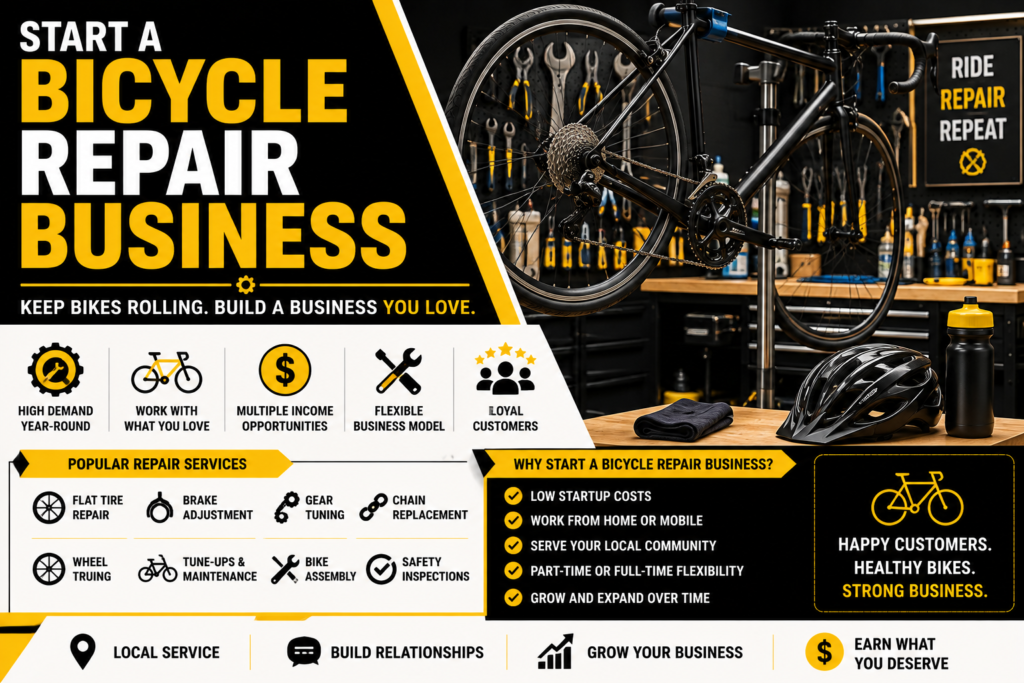
What Does a Bicycle Repair Business Do?
A bicycle repair business helps customers maintain and repair their bicycles. Services can range from simple tire and brake adjustments to more complicated repairs involving drivetrains, wheels, bearings, and other components.
Common Bicycle Repair Services
- Flat tire repair
- Tube replacement
- Tire replacement
- Brake adjustment
- Brake replacement
- Gear adjustment
- Chain replacement
- Chain cleaning and lubrication
- Derailleur adjustment
- Wheel truing
- Bike assembly
- Safety inspections
- General bicycle tune-ups
- Component replacement
Why Start a Bicycle Repair Business?
Bicycle repair is a specialized service that allows you to focus on a specific customer need. Riders may not have the tools, knowledge, or time to repair their own bicycles, creating an opportunity for a skilled service provider.
Can Be Started on a Small Scale
You do not necessarily need a large commercial shop to get started. Depending on local requirements, you may be able to begin from a small workshop or offer mobile repairs at customers’ homes and workplaces.
Recurring Customers
Bicycles require ongoing maintenance. Customers may return for seasonal tune-ups, repairs, replacement parts, adjustments, and other services.
Multiple Revenue Opportunities
A bicycle repair business can earn revenue from labor, repair services, parts, accessories, assembly, maintenance packages, and other related services.
Growing Interest in Cycling
Cyclists use bikes for recreation, transportation, fitness, commuting, and competition. Different types of riders can create different customer opportunities for a bicycle repair business.
Types of Bicycle Repair Businesses
Before starting your business, decide what type of operation you want to build. Your business model will affect your equipment, startup costs, location, and marketing strategy.
Mobile Bicycle Repair Business
A mobile bicycle repair business travels directly to customers. You can carry your tools and common replacement parts in a vehicle and perform many repairs at the customer’s location.
Mobile service can reduce the need for a traditional storefront and provide convenience for customers.
Home-Based Bicycle Repair Shop
A home-based workshop may allow you to keep overhead lower than operating a commercial retail location. However, local zoning, licensing, insurance, and home-business rules should be checked before operating from your property.
Commercial Bicycle Repair Shop
A traditional shop can provide space for repairs, inventory, customer service, and bicycle sales or accessories. It can also provide a visible location for customers to visit.
Specialized Bicycle Repair
You can also specialize in a particular type of bicycle or repair. Examples include road bikes, mountain bikes, electric bicycles, children’s bicycles, racing bikes, or high-end components.
How Much Does It Cost to Start a Bicycle Repair Business?
Startup costs vary depending on whether you operate from home, offer mobile service, or open a commercial shop. A small mobile or home-based operation can generally be started with less money than a full retail bicycle store.
Common Startup Expenses
- Bicycle repair stands
- Hand tools
- Specialty bicycle tools
- Air compressors or pumps
- Wheel truing equipment
- Replacement tubes and tires
- Chains and cables
- Lubricants and cleaning supplies
- Workbenches and storage
- Vehicle expenses
- Business registration
- Insurance
- Website and domain
- Advertising
- Business software
You can reduce your initial investment by starting with the tools required for the most common repairs and adding specialized equipment as your customer base grows.
Bicycle Repair Tools and Equipment
Having the right tools is essential because bicycle components require specialized equipment. Professional-quality tools can make repairs faster and reduce the risk of damaging customer bicycles.
Basic Bicycle Repair Tools
- Allen and hex key sets
- Screwdrivers
- Torque wrenches
- Chain tools
- Tire levers
- Bike pumps
- Floor pumps
- Adjustable wrenches
- Cable cutters
- Chain wear checker
- Pedal wrench
- Cleaning brushes
- Lubricants
Specialty Equipment
As your business grows, you may invest in equipment for wheel truing, bearing service, drivetrain work, suspension service, electronic components, or other specialized repairs.
How to Start a Bicycle Repair Business
Starting a bicycle repair business involves choosing your business model, determining your target market, purchasing equipment, setting prices, and developing a system for finding and serving customers.
1. Research Your Local Market
Research the number of cyclists in your area and identify existing bicycle repair shops. Look at the services competitors offer, their customer reviews, pricing, hours, and service areas.
Pay particular attention to gaps in the local market. For example, there may be demand for mobile repairs, faster turnaround times, electric bicycle service, or convenient weekend appointments.
2. Choose Your Business Model
Decide whether you want to operate a mobile service, home-based workshop, commercial repair shop, or combination of these models.
Starting with mobile or home-based service can allow you to test the market before committing to a commercial lease.
3. Choose Your Services
Start with services you can perform confidently and safely. You can expand your service menu as your skills, tools, and experience increase.
4. Set Up the Business
Choose a business name, select an appropriate business structure, register the business where required, and establish separate business financial accounts.
Check local requirements for licenses, permits, zoning, and operating a bicycle repair business in your area.
5. Get Business Insurance
Insurance can help protect your business from certain risks associated with working on customer property and handling customer bicycles. Discuss your specific operations with an insurance professional to determine appropriate coverage.
6. Purchase Your Tools
Purchase reliable tools for the repairs you plan to offer. Avoid purchasing expensive specialty equipment until you have determined that customers are willing to pay for those services.
7. Begin Marketing
Once you are ready to accept customers, promote your business through local search, social media, cycling groups, community events, referrals, and partnerships with other local businesses.
How to Price Bicycle Repair Services
Pricing should reflect your labor, parts, overhead, experience, and the complexity of the repair.
Labor Rates
You can charge an hourly labor rate or use fixed prices for common services. Fixed pricing can make it easier for customers to understand what they will pay for routine repairs.
Parts and Materials
Decide how you will price replacement parts. You may charge customers for the part plus a markup that helps cover ordering, inventory, warranty handling, and other business costs.
Service Packages
Consider offering packages such as basic tune-ups, standard tune-ups, and more comprehensive bicycle services. Packages can make it easier for customers to choose the level of service they need.
How to Find Bicycle Repair Customers
Marketing should focus on reaching people who already ride bicycles or are likely to purchase and use them.
Create a Professional Website
Your website should list your repair services, service area, business hours, contact information, and a simple way for customers to request service.
Create individual pages for important services when appropriate. For example, you might create pages for bicycle tune-ups, flat tire repair, wheel truing, and mobile bicycle repair.
Use Local SEO
Optimize your website and online business listings for searches related to bicycle repair in your area. Include the communities you serve naturally throughout your website.
Build a Local Business Profile
A complete local business profile can help potential customers discover your repair service when searching for bicycle shops or repair services nearby.
Use Social Media
Bicycle repair is highly visual. Before-and-after photos, repair demonstrations, maintenance tips, and completed projects can make useful social media content.
Build Relationships With Cycling Businesses
Local partnerships can provide a valuable source of referrals.
Bike Shops
If another bicycle business specializes in bicycle sales but does not perform certain repairs, there may be opportunities for referrals or subcontracted services.
Cycling Clubs
Local cycling clubs can connect you with groups of riders who regularly need maintenance and repair services.
Bike Rental Businesses
Bike rental companies may require regular maintenance and repairs because their bicycles receive frequent use.
Apartment Communities and Workplaces
Businesses and residential communities with bicycle storage or cycling programs may be interested in occasional mobile repair events.
How to Get Your First Bicycle Repair Customers
Your first customers can come from your personal network, local cyclists, community groups, online searches, referrals, and promotional offers.
Offer a Basic Tune-Up Promotion
A limited introductory offer can encourage local cyclists to try your service. Make sure the promotion still allows you to cover your costs.
Attend Cycling Events
Local cycling events can provide opportunities to meet riders and introduce your services. You can also offer maintenance tips or demonstrations to establish credibility.
Encourage Customer Referrals
Ask satisfied customers to recommend your business to other cyclists. Referral marketing can be particularly effective in communities where cyclists regularly interact with one another.
Offering Mobile Bicycle Repair
Mobile repair can be an attractive option because customers do not have to transport their bicycles to a shop.
Benefits of Mobile Repair
- Lower overhead than a traditional shop
- Convenient service for customers
- Ability to serve multiple communities
- Potential for higher convenience-based pricing
- Opportunity to serve workplaces and events
Not every repair can be completed efficiently in a driveway or parking lot, so clearly explain which services are available through your mobile operation.
How to Build Recurring Bicycle Repair Revenue
Bicycle repair is not naturally as recurring as some other service businesses, but you can create repeat business through maintenance programs and customer relationships.
Seasonal Tune-Ups
Many cyclists prepare their bicycles before the beginning of the riding season. Promote seasonal inspection and tune-up services before demand increases.
Maintenance Plans
You can create maintenance packages for customers who ride frequently and want regular inspections and adjustments.
Fleet Maintenance
Businesses with multiple bicycles, such as rental companies or tour operators, may need regular maintenance. Fleet service can provide larger and more predictable contracts.
How to Operate a Bicycle Repair Business Efficiently
Use Work Orders
Create a work order for every bicycle. Record the customer’s information, bicycle type, requested repairs, recommended repairs, parts required, estimated cost, and completion date.
Take Photos
Photographs can document the bicycle’s condition when it arrives. They may also help explain recommended repairs to customers.
Keep Common Parts in Stock
Stock commonly used tubes, cables, chains, brake pads, lubricants, and other parts based on the types of bicycles you service.
Communicate Before Additional Repairs
If you discover additional problems after inspecting a bicycle, contact the customer before performing work that will increase the original estimate.
Common Bicycle Repair Business Mistakes
Taking on Repairs Beyond Your Skills
Only perform repairs you are qualified and equipped to complete properly. Complex or specialized work should not be accepted simply because a customer is willing to pay.
Underpricing Labor
Your price needs to account for more than the time spent turning a wrench. Consider customer communication, diagnosis, parts ordering, cleanup, equipment, insurance, and business overhead.
Buying Too Much Inventory
Do not tie up your cash in parts that may sit on a shelf for months. Start with common parts and expand your inventory based on actual demand.
Ignoring Customer Communication
Customers appreciate knowing when their bicycle will be ready and whether the repair cost has changed. Clear communication can prevent misunderstandings.
Failing to Track Business Expenses
Keep accurate records of tools, parts, vehicle expenses, insurance, advertising, rent, utilities, and other business costs.
How to Grow a Bicycle Repair Business
Expand Your Service Menu
Once you have established a customer base, adding related services can increase revenue per customer.
Offer Bicycle Assembly
Customers who purchase bicycles online may need professional assembly and adjustment. If you offer this service, make sure you understand any manufacturer requirements and local rules that apply.
Add Parts and Accessories
You may eventually sell commonly needed parts, lights, locks, pumps, helmets, bags, and other cycling accessories that complement your repair services.
Hire a Technician
When customer demand exceeds your personal capacity, hiring another technician can increase the number of repairs you can complete.
Open a Commercial Location
If your customer base becomes large enough, a commercial shop can provide additional workspace, storage, visibility, and room for inventory.
Is a Bicycle Repair Business Profitable?
A bicycle repair business can be profitable when you have enough local demand, charge appropriately for labor, control overhead, and build a strong reputation. Mobile and home-based operations can potentially have lower overhead than traditional retail shops.
Your profitability will depend on factors such as your service mix, labor rates, parts costs, customer volume, location, competition, and operating expenses.
Final Thoughts
Starting a bicycle repair business can be a good opportunity for someone with mechanical skills and an interest in cycling. You can choose between a mobile operation, home-based workshop, commercial shop, or a combination of these models.
Start with the services you know how to perform well, purchase the tools you actually need, establish competitive pricing, and focus on providing dependable service. As your reputation grows, you can add services, develop maintenance programs, build partnerships, and expand your operation.
Related Articles
- How to Start a Specialty Service Business: Complete Guide
- Pet Waste Removal Business
- Tool Sharpening Business
- Firewood Delivery Business
- Pet House Assembly Business
Previous Article: How to Start a Pet Waste Removal Business
Next Article: How to Start a Tool Sharpening Business