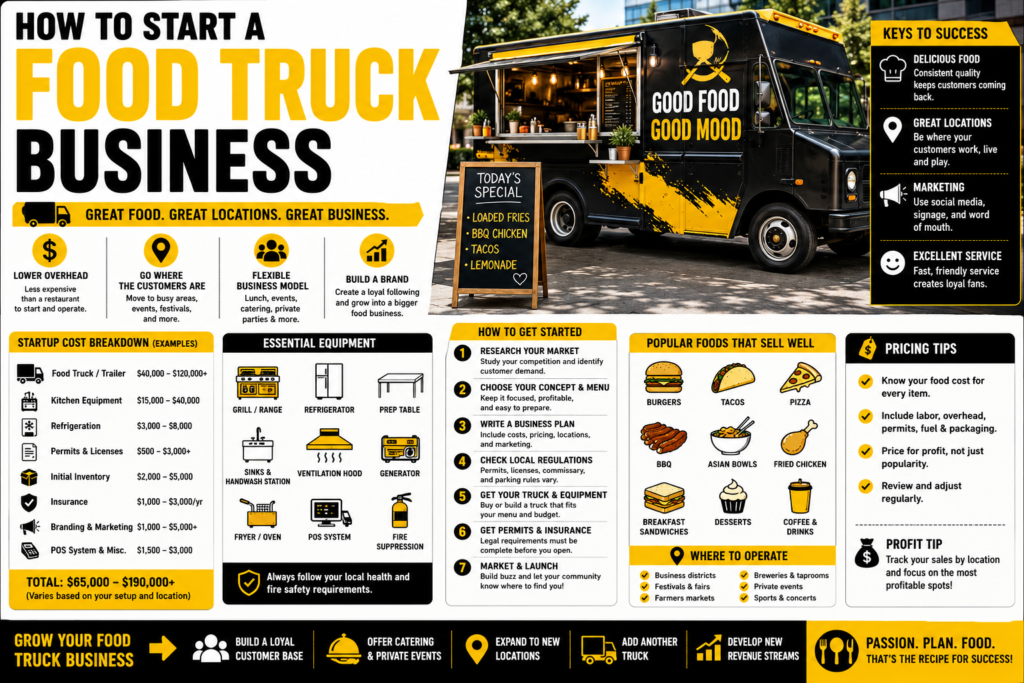
A food truck business can be an exciting way to enter the food service industry without the cost of opening a traditional restaurant. Food trucks allow entrepreneurs to bring prepared food directly to customers at busy streets, business districts, festivals, events, markets, breweries, private gatherings, and other locations.
However, a food truck is more than a vehicle with a kitchen. You need to plan your menu, understand local regulations, purchase or lease suitable equipment, obtain required permits, manage food safety, control inventory, and develop a marketing strategy. With careful planning, a food truck can grow from a small operation into a recognizable local food brand.
What Is a Food Truck Business?
A food truck business prepares and sells food from a mobile food vehicle. Unlike a traditional restaurant, the business can potentially operate in multiple locations and adjust its schedule based on customer demand, events, and opportunities.
Common Food Truck Concepts
- Burgers and sandwiches
- Tacos and Mexican food
- Pizza
- Fried chicken
- Barbecue
- Asian-inspired food
- Breakfast foods
- Seafood
- Desserts
- Coffee and beverages
- Healthy meals
- Specialty or regional foods
A focused concept can make it easier to develop a recognizable brand and keep your menu manageable.
Why Start a Food Truck Business?
Food trucks offer several potential advantages compared with opening a traditional restaurant.
Lower Overhead Than a Restaurant
A food truck may require less space and lower fixed overhead than a full-service restaurant. However, food trucks still have substantial startup and operating expenses, so they should not be viewed as a low-cost business automatically.
Mobility
You can potentially move your business to locations where customers are concentrated. This can include office districts during lunch, festivals on weekends, and private events in the evening.
Flexible Business Model
A food truck can potentially combine regular operating locations with catering, festivals, private events, and special promotions.
Opportunity to Build a Brand
A successful food truck can develop a recognizable brand that may eventually support catering, additional trucks, a restaurant, packaged products, or other business opportunities.
How Much Does It Cost to Start a Food Truck Business?
Food truck startup costs vary widely depending on whether you purchase a new truck, buy a used vehicle, lease equipment, build out your own truck, or purchase an existing operation.
Common Startup Expenses
- Food truck or trailer
- Kitchen equipment
- Refrigeration
- Cooking equipment
- Food preparation equipment
- Water and sanitation systems
- Generator or approved power system
- Point-of-sale system
- Initial food inventory
- Packaging and disposable supplies
- Business registration
- Food service permits
- Health department requirements
- Business insurance
- Commissary or commercial kitchen costs
- Website and branding
- Marketing
The cost of the truck itself can be one of the largest expenses. Before purchasing a vehicle, determine exactly what equipment and modifications are required for the menu you plan to serve.
Choosing a Food Truck
The food truck should match your menu and operating model. Buying a vehicle first and trying to design a menu around it can create unnecessary problems.
New Food Truck
A new truck can provide modern equipment and customization options but generally requires a larger initial investment.
Used Food Truck
A used truck may reduce your initial purchase price, but carefully inspect the vehicle, kitchen equipment, electrical system, plumbing, refrigeration, ventilation, and other components before purchasing.
Food Trailer
A trailer can provide another option for mobile food service. You will need an appropriate tow vehicle and should understand local regulations governing mobile food operations.
How to Choose a Food Truck Concept
Your concept should be based on customer demand, your skills, equipment requirements, food costs, competition, and the locations where you plan to operate.
Choose a Focused Menu
A smaller menu can make purchasing, food preparation, storage, staffing, and customer service easier to manage.
Consider Food Preparation Time
Food trucks often serve customers during busy periods. Your menu should allow you to prepare orders efficiently without sacrificing quality.
Calculate Food Costs
Before choosing menu prices, calculate the cost of ingredients and packaging for each item. Include waste and other variable expenses in your calculations.
How to Start a Food Truck Business
1. Research Your Local Market
Research existing food trucks and restaurants in your target market. Look at their menus, prices, locations, reviews, operating hours, and customer demand.
Identify gaps in the market. Perhaps customers want a certain type of food that is not readily available, or perhaps a busy business district has limited lunch options.
2. Develop Your Concept
Choose your cuisine, target customer, menu style, branding, and service model.
3. Create Your Menu
Develop a manageable menu that can be prepared efficiently inside your truck. Test recipes before committing to large-scale purchasing.
4. Develop a Business Plan
Your plan should cover startup expenses, food costs, labor, pricing, locations, marketing, expected sales, and operating expenses.
5. Research Local Regulations
Food trucks are highly regulated in many locations. Requirements can include health permits, business licenses, food safety certifications, vehicle inspections, parking restrictions, fire inspections, commissary requirements, and other approvals.
Requirements vary significantly by state, county, and city. Contact the appropriate local agencies before purchasing a truck or beginning operations.
6. Purchase or Lease Your Vehicle
Once you understand the requirements for your menu and location, select a vehicle that can legally and safely support your operation.
7. Obtain Required Permits and Insurance
Complete the required licensing, inspections, permits, and insurance before opening to the public.
8. Build Your Brand
Create a memorable business name, logo, menu design, vehicle graphics, website, and social media presence.
9. Begin Marketing
Build awareness before your launch. Let potential customers know when and where they can find your truck.
Food Truck Equipment
The equipment you need depends on your menu and local health requirements.
Common Food Truck Equipment
- Commercial refrigerator
- Freezer
- Cooking equipment
- Food preparation surfaces
- Handwashing station
- Three-compartment sink where required
- Food storage containers
- Commercial ventilation where required
- Fire suppression equipment where required
- Generator or approved power source
- Point-of-sale system
- Food thermometers
- Cleaning and sanitation supplies
Do not purchase or install equipment without first understanding your local requirements. Your health department or other regulatory agency may have specific requirements for food trucks.
How to Create a Food Truck Menu
Your menu should be attractive to customers while remaining practical for a mobile kitchen.
Keep the Menu Focused
Too many menu items can create inventory problems, slow service, and increase food waste.
Use Shared Ingredients
Choose ingredients that can be used in multiple dishes. This can simplify purchasing and reduce waste.
Create Signature Items
A signature dish can give customers a reason to seek out your truck rather than choosing another food vendor.
Offer Different Price Points
Consider offering lower-cost items as well as higher-value combinations or specialty meals.
How to Price Food Truck Menu Items
Pricing needs to cover food, packaging, labor, fuel, permits, vehicle expenses, insurance, marketing, commissary costs, taxes, and other operating expenses.
Calculate Food Cost
Determine the ingredient cost of every menu item. Include sauces, condiments, cooking oil, garnishes, packaging, and other components.
Calculate Labor and Overhead
A profitable menu price must account for expenses beyond ingredients. Your truck may have significant fixed and variable operating costs.
Use Menu Engineering
Pay attention to which menu items sell the most and which generate the strongest margins. Adjust your menu based on actual customer behavior.
Where Can a Food Truck Operate?
Food truck regulations vary significantly by location. Some cities restrict where mobile food vendors can park or operate, while others require special permits for certain areas or events.
Business Districts
Office areas can provide strong lunch demand when local regulations allow food truck operations.
Events and Festivals
Festivals, fairs, markets, concerts, and community events can provide access to large groups of potential customers.
Private Events
Weddings, birthday parties, corporate events, graduation parties, and other private gatherings can create catering opportunities.
Breweries and Entertainment Locations
Some businesses may allow food trucks to serve customers on their property. Establish relationships with property owners and event organizers where appropriate.
How to Find Food Truck Customers
Build a Website
Your website should show your menu, schedule, service area, contact information, catering options, and upcoming events.
Use Social Media
Social media is particularly important for food trucks because customers need to know where you will be operating each day.
Post your location, hours, menu specials, food photos, upcoming events, and schedule changes regularly.
Build an Email or Text List
With appropriate customer permission, you can notify customers about upcoming locations, specials, new menu items, and events.
Encourage Reviews
Positive customer reviews can help people discover your food truck and decide to try it.
How to Build a Food Truck Schedule
A consistent schedule can make it easier for customers to find you.
Choose Reliable Locations
Rather than changing locations constantly, consider establishing regular operating locations that customers can learn to expect.
Use Events Strategically
Events can generate significant sales, but fees, competition, staffing, and attendance should be considered before committing.
Track Sales by Location
Record sales at different locations and events. Over time, this data can help you identify the most profitable opportunities.
Food Truck Catering
Catering can provide an additional revenue stream and may allow you to earn revenue outside your normal operating schedule.
Corporate Catering
Businesses may hire food trucks for employee lunches, company celebrations, and special events.
Private Parties
Birthdays, weddings, graduations, reunions, and neighborhood events can provide private catering opportunities.
Event Catering
Large events can provide access to many customers at one location. Carefully evaluate event fees and expected attendance before accepting an opportunity.
How to Manage Food Inventory
Food waste can reduce profitability, making inventory management extremely important.
Track Daily Usage
Record how much food you use and compare it with sales. This can help you improve ordering accuracy.
Use First-In, First-Out Practices
Organize inventory so older products are used appropriately before newer products, while following applicable food safety requirements.
Monitor Waste
Track food that is discarded because of spoilage, preparation errors, overproduction, or other causes. Reducing waste can improve your margins.
Common Food Truck Business Mistakes
Starting Without Understanding Regulations
Do not purchase a truck before determining whether it meets local requirements. Regulatory requirements can significantly affect the vehicle and equipment you need.
Creating an Oversized Menu
A huge menu can make a small kitchen difficult to operate. Focus on items that can be prepared efficiently.
Underpricing Food
Ingredient cost alone does not determine your required selling price. Include labor, packaging, vehicle expenses, permits, insurance, fuel, and other overhead.
Ignoring Location Performance
Not every location will produce the same sales. Track your results and focus on locations that make financial sense.
Poor Customer Communication
If your truck’s schedule changes, tell customers. Food truck customers need accurate information about where and when you will be available.
How to Grow a Food Truck Business
Build a Strong Brand
A memorable brand can help turn first-time customers into loyal customers. Use consistent branding across your truck, website, menu, packaging, and social media.
Increase Catering
Catering can increase revenue while allowing you to reach customers who may not encounter your truck during normal operating hours.
Add Another Vehicle
Once your first truck is consistently profitable, adding another vehicle may allow you to serve multiple locations.
Develop a Restaurant
A successful food truck can potentially become a stepping stone toward a permanent restaurant. However, a restaurant introduces substantially different costs and operational requirements.
Sell Packaged Products
Depending on your concept and applicable regulations, you may eventually sell sauces, seasonings, desserts, or other branded products.
Is a Food Truck Business Profitable?
A food truck can be profitable when the business has strong customer demand, effective locations, appropriate pricing, controlled food costs, and efficient operations.
Profitability can vary significantly based on vehicle costs, food prices, labor, permits, event fees, fuel, maintenance, location performance, and competition. Carefully track revenue and expenses rather than judging success by sales alone.
Final Thoughts
Starting a food truck business can provide an opportunity to enter the food service industry with a mobile business model. The ability to serve different locations, participate in events, provide catering, and build a recognizable brand can create multiple revenue opportunities.
Success requires much more than good food. You need a focused menu, accurate pricing, efficient operations, reliable customer service, strong marketing, and a clear understanding of local regulations. Start with a manageable concept, track your numbers carefully, and use customer feedback to improve the business over time.
Related Articles
- How to Start a Specialty Service Business: Complete Guide
- Pet Waste Removal Business
- Bicycle Repair Business
- Tool Sharpening Business
- Firewood Delivery Business
- Pet House Assembly Business
- Laundromat Business
Previous Article: How to Start a Pet House Assembly Business
Next Article: How to Start a Laundromat Business