
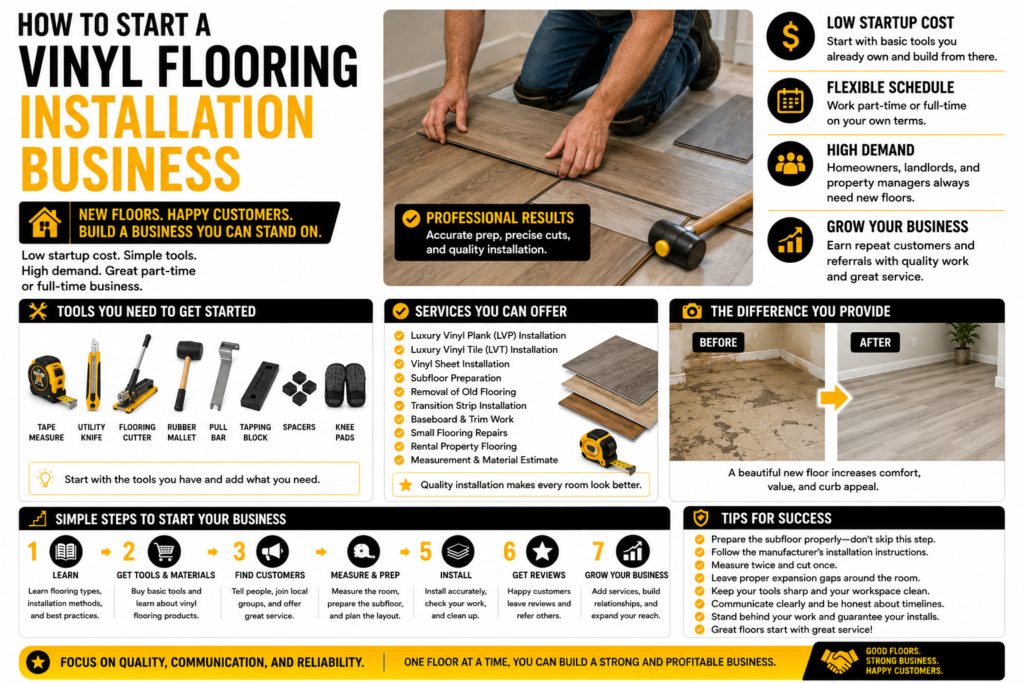
If you are good with your hands, enjoy working with tools, and like seeing a job change from start to finish, a vinyl flooring installation business may be a good way to turn your skills into income.
Vinyl flooring is popular because it can be practical, attractive, and easier to maintain than some other flooring options. Homeowners, landlords, property managers, and businesses may need help installing new flooring.
Many people can buy flooring from a store but do not want to spend their weekend measuring, cutting, fitting, and installing it.
That creates a business opportunity.
A small flooring business does not necessarily require a large shop, expensive machinery, or a crew of employees. You can start with basic tools, work locally, and build the business one customer at a time.
This guide explains how to start a vinyl flooring installation business, what tools you need, how to find customers, how to price your work, and how to grow the business.
What Is a Vinyl Flooring Installation Business?
A vinyl flooring installation business installs vinyl flooring in homes and other properties.
Depending on your skills, training, and local requirements, services may include:
- Luxury vinyl plank installation
- Luxury vinyl tile installation
- Vinyl sheet installation
- Floating vinyl floor installation
- Floor preparation
- Removal of old flooring
- Installation of transition pieces
- Baseboard and trim work
- Small flooring repairs
- Flooring installation for rental properties
You do not need to offer every service when you start.
Start with the type of vinyl flooring you understand and can install properly.
Why Start a Vinyl Flooring Installation Business?
Flooring is one of the most visible parts of a room.
When flooring is old, damaged, or unattractive, homeowners may want to replace it.
But installing flooring takes time and requires accurate measuring and cutting.
Some customers would rather pay someone who has the tools and experience.
You are solving a simple problem: the customer wants a new floor but does not want to install it themselves.
You Can Start Small
You do not necessarily need a commercial building.
You can store your tools at home and travel to customers, depending on local rules.
You Can Start With Basic Tools
Many vinyl flooring installations require tools that are affordable compared with equipment used in larger construction businesses.
If you already have experience with home improvement, you may own some of the tools already.
You Can Start Part-Time
You can begin with smaller jobs on weekends or during other times that fit your schedule.
As your customer base grows, you can decide whether to work full-time.
You Can Work With Repeat Customers
Landlords, property managers, real estate investors, and contractors may need flooring installed in multiple properties.
One good customer can sometimes lead to several more jobs.
How Much Money Do You Need to Start?
Your startup cost depends on the type of flooring you install and the tools you already own.
Basic tools may include:
- Tape measure
- Pencil
- Utility knife
- Flooring cutter
- Rubber mallet
- Spacers
- Pull bar
- Tapping block
- Level
- Square
- Chalk line
- Work gloves
- Knee pads
- Broom or shop vacuum
You may need additional tools for certain flooring products or installation methods.
Do not buy every tool available when you are starting.
Buy the equipment needed for the jobs you plan to accept.
Start With the Tools You Already Have
Before spending money, look through your existing tools.
You may already have a tape measure, utility knife, level, square, hammer, drill, and other useful equipment.
Make a list of what you already own.
Then purchase only what you need to complete your first jobs.
Your goal is to start earning money before spending money on equipment you do not need.
Learn the Different Types of Vinyl Flooring
Vinyl flooring is not one single product.
You may encounter:
- Luxury vinyl plank
- Luxury vinyl tile
- Click-lock flooring
- Glue-down vinyl
- Vinyl sheet
Each product can have different installation requirements.
Read the manufacturer’s instructions before installing a product.
Do not assume that one installation method works for every type of vinyl flooring.
Luxury Vinyl Plank Flooring
Luxury vinyl plank, often called LVP, is a popular flooring option that can resemble wood.
Many products use a click-lock or floating installation system.
This can make certain installations easier than traditional flooring methods.
However, the subfloor still needs to meet the manufacturer’s requirements.
Luxury Vinyl Tile
Luxury vinyl tile can be designed to resemble tile or stone.
Installation requirements depend on the specific product.
Learn the manufacturer’s instructions before accepting a job.
Vinyl Sheet Flooring
Vinyl sheet is another type of flooring.
Sheet flooring can be more difficult to install because accurate measuring, cutting, seams, and adhesive work may be required.
If you are new to flooring, you may want to start with simpler vinyl plank installations before taking on complicated sheet flooring jobs.
Floor Preparation Is Extremely Important
One of the biggest mistakes a new flooring installer can make is focusing only on the flooring itself.
The surface underneath the flooring matters.
The subfloor may need to be:
- Clean
- Dry
- Stable
- Flat enough for the product
- Free of debris
Always follow the flooring manufacturer’s requirements.
Do not install new flooring over a serious subfloor problem simply to finish the job.
Learn How to Measure a Room
Accurate measurements are essential.
Measure the length and width of the room and account for unusual shapes, closets, doorways, and other areas.
For larger or complicated rooms, make a simple drawing of the floor area.
Write the measurements directly on your drawing.
Measure more than once.
Buy Enough Flooring
You need enough material to complete the job, including an appropriate amount for cuts and waste.
The amount of extra material depends on the product, room shape, installation pattern, and manufacturer’s recommendations.
Follow the flooring manufacturer’s guidance.
Running out of flooring in the middle of a job can create a major problem.
Check the Flooring Before Installation
Inspect the flooring before installing it.
Look for visible damage, incorrect product, missing pieces, or obvious defects.
If the customer purchased the flooring, let them know about problems before you begin.
Do not install visibly damaged material and then discover the problem after the installation is complete.
Learn About Acclimation Requirements
Some flooring products have specific temperature, humidity, or acclimation requirements before installation.
These requirements vary by product.
Read and follow the manufacturer’s instructions.
Do not guess.
How to Find Your First Customers
You do not need a huge advertising budget.
Start with your local area.
Tell People You Know
Tell friends, relatives, neighbors, and former coworkers about your service.
Be specific about what you do.
You could say:
“I install vinyl plank flooring for homeowners and rental properties. I can measure the room, prepare the area, and install the flooring.”
A specific description makes your service easier to understand.
Use Local Community Groups
Local community groups can help you reach homeowners who are remodeling or updating their homes.
Keep your advertisement simple.
Explain:
- What type of flooring you install
- What area you serve
- Whether customers provide the flooring
- Whether you provide measurements
- How customers can contact you
Use Before-and-After Photos
Flooring is a visual service.
Before-and-after photographs can show customers the difference a new floor can make.
Take photographs of your own work and get permission before using a customer’s home in your advertising.
Work With Landlords
Landlords can be an excellent source of repeat flooring work.
Rental properties often need flooring replaced between tenants.
Some landlords may prefer durable flooring that is easier to maintain than carpet.
Contact local landlords and explain your services.
Work With Property Managers
Property managers may oversee many homes or apartments.
They may need flooring installed in multiple units.
If you provide reliable work and communicate well, a property manager may become a repeat customer.
Work With Real Estate Investors
Real estate investors often renovate properties before renting or selling them.
Flooring is a common part of these renovations.
Introduce yourself to local investors and explain what type of flooring work you perform.
Work With Realtors
Home sellers may replace worn flooring before putting a property on the market.
Real estate agents may know homeowners who need flooring work completed quickly.
Build relationships with local real estate professionals.
Work With Remodeling Contractors
Remodeling contractors may need reliable flooring installers for their projects.
Other businesses that may provide referrals include:
- Handymen
- General contractors
- Kitchen remodelers
- Bathroom remodelers
- Property maintenance companies
- Home improvement businesses
Good contractor relationships can create a steady source of work.
How Much Should You Charge?
Flooring installation can be priced in several ways.
Price by Square Foot
Charging by the square foot is common for flooring installation.
Your price may depend on the type of flooring, room layout, preparation required, and difficulty of the job.
Charge Separately for Floor Preparation
Do not assume that every floor is ready for installation.
If the customer needs additional preparation, explain the extra work and cost before starting.
Examples may include removing old flooring, removing adhesive, repairing minor surface problems, or other preparation work that you are qualified to perform.
Charge for Additional Services
Additional work may include:
- Old flooring removal
- Baseboard removal and replacement
- Transition installation
- Furniture moving where offered
- Floor preparation
- Disposal of old flooring
Make sure customers know what is included in your quote.
Do Not Underprice Your Work
A flooring installation may take several hours or several days.
You have to account for measuring, preparation, cutting, installation, cleanup, travel, tools, and business expenses.
Flooring mistakes can also be expensive.
Your experience and ability to install the floor correctly have value.
Let Customers Buy Their Own Flooring
When you are starting, you may want customers to purchase the flooring themselves.
This means you do not need to invest your own money in large amounts of inventory.
You can provide the labor and installation service.
Before accepting the job, make sure the customer has purchased enough material and that the product is suitable for the planned installation.
Offer Measurement Services
Some customers may not know how much flooring to buy.
You can potentially offer a measurement service.
Measure the rooms and provide the information the customer needs to purchase the appropriate amount of flooring.
Make it clear that the final material quantity should follow the flooring manufacturer’s recommendations.
Protect the Customer’s Home
Flooring installation can create dust, scraps, and debris.
Protect walls, furniture, cabinets, and finished surfaces while you work.
Use appropriate coverings and keep your tools organized.
Clean the work area when you finish.
Be Careful With Heavy Furniture
Moving furniture can create additional risk.
If you offer furniture moving, understand what you can safely handle.
Large, heavy, fragile, or valuable items may require specialized movers.
You can also require the customer to clear the room before you arrive.
Do Not Hide Subfloor Problems
A customer may want you to install flooring over a damaged or uneven surface.
If the subfloor does not meet the flooring manufacturer’s requirements, explain the problem.
Do not cover a serious problem just to finish the installation.
Some subfloor, moisture, structural, or mold problems may require another qualified professional.
Can You Start Part-Time?
Yes.
Vinyl flooring installation can be started part-time.
You can take smaller projects on weekends or during other times that fit your schedule.
As your customer list grows, you can decide whether to work full-time.
What If You Are Retired?
If you enjoy home improvement work and want a flexible way to earn additional income, flooring installation may be worth considering.
You can decide how many jobs you want to accept.
You can focus on smaller rooms or projects that fit your schedule.
You do not have to build a large company to make money from the skill.
What If You Do Not Like Resumes and Job Interviews?
Some people would rather work with their hands than spend their time filling out applications and sitting through job interviews.
A service business can provide another possible way to earn money from a useful skill.
A customer has an old floor.
They want vinyl flooring installed.
You know how to measure, prepare the floor, and install the product.
You provide the service and get paid for solving the problem.
You are building a business around what you can do instead of waiting for someone to hire you.
What If You Have a Criminal Record?
A criminal record can make traditional employment more difficult for some people.
Self-employment can provide another possible path for someone who has useful skills and wants to work.
Customers may care about whether you show up, communicate honestly, protect their home, and do quality work.
You still need to follow applicable laws, licensing requirements, insurance requirements, and local business rules.
Keep Good Records
Even a small flooring business should keep good records.
For each job, record:
- Customer name
- Contact information
- Job address
- Room measurements
- Flooring type
- Square footage
- Preparation required
- Materials needed
- Labor price
- Additional services
- Payment received
Keep records of business expenses as well and follow applicable tax requirements.
Common Mistakes to Avoid
Not Measuring Correctly
Incorrect measurements can lead to wasted material and delays.
Measure carefully.
Ignoring the Subfloor
The finished floor is only as good as the surface underneath it.
Follow the flooring manufacturer’s requirements.
Buying the Wrong Material
Make sure the customer has the correct product before installation begins.
Installing Damaged Flooring
Inspect the flooring before installing it.
Do not install obviously damaged material and then try to explain the problem afterward.
Underestimating Preparation Time
Floor preparation can take longer than the actual installation.
Look at the floor before giving the customer a final price.
Rushing the Job
Flooring is highly visible.
Take the time to make cuts, seams, transitions, and edges look professional.
How to Grow a Vinyl Flooring Installation Business
You can start with small projects and gradually expand.
A possible growth path could look like this:
- Start with simple vinyl plank installations.
- Build customer reviews.
- Take before-and-after photographs.
- Work with homeowners.
- Build relationships with landlords.
- Contact property managers.
- Build relationships with real estate investors.
- Work with remodeling contractors.
- Add additional flooring services.
- Expand your service area when demand supports it.
You do not have to follow this exact plan.
Build the business around the services customers in your area actually need and the work you are qualified to perform.
Is a Vinyl Flooring Installation Business Right for You?
If you enjoy working with your hands, measuring carefully, and seeing a clear result from your work, a vinyl flooring installation business may be worth considering.
You can start small.
You can use tools you already own.
You can let customers purchase their own flooring.
You can work part-time.
You can build relationships with homeowners, landlords, property managers, investors, and contractors.
Then you can add services as your skills and customer base grow.
You do not need a large amount of money to start a business based on a useful skill.
Find a problem, solve it well, treat the customer fairly, and build your business one floor at a time.
Next Article
Back to Start a Home Repair Business
Previous Article
How to Start a Screen Repair Business
Related Articles
If you are interested in starting a home repair or installation business, these related guides may also help: