A pallet recycling business collects, repairs, resells, and recycles used wooden pallets for businesses that need an affordable alternative to buying new pallets. Every day, warehouses, manufacturers, retailers, distributors, and construction companies receive products on pallets. Many of these pallets are still usable but end up being thrown away simply because businesses don’t have the time or space to store them.
A pallet recycling business provides a valuable service by picking up unwanted pallets, repairing damaged ones, and reselling them to companies that need shipping pallets at a lower cost. Broken pallets can also be dismantled so the lumber can be reused for repairs, woodworking projects, mulch, or other recycling purposes.
With relatively low startup costs and steady demand from local businesses, pallet recycling can become a profitable full-time business or an excellent addition to a junk removal, trailer hauling, scrap metal collection, or moving business.
What Does a Pallet Recycling Business Do?
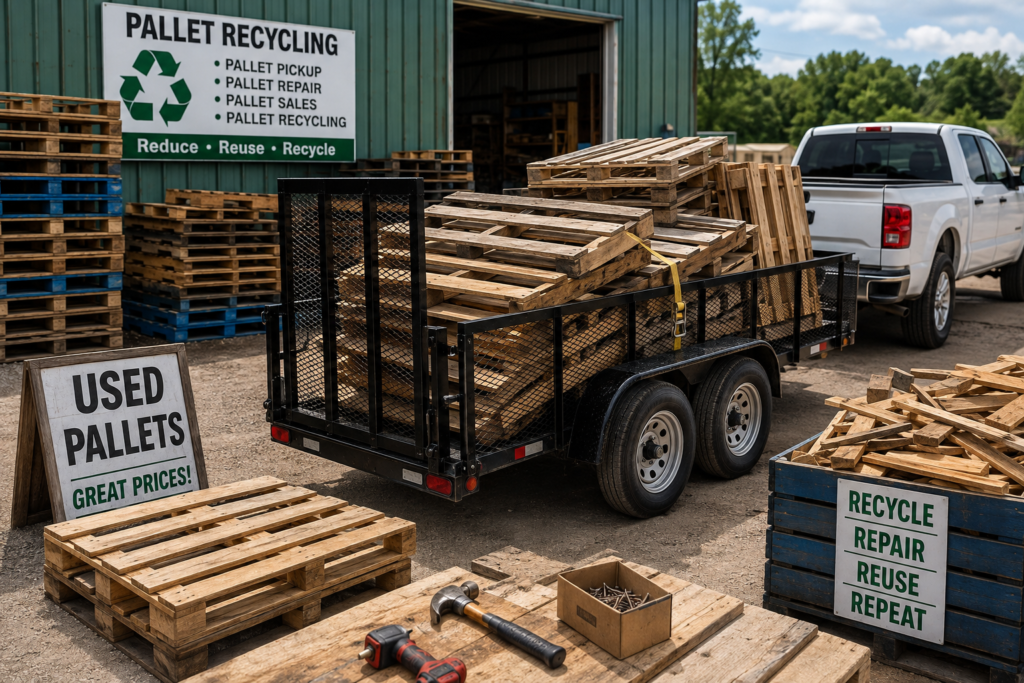
A pallet recycling business collects used pallets from businesses, sorts them by condition, repairs damaged pallets, and resells usable pallets to customers. Pallets that cannot be repaired are dismantled so the wood can be reused or recycled.
Many businesses also offer regular pallet pickup services, helping customers keep their loading docks and storage areas clean while ensuring pallets stay out of landfills.
Common Pallet Recycling Services
- Pallet pickup
- Pallet recycling
- Pallet repair
- Pallet resale
- Bulk pallet removal
- Warehouse pallet cleanup
- Construction pallet removal
- Wood pallet dismantling
- Pallet delivery
- Custom pallet collection schedules
- Commercial pallet hauling
- Pallet disposal
Some companies also purchase quality pallets directly from businesses, creating an additional incentive for customers to recycle instead of throwing them away.
Why This Business Can Be Profitable
Millions of pallets are used every year, and many remain in good condition after only one shipment. Businesses often need someone to remove excess pallets quickly, while other companies are looking for affordable used pallets instead of buying new ones.
A pallet recycling business can generate revenue from multiple sources:
- Charging businesses for pallet removal
- Selling repaired pallets
- Selling reusable pallet lumber
- Delivering pallets to customers
- Providing scheduled commercial pickup services
By collecting free or low-cost pallets and reselling them after minor repairs, many pallet recyclers are able to maintain healthy profit margins.
Who Are Your Customers?
Pallet recycling businesses work with a wide variety of commercial customers.
Common Customers Include
- Warehouses
- Manufacturing companies
- Distribution centers
- Retail stores
- Home improvement stores
- Garden centers
- Construction companies
- Freight companies
- Food distributors
- Industrial suppliers
- Farm supply businesses
- Small manufacturers
Building long-term relationships with these businesses can provide a reliable supply of pallets while creating repeat customers for pallet sales.
Services You Can Offer
Offering multiple pallet-related services increases your earning potential and helps build recurring business relationships.
Popular Services
- Pallet pickup
- Pallet removal
- Pallet repair
- Pallet recycling
- Pallet resale
- Bulk pallet hauling
- Warehouse cleanups
- Loading dock cleanup
- Commercial junk removal
- Wood recycling
- Construction site cleanup
- Trailer hauling
Offering complementary services allows you to increase the value of every customer visit while creating opportunities for long-term service agreements.
Equipment You’ll Need
Many pallet recycling businesses begin with basic hauling equipment and expand as demand grows.
Essential Equipment
- Pickup truck
- Utility trailer
- Heavy-duty pallet jack
- Pry bars
- Hammer
- Nail pullers
- Cordless drill
- Circular saw
- Reciprocating saw
- Air nailer (optional)
- Ratchet straps
- Work gloves
- Safety glasses
- Steel-toe boots
- Tape measure
- Toolbox
As your business grows, you may invest in forklifts, enclosed storage, pallet repair tables, or automated dismantling equipment to increase production.
Startup Costs
Your startup costs depend largely on whether you already own a pickup truck and trailer.
| Item | Estimated Cost |
|---|---|
| Pickup truck (if needed) | $10,000–$35,000+ |
| Utility trailer | $2,000–$6,000 |
| Hand tools | $300–$800 |
| Power tools | $500–$1,500 |
| Safety equipment | $200–$500 |
| Insurance | $1,000–$4,000 annually |
| Business registration | Varies by state |
| Website and marketing | $500–$2,000 |
Many entrepreneurs can launch a pallet recycling business for less than $6,000 if they already own a truck and trailer.
How Much Can You Charge?
Your pricing depends on the number of pallets, their condition, pickup location, repair requirements, and delivery distance.
Typical Pricing Examples
- Small pallet pickup: $75–$150
- Bulk commercial pickup: $200–$800
- Used pallet sales: $5–$20 per pallet
- Repaired pallet sales: $8–$25 per pallet
- Scheduled pallet collection: Monthly service contract
Many pallet recyclers generate recurring income by scheduling regular pickups for warehouses, manufacturers, and distribution centers that receive large shipments every week.
How to Find Customers
Finding customers is one of the most important parts of building a successful pallet recycling business. Warehouses, manufacturers, retailers, and construction companies receive pallets every day, and many are looking for a reliable company to remove unwanted pallets or supply affordable recycled ones.
Create a professional website that clearly explains your pallet pickup, recycling, repair, resale, and delivery services. Include your service area, contact information, and photos of your equipment and inventory to build trust with potential customers.
You should also create and optimize your Google Business Profile. Many businesses search online for pallet pickup or pallet recycling services, and a strong online presence can help your company appear in local search results.
Great Referral Sources
- Warehouses
- Manufacturing companies
- Distribution centers
- Freight terminals
- Home improvement stores
- Garden centers
- Construction companies
- Industrial parks
- Food distributors
- Commercial property managers
Businesses that receive frequent shipments often need ongoing pallet pickup services, making them excellent long-term customers.
Marketing Your Pallet Recycling Business
Most business owners search online before contacting a recycling company, making local SEO one of your most valuable marketing tools. Creating dedicated service pages helps improve your visibility in search engines.
Helpful Service Pages
- Pallet Recycling
- Pallet Pickup
- Pallet Removal
- Pallet Repair
- Used Pallet Sales
- Commercial Pallet Pickup
- Warehouse Cleanup
- Loading Dock Cleanup
- Bulk Pallet Recycling
Additional marketing strategies include:
- Google Business Profile
- Search engine optimization (SEO)
- Google Local Services Ads (where available)
- Facebook Business Page
- LinkedIn business networking
- Email outreach to local businesses
- Truck and trailer lettering
- Business cards
- Referral incentives
- Networking with warehouse managers
Consistent marketing and excellent customer service help establish your company as the preferred pallet recycler in your area.
Licenses, Insurance, and Legal Requirements
Before starting your business, check your local and state regulations regarding business registration and commercial hauling. Requirements vary by location.
Many entrepreneurs choose to form an LLC to separate personal and business assets. Depending on your area, you may also need a business license and commercial vehicle registration.
Recommended Insurance
- General liability insurance
- Commercial auto insurance
- Trailer insurance
- Workers’ compensation insurance (if hiring employees)
- Tools and equipment coverage
Proper insurance protects your business while demonstrating professionalism to commercial customers.
Safety Tips
Working with wooden pallets involves lifting heavy materials, handling nails, and operating power tools. Following safe work practices helps prevent injuries.
Safe Work Practices
- Wear heavy-duty work gloves.
- Use safety glasses when cutting or repairing pallets.
- Wear steel-toe boots.
- Inspect pallets for broken boards and exposed nails.
- Use proper lifting techniques.
- Secure pallet loads before transport.
- Maintain tools and trailers regularly.
- Keep work areas clean and organized.
Safe operations reduce accidents, improve productivity, and protect both employees and customers.
Common Mistakes to Avoid
Many new pallet recycling businesses lose profits by making avoidable mistakes.
- Collecting damaged pallets with no resale value
- Failing to sort pallets by size and condition
- Underpricing pickup services
- Ignoring regular customers
- Working without insurance
- Overloading trailers
- Poor inventory management
- Neglecting equipment maintenance
- Not asking satisfied customers for reviews
- Missing scheduled pickups
Staying organized and providing dependable service helps create long-term customer relationships and repeat business.
Ways to Increase Profits
One of the easiest ways to grow your business is by offering complementary services that use the same truck and trailer. Many commercial customers need more than pallet pickup.
Profitable Add-On Services
- Junk removal
- Trailer hauling
- Scrap metal collection
- Warehouse cleanouts
- Construction debris removal
- Equipment hauling
- Appliance moving
- Moving labor
- Commercial property cleanups
- Bulk material hauling
Offering multiple services increases your average revenue per customer while helping businesses solve several problems with one contractor.
Frequently Asked Questions
Can I start a pallet recycling business with a pickup truck?
Yes. Many successful pallet recycling businesses begin with a pickup truck and utility trailer before upgrading to larger trailers, forklifts, or warehouse space as demand increases.
Are all pallets worth recycling?
No. Some pallets are damaged beyond repair or made from lower-quality materials. Learning to identify reusable pallets is one of the keys to maximizing profits.
How do pallet recyclers make money?
Most businesses earn money by charging for pallet pickup, selling repaired pallets, delivering used pallets, and recycling lumber from damaged pallets.
Can this business be combined with other services?
Absolutely. Many pallet recycling companies also offer junk removal, scrap metal collection, trailer hauling, warehouse cleanouts, and moving services.
Is pallet recycling environmentally friendly?
Yes. Recycling and repairing pallets reduces landfill waste, conserves natural resources, and extends the useful life of wood products.
Related Articles
If you’re interested in building a complete moving and home service business, these guides can help you expand your services and increase your earning potential.
- Start a Moving & Home Service Business
- Junk Removal Business
- Estate Cleanout Business
- Foreclosure Cleanout Business
- Hoarder Cleanout Business
- Appliance Moving Business
- Moving Labor Business
- Trailer Hauling Business
- Scrap Metal Collection Business
Final Thoughts
A pallet recycling business is an excellent opportunity for entrepreneurs looking for a low-cost, environmentally friendly business with strong demand from commercial customers. By providing dependable pickup services, repairing quality pallets, and building relationships with local businesses, you can create recurring revenue while helping reduce landfill waste.
As your business grows, consider expanding into complementary services such as trailer hauling, scrap metal collection, junk removal, moving labor, appliance moving, warehouse cleanouts, and commercial property cleanup. Offering multiple services allows you to maximize every trip, increase your average customer value, and build a successful business that continues to grow year after year.