
Moving large household appliances is a service many homeowners need but few want to attempt themselves. Refrigerators, washing machines, dryers, ovens, safes, and commercial appliances are heavy, awkward, and expensive to replace if damaged. Because of this, customers are often willing to pay experienced movers who have the proper equipment to transport these items safely.
An appliance moving business can be started as a standalone company or added as a profitable service to an existing junk removal, moving labor, trailer hauling, or cleanout business. Many jobs take only one or two hours, making it possible to complete several appointments each day while keeping overhead relatively low.
Whether you’re helping someone move a refrigerator into a new home, relocating a washer and dryer upstairs, or delivering a commercial freezer for a local restaurant, appliance moving can become a dependable source of income with repeat customers and referral opportunities.
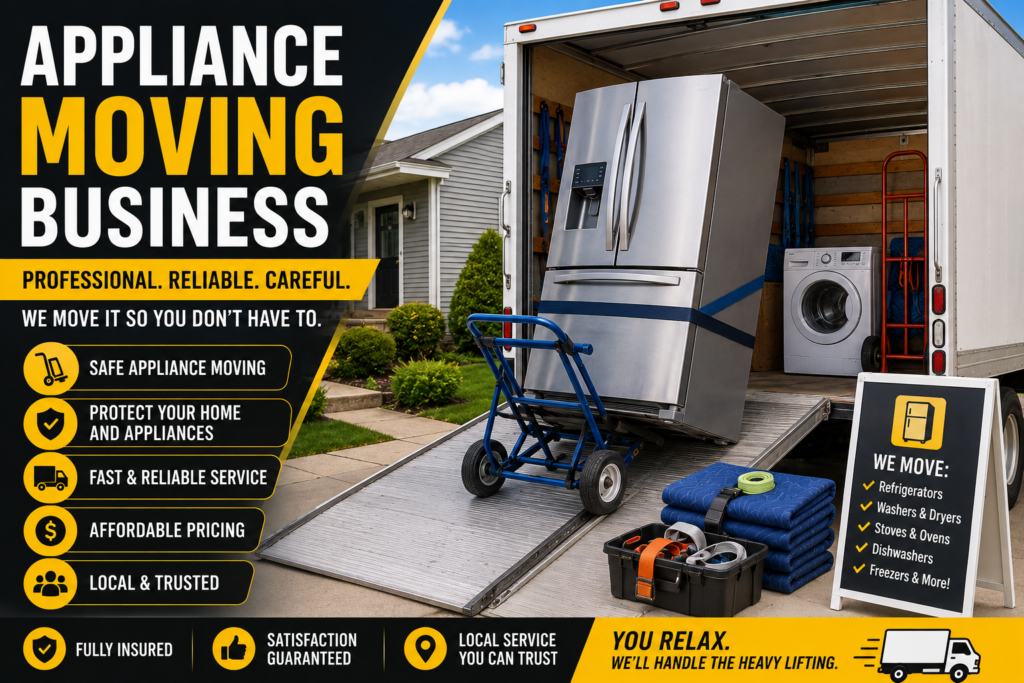
What Does an Appliance Moving Business Do?
An appliance moving business specializes in transporting large, heavy appliances safely from one location to another.
Common items include:
- Refrigerators
- Freezers
- Washers
- Dryers
- Dishwashers
- Stoves
- Ovens
- Commercial refrigerators
- Ice machines
- Water heaters
- Safes
- Fitness equipment
- Heavy furniture
Some businesses simply move appliances within the same home, while others transport them across town or to another city.
Many companies also offer:
- Appliance pickup
- Appliance delivery
- Appliance installation assistance
- Old appliance removal
- Garage rearranging
- Storage unit moves
- Commercial equipment moving
Offering multiple services increases revenue while making each trip more profitable.
Why This Business Can Be Profitable
People replace appliances every day.
Someone purchasing a refrigerator from a home improvement store may need delivery.
A homeowner selling a washer online may need someone to move it.
Landlords constantly replace appliances between tenants.
Property management companies regularly need refrigerators, stoves, and laundry equipment moved from one rental property to another.
Many customers simply cannot lift 300 to 700 pounds safely.
Because the work requires specialized equipment and physical labor, customers often expect professional pricing.
Who Are Your Customers?
Your customer base can include:
- Homeowners
- Renters
- Seniors
- Property managers
- Apartment complexes
- Realtors
- Landlords
- Appliance stores
- Used appliance dealers
- Restoration companies
- Remodeling contractors
- Storage facilities
- Commercial kitchens
- Restaurants
- Hotels
Building relationships with these businesses can provide repeat work throughout the year.
Services You Can Offer
Instead of offering only appliance moving, package multiple services together.
Examples include:
- Refrigerator moving
- Washer and dryer moving
- Safe moving
- Commercial appliance relocation
- In-home appliance moving
- Basement appliance removal
- Garage organization
- Appliance delivery
- Appliance pickup from Facebook Marketplace
- Appliance installation assistance
- Disposal of old appliances
- Scrap appliance pickup
- Emergency appliance moving
The more problems you solve during one visit, the more revenue you can generate from each customer.
Equipment You’ll Need
Fortunately, startup equipment is relatively affordable.
Basic equipment includes:
- Heavy-duty appliance dolly
- Furniture dollies
- Hand truck
- Ratchet straps
- Moving blankets
- Shoulder lifting straps
- Furniture sliders
- Protective floor runners
- Corner protectors
- Tool set
- Work gloves
- Steel-toe boots
- Pickup truck or cargo trailer
As your business grows, you may invest in:
- Liftgate truck
- Powered stair-climbing dolly
- Hydraulic lift equipment
- Enclosed trailer
- Pallet jack
Quality equipment helps reduce injuries while protecting customer property.
Startup Costs
Many entrepreneurs already own a pickup truck, making startup costs surprisingly affordable.
Estimated expenses include:
| Item | Estimated Cost |
|---|---|
| Appliance dolly | $300–$700 |
| Furniture dollies | $100–$300 |
| Ratchet straps | $50–$150 |
| Moving blankets | $100–$250 |
| Hand tools | $100–$300 |
| Protective equipment | $100–$300 |
| Insurance | $800–$3,000 annually |
| Website & marketing | $500–$2,000 |
A small operation can often launch for under $5,000 if you already own a suitable vehicle.
How Much Can You Charge?
Pricing varies depending on:
- Weight
- Number of appliances
- Stairs
- Distance traveled
- Number of movers required
- Difficulty of the move
Common pricing examples include:
- Single appliance move: $100–$250
- Two appliances: $175–$350
- Multiple appliances: $300–$700+
- Commercial equipment: Custom quote
Adding disposal, installation, or delivery services can significantly increase each invoice.
How to Find Customers
Finding customers is one of the most important parts of building a successful appliance moving business. Fortunately, people need help moving heavy appliances every day, and many are searching online for a local company that can do the job safely and quickly.
Start by creating a professional website that clearly explains your services, pricing, service area, and contact information. Optimize each page for local search terms such as “appliance movers near me” or “refrigerator moving service” so customers can easily find your business.
You should also create and optimize a Google Business Profile, encourage satisfied customers to leave reviews, and post photos of completed jobs. Positive reviews help build trust and improve your visibility in local search results.
Other effective ways to find customers include:
- Partnering with appliance stores
- Working with used appliance dealers
- Networking with real estate agents
- Contacting property management companies
- Introducing your services to landlords
- Building relationships with remodeling contractors
- Advertising in local Facebook community groups
- Running Google Local Services Ads
- Using Facebook Marketplace for delivery opportunities
- Asking happy customers for referrals
Repeat customers and business partnerships can provide a steady stream of work throughout the year.
Marketing Your Appliance Moving Business
You don’t need a massive advertising budget to attract customers. Consistent local marketing often produces the best results.
Your website should include separate pages for each service you offer, such as refrigerator moving, washer and dryer moving, safe moving, commercial appliance relocation, and appliance delivery. This improves your chances of appearing in search results for multiple keywords.
Take before-and-after photos whenever possible, especially when moving oversized appliances through tight spaces without causing damage. Visual proof of your work builds confidence with potential customers.
Consider using these marketing strategies:
- Search engine optimization (SEO)
- Google Business Profile
- Facebook Business Page
- Instagram photos and videos
- YouTube moving demonstrations
- Door hangers in neighborhoods
- Business cards
- Vehicle lettering or wraps
- Networking with appliance repair companies
- Referral programs for previous customers
The more visible your business becomes in your local area, the more inquiries you’ll receive.
Licenses, Insurance, and Legal Requirements
Before accepting customers, check your local and state business requirements. Regulations vary depending on where you operate.
Many appliance moving businesses choose to register as an LLC to separate personal and business assets. You may also need a general business license and any permits required by your city or county.
Insurance is essential because you’re handling expensive customer property. Consider carrying:
- General liability insurance
- Commercial auto insurance
- Cargo or inland marine coverage
- Workers’ compensation insurance if hiring employees
Being properly insured not only protects your business but also gives customers greater confidence when choosing your company.
Safety Tips
Appliance moving can be physically demanding and potentially dangerous without the proper equipment and techniques.
Always inspect the appliance before moving it. Remove loose shelves, disconnect utilities safely, secure doors with straps or tape, and measure doorways before attempting the move.
Never attempt to move extremely heavy appliances by yourself. Using two movers is often safer and faster than risking injury or damaging a customer’s home.
Remember these safety practices:
- Lift with your legs, not your back.
- Use appliance dollies whenever possible.
- Secure appliances with ratchet straps.
- Protect hardwood floors with floor runners.
- Use moving blankets to prevent scratches.
- Wear steel-toe boots and work gloves.
- Take extra care on stairs and uneven surfaces.
Safe work practices help prevent injuries, reduce insurance claims, and protect your reputation.
Common Mistakes to Avoid
Many new business owners make mistakes that can easily be avoided with proper planning.
Common mistakes include:
- Underpricing jobs
- Not charging extra for stairs
- Using inadequate moving equipment
- Working without insurance
- Failing to inspect access points before moving
- Attempting oversized jobs alone
- Ignoring online reviews
- Not confirming appointments
- Failing to protect customer floors and walls
- Accepting every job without considering profitability
Learning from these common mistakes can save thousands of dollars and help your business grow more quickly.
Ways to Increase Profits
One of the easiest ways to earn more money is by offering additional services during each appointment.
For example, after delivering a new refrigerator, you could remove and recycle the old one, move another appliance within the home, haul away unwanted furniture, or transport additional heavy items.
Consider expanding your services to include:
- Junk removal
- Estate cleanouts
- Foreclosure cleanouts
- Hoarder cleanouts
- Moving labor
- Trailer hauling
- Scrap metal collection
- Pallet recycling
- Furniture moving
- Storage unit cleanouts
Offering multiple related services increases the value of every customer visit while creating opportunities for repeat business.
Frequently Asked Questions
Do I need a commercial truck to start?
No. Many appliance moving businesses begin with a reliable pickup truck or cargo trailer. As your business grows, you can upgrade to larger vehicles with liftgates.
Can I operate this business by myself?
Some smaller jobs can be completed by one person using proper equipment, but many appliance moves require two movers for safety and efficiency.
How much can an appliance moving business earn?
Your income depends on your pricing, service area, and number of jobs completed. Many businesses increase profits by offering additional services such as junk removal, hauling, or appliance disposal during the same visit.
What appliances are moved most often?
Refrigerators, washers, dryers, freezers, stoves, ovens, dishwashers, and commercial kitchen equipment are among the most common items customers need moved.
Is appliance moving seasonal?
Demand remains fairly consistent throughout the year, although spring and summer often bring increased activity due to home sales and moving season.
Final Thoughts
An appliance moving business is an excellent opportunity for entrepreneurs who enjoy physical work and want to build a service business with relatively low startup costs. By investing in quality equipment, focusing on customer service, and marketing consistently, you can develop a reputation that leads to repeat customers and referrals.
As your business grows, consider expanding into complementary services such as junk removal, moving labor, trailer hauling, estate cleanouts, foreclosure cleanouts, hoarder cleanouts, scrap metal collection, and pallet recycling. Offering a variety of related services helps maximize every customer interaction while building a stronger, more profitable business.