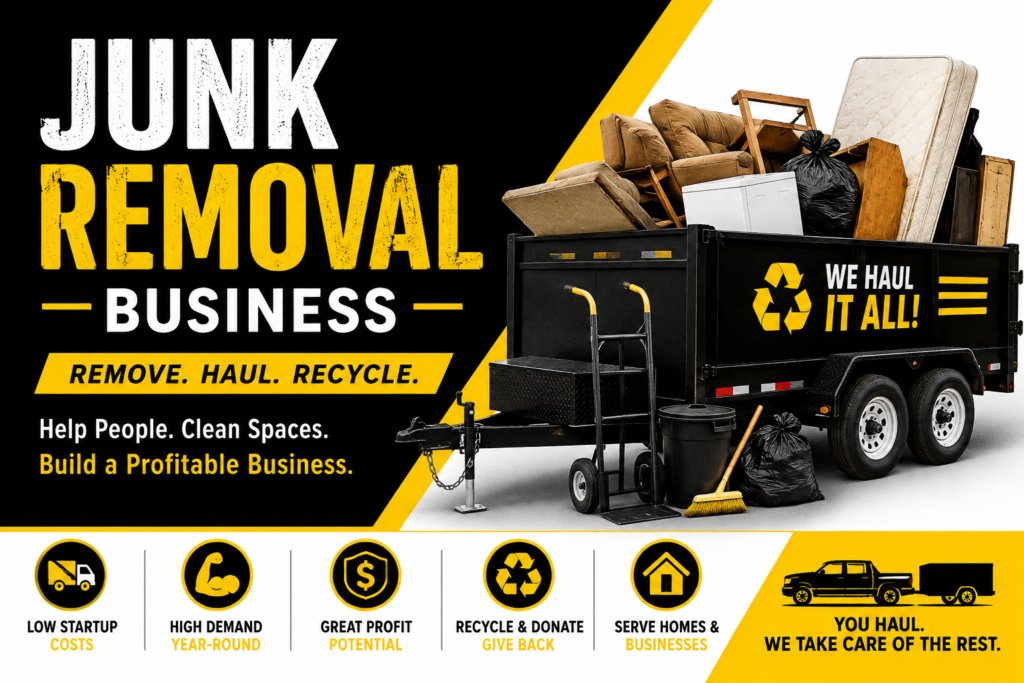
Every day, homeowners, landlords, businesses, and property managers need unwanted items removed quickly. Old furniture, broken appliances, renovation debris, yard waste, garage clutter, and office cleanouts all create opportunities for junk removal businesses. Most people either don’t have the time, equipment, or vehicle needed to haul everything away themselves.
A junk removal business is one of the most practical service businesses you can start because it requires relatively low startup costs and can begin with equipment many people already own. As your customer base grows, you can expand into specialized services such as estate cleanouts, foreclosure cleanouts, appliance removal, moving labor, trailer hauling, scrap metal collection, and pallet recycling.
If you’re looking for a business with consistent demand, flexible scheduling, and excellent income potential, junk removal is worth serious consideration.
What Does a Junk Removal Business Do?
A junk removal business collects and disposes of unwanted items from residential and commercial properties. Customers simply point to what they want removed, and you handle all the heavy lifting, loading, hauling, recycling, donating, and disposal.
Common jobs include:
- Furniture removal
- Mattress disposal
- Appliance removal
- Garage cleanouts
- Basement cleanouts
- Attic cleanouts
- Office cleanouts
- Storage unit cleanouts
- Construction debris removal
- Yard waste removal
- Hot tub removal
- Shed demolition and cleanup
Many successful companies eventually add related services that increase average job value.
Why Start a Junk Removal Business?
The demand continues to grow because people constantly move, renovate homes, downsize, inherit property, or simply accumulate too much stuff.
Benefits include:
- Low startup costs
- No expensive storefront required
- Can operate part-time initially
- High profit margins
- Repeat customers
- Commercial contracts available
- Multiple expansion opportunities
- Minimal inventory
Many entrepreneurs begin with a pickup truck and trailer before investing in larger dump trailers or box trucks.
Services You Can Offer
Offering multiple services helps increase revenue while keeping your schedule full throughout the year.
Residential Junk Removal
- Furniture
- Mattresses
- Boxes
- Garage clutter
- Household junk
- Basement cleanouts
Commercial Junk Removal
- Office furniture
- Warehouse cleanouts
- Retail fixtures
- Restaurant equipment
- Property management cleanouts
Specialized Services
- Estate cleanouts
- Foreclosure cleanouts
- Storage unit cleanouts
- Rental property cleanouts
- Construction debris removal
- Yard debris removal
Equipment You’ll Need
You don’t need a large investment to get started.
Basic equipment includes:
- Pickup truck or cargo trailer
- Utility trailer or dump trailer
- Dollies
- Furniture moving straps
- Hand truck
- Heavy-duty gloves
- Safety glasses
- Steel-toe boots
- Brooms
- Shovels
- Rakes
- Tarps
- Ratchet straps
- Leaf blower
- Trash cans
- Contractor garbage bags
- First aid kit
As your business grows, you can upgrade to dump trailers, enclosed trailers, or box trucks.
How Much Does It Cost to Start?
Your startup budget depends on the equipment you already own.
| Item | Estimated Cost |
|---|---|
| Business registration | $100–$500 |
| Business insurance | $600–$2,000/year |
| Trailer (if needed) | $2,000–$8,000 |
| Dollies & equipment | $300–$1,000 |
| Marketing | $200–$1,000 |
| Safety gear | $200–$500 |
| Website & domain | $100–$300 |
Many businesses launch for under $5,000 if they already own a truck.
How Much Can You Charge?
Pricing usually depends on how much space the junk occupies in your truck or trailer, along with labor, travel distance, and disposal costs.
Typical pricing:
- Single item removal: $75–$200
- Quarter load: $150–$300
- Half load: $300–$500
- Three-quarter load: $500–$700
- Full truck load: $700–$1,200+
Heavy materials such as concrete, dirt, roofing shingles, and bricks often require additional fees.
Where Do You Dispose of Junk?
Proper disposal is one of the biggest parts of the business.
You may take items to:
- Local landfills
- Transfer stations
- Metal recycling centers
- Electronics recycling facilities
- Appliance recycling centers
- Donation centers
- Habitat for Humanity ReStores
- Charitable organizations
Recycling and donating usable items helps reduce disposal costs while benefiting your community.
Do You Need a License?
Requirements vary by state and city.
You may need:
- Business license
- LLC or corporation registration
- General liability insurance
- Commercial auto insurance
- Local hauling permit (in some areas)
- Sales tax registration (where applicable)
Always check with your local government before operating.
How to Find Customers
Marketing is often easier than many people expect because customers usually need help immediately.
Create a Professional Website
Your website should explain your services, pricing, service area, and include an easy way for customers to request estimates.
Optimize Your Google Business Profile
Most customers search for “junk removal near me.”
Adding photos, reviews, and accurate business information can generate consistent local leads.
Use Social Media
Post before-and-after photos of completed jobs, cleanup videos, customer testimonials, and time-lapse removals.
Network Locally
Build relationships with:
- Real estate agents
- Property managers
- Realtors
- Apartment complexes
- Storage facilities
- Moving companies
- Contractors
- Senior living communities
Ways to Increase Profits
Many successful junk removal companies earn additional income by expanding their services.
You can also offer:
- Estate cleanouts
- Foreclosure cleanouts
- Moving labor
- Appliance moving
- Trailer hauling
- Scrap metal collection
- Pallet recycling
- Storage unit cleanouts
- Garage organization
Offering multiple services helps maximize every customer relationship.
Common Mistakes to Avoid
- Underpricing jobs
- Not charging for disposal fees
- Skipping insurance
- Ignoring online reviews
- Failing to recycle valuable materials
- Overloading trailers
- Poor scheduling
- Not photographing completed jobs
Careful planning and professional customer service can help build a strong reputation that generates referrals.
Frequently Asked Questions
Is a junk removal business profitable?
Yes. Many operators earn strong profits because startup costs are relatively low and customers are willing to pay for convenience and heavy lifting.
Can I start with just a pickup truck?
Absolutely. Many successful businesses begin with a pickup truck and utility trailer before upgrading to larger equipment.
Do I need employees?
No. Many owners start alone or with one helper and hire additional workers as demand increases.
What items should I avoid?
Hazardous waste, chemicals, asbestos, medical waste, and certain regulated materials often require specialized disposal procedures.
Final Thoughts
A junk removal business offers an excellent opportunity for entrepreneurs who enjoy physical work, helping customers, and building a local service company. With relatively low startup costs, steady demand, and numerous opportunities to expand into related home services, this business can grow from a part-time operation into a full-time company serving homeowners, landlords, contractors, and businesses throughout your community.
Read More
If you’re exploring additional opportunities in the moving and home services industry, don’t stop here. Our Start a Moving & Home Service Business guide explains how junk removal fits into the larger industry and covers other profitable service businesses you can add as your company grows.
- How to Start an Estate Cleanout Business
- How to Start a Foreclosure Cleanout Business
- How to Start a Hoarder Cleanout Business
- How to Start an Appliance Moving Business
- How to Start a Moving Labor Business
- How to Start a Trailer Hauling Business
- How to Start a Scrap Metal Collection Business
- How to Start a Pallet Recycling Business