Not every move requires a moving truck. Many people already have a rental truck, cargo trailer, storage container, or moving pod but need extra muscle to safely load and unload their belongings. That’s where a moving labor business comes in.
A moving labor business provides the physical labor needed to load, unload, rearrange, or move heavy furniture and household items without transporting them. Since customers often supply the truck or moving container, startup costs are much lower than starting a full-service moving company. This makes moving labor one of the easiest and most affordable businesses to launch.
Whether you’re helping someone move into a new apartment, unload a storage container, rearrange furniture inside a home, or assist senior citizens with downsizing, moving labor is a service that remains in demand throughout the year.
What Is a Moving Labor Business?
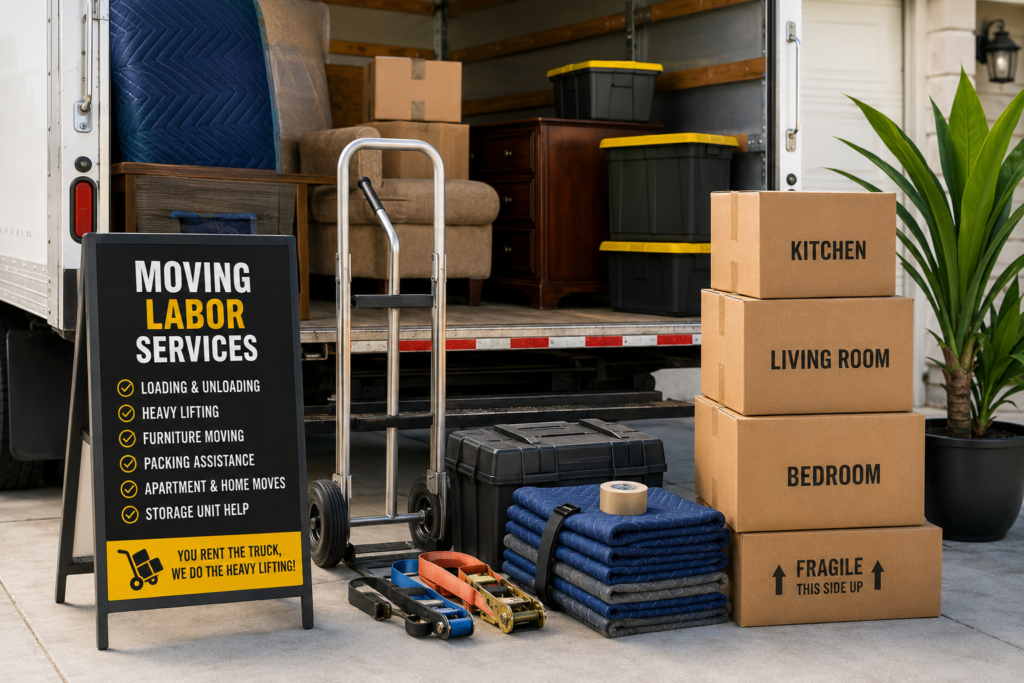
A moving labor business provides professional moving assistance without supplying the transportation. Customers rent their own moving truck or portable storage container, while you provide the experienced workers needed to safely move furniture, boxes, appliances, and other household belongings.
Many customers prefer this option because it costs significantly less than hiring a full-service moving company while still reducing the physical effort involved in moving.
Common Moving Labor Services
- Loading moving trucks
- Unloading rental trucks
- Loading portable storage containers
- Unloading storage pods
- Apartment moves
- Furniture rearranging
- Office furniture moving
- Senior moving assistance
- Storage unit loading
- Storage unit unloading
- Heavy item moving
- Packing assistance
Many businesses also offer packing, unpacking, furniture assembly, and appliance moving as additional services.
Why This Business Can Be Profitable
Every year, millions of people move into new homes, apartments, condominiums, and offices. Many rent trucks from companies like U-Haul, Penske, or Budget to save money but quickly realize they need help lifting heavy furniture.
Because customers provide the truck, your business avoids the high costs associated with owning commercial moving vehicles, making moving labor one of the most affordable service businesses to start.
Moving labor businesses also benefit from:
- Low startup costs
- Minimal equipment requirements
- Strong demand year-round
- Repeat customers
- Referral opportunities
- Flexible scheduling
- Opportunities to add related services
Many jobs last only two to four hours, allowing multiple appointments to be completed in a single day.
Who Are Your Customers?
Moving labor services are needed by a wide variety of residential and commercial customers.
Typical Customers Include
- Homeowners
- Apartment renters
- College students
- Military families
- Senior citizens
- Property managers
- Real estate agents
- Businesses relocating offices
- Storage facility customers
- Portable storage container users
Building relationships with apartment complexes, self-storage facilities, and real estate professionals can provide a steady stream of referrals.
Services You Can Offer
Offering multiple services helps increase your average job value while making your business more attractive to customers.
Popular Services
- Truck loading
- Truck unloading
- Packing services
- Unpacking services
- Furniture disassembly
- Furniture assembly
- Furniture rearranging
- Appliance moving
- Storage unit organization
- Garage organization
- Office moving labor
- Senior move assistance
The more services you provide, the easier it becomes to generate additional revenue from every appointment.
Equipment You’ll Need
Unlike a traditional moving company, moving labor businesses require relatively little equipment. Most customers provide the truck, trailer, or storage container.
Essential Equipment
- Furniture dollies
- Appliance dolly
- Hand truck
- Moving blankets
- Ratchet straps
- Shoulder lifting straps
- Furniture sliders
- Tool kit
- Cordless drill
- Work gloves
- Steel-toe boots
- Protective floor runners
- Corner protectors
- Stretch wrap
- Packing tape
High-quality equipment protects customers’ belongings while helping your crew work safely and efficiently.
Startup Costs
One of the biggest advantages of a moving labor business is its low startup cost. Since you don’t need to purchase a moving truck immediately, most expenses involve equipment, insurance, and marketing.
| Item | Estimated Cost |
|---|---|
| Furniture dollies | $150–$400 |
| Appliance dolly | $300–$700 |
| Moving blankets | $150–$400 |
| Ratchet straps | $50–$150 |
| Tools and supplies | $200–$500 |
| Safety equipment | $150–$400 |
| Insurance | $800–$3,000 annually |
| Website and marketing | $500–$2,000 |
Many owner-operators can launch their business for under $5,000, making this one of the least expensive moving-related businesses to start.
How Much Can You Charge?
Most moving labor businesses charge by the hour, although some offer flat-rate pricing for smaller jobs.
Typical Pricing Examples
- Two movers (2 hours): $200–$350
- Two movers (4 hours): $400–$700
- Three movers (4 hours): $600–$1,000
- Furniture rearranging: $150–$500
- Packing services: $50–$100 per hour per packer
Extra charges may apply for stairs, oversized furniture, long carrying distances, same-day service, or after-hours appointments.
How to Find Customers
Finding customers is one of the most important parts of building a successful moving labor business. Every day, homeowners, renters, businesses, and storage facility customers need help loading or unloading heavy furniture and boxes. By making your business easy to find online and building local partnerships, you can generate a steady flow of work throughout the year.
Your first priority should be creating a professional website that clearly explains your services, service area, pricing, and contact information. Include photos of your equipment, customer testimonials, and frequently asked questions to help potential customers feel confident about hiring your company.
You should also create and optimize a Google Business Profile so your business appears in local searches when customers need moving assistance. Positive customer reviews can significantly improve your visibility and help you stand out from competitors.
Great Referral Sources
- Apartment complexes
- Property management companies
- Self-storage facilities
- Portable storage container companies
- Real estate agents
- Home staging companies
- Senior living communities
- Furniture stores
- Office furniture suppliers
- Truck rental companies
Developing relationships with local businesses can provide repeat referrals and reduce your dependence on paid advertising.
Marketing Your Moving Labor Business
Most customers search online when they need moving help, making local SEO one of your most valuable marketing tools. Your website should include separate service pages whenever possible to improve your chances of ranking for multiple search terms.
Helpful Service Pages
- Truck Loading Services
- Truck Unloading Services
- Apartment Moving Help
- Furniture Moving
- Office Moving Labor
- Packing Services
- Unpacking Services
- Storage Unit Moving
- Senior Moving Assistance
- Appliance Moving
Additional marketing ideas include:
- Google Business Profile
- Search engine optimization (SEO)
- Google Local Services Ads
- Facebook Business Page
- Facebook Marketplace
- Community Facebook groups
- Vehicle magnets or lettering
- Business cards
- Referral rewards
- Networking with local businesses
Consistent marketing builds your reputation and helps generate both repeat customers and referrals.
Licenses, Insurance, and Legal Requirements
Although a moving labor business does not transport customer belongings, you should still operate as a legitimate business with the appropriate licenses and insurance.
Many owners choose to form an LLC to separate personal and business assets. Check with your state and local government to determine which licenses or permits are required in your area.
Recommended Insurance
- General liability insurance
- Commercial auto insurance
- Workers’ compensation insurance (if hiring employees)
- Tools and equipment coverage
- Commercial umbrella insurance
Insurance helps protect your business while providing peace of mind for your customers.
Safety Tips
Moving heavy furniture and appliances requires proper lifting techniques and the right equipment. Injuries can often be prevented by planning each move carefully.
Safe Moving Practices
- Lift with your legs instead of your back.
- Use furniture dollies whenever possible.
- Wear steel-toe boots and work gloves.
- Protect floors with floor runners.
- Secure heavy items with straps.
- Disassemble oversized furniture before moving it.
- Measure doorways and stairwells before lifting.
- Communicate clearly with your moving partner.
Working safely helps prevent injuries, protects customer property, and improves your company’s reputation.
Common Mistakes to Avoid
Many new business owners lose money or damage their reputation by making avoidable mistakes.
- Underpricing jobs
- Accepting jobs without asking enough questions
- Failing to inspect oversized items
- Working without insurance
- Using worn-out equipment
- Arriving late
- Ignoring customer reviews
- Not confirming appointments
- Working without proper lifting equipment
- Attempting dangerous moves without enough helpers
A professional appearance, clear communication, and reliable service will help you earn repeat customers and referrals.
Ways to Increase Profits
The easiest way to increase profits is by offering additional services during each appointment. Many customers need more than just loading and unloading assistance.
Profitable Add-On Services
- Packing services
- Unpacking services
- Furniture assembly
- Furniture disassembly
- Appliance moving
- Junk removal
- Estate cleanouts
- Foreclosure cleanouts
- Hoarder cleanouts
- Trailer hauling
- Scrap metal collection
- Pallet recycling
Offering complementary services allows you to solve more customer problems during a single visit while increasing your average revenue per job.
Frequently Asked Questions
Do I need a moving truck?
No. In a moving labor business, the customer usually provides the rental truck, trailer, or portable storage container. Your company supplies the labor needed to safely load and unload their belongings.
Can I operate this business alone?
Yes, although many jobs require at least two movers for safety and efficiency. Many owner-operators begin by working with a part-time helper before hiring employees as demand increases.
How much can a moving labor business earn?
Your earnings depend on your pricing, local demand, and the number of jobs completed each week. Expanding into related services can significantly increase your annual revenue.
Is moving labor seasonal?
Moving activity often increases during spring and summer, but customers need loading, unloading, furniture moving, and storage assistance throughout the year.
What makes this business different from a moving company?
A moving labor business supplies the workers but not the transportation. Customers provide the truck or storage container, reducing startup costs and allowing you to focus on providing professional moving assistance.
Related Articles
If you’re building a complete moving and home service business, these guides can help you expand your services and increase your revenue.
- Start a Moving & Home Service Business
- Junk Removal Business
- Estate Cleanout Business
- Foreclosure Cleanout Business
- Hoarder Cleanout Business
- Appliance Moving Business
- Trailer Hauling Business
- Scrap Metal Collection Business
- Pallet Recycling Business
Final Thoughts
A moving labor business is one of the easiest ways to enter the moving industry without the expense of purchasing commercial moving trucks. Startup costs are relatively low, demand remains strong throughout the year, and there are many opportunities to build long-term relationships with homeowners, renters, businesses, and property managers.
As your business grows, consider expanding into complementary services such as appliance moving, junk removal, estate cleanouts, foreclosure cleanouts, trailer hauling, scrap metal collection, and pallet recycling. Offering multiple moving and property services allows you to serve more customers, increase your average job value, and build a successful business that can continue growing for years to come.