
A water vending business allows entrepreneurs to generate recurring income by selling purified drinking water through automated self-service vending machines. As more consumers look for affordable, high-quality drinking water while reducing single-use plastic waste, water vending has become an attractive business opportunity with long-term growth potential.
Unlike traditional retail businesses, water vending machines operate around the clock with minimal staffing. Customers simply bring reusable containers, select the amount of purified water they need, make a payment, and fill their containers. Once installed in a busy location, a water vending machine can provide steady revenue while requiring only routine maintenance and periodic servicing.
This guide covers everything you need to know about starting a water vending business, including startup costs, choosing equipment, finding profitable locations, legal requirements, maintenance, marketing, and strategies for growing a successful route-based business.
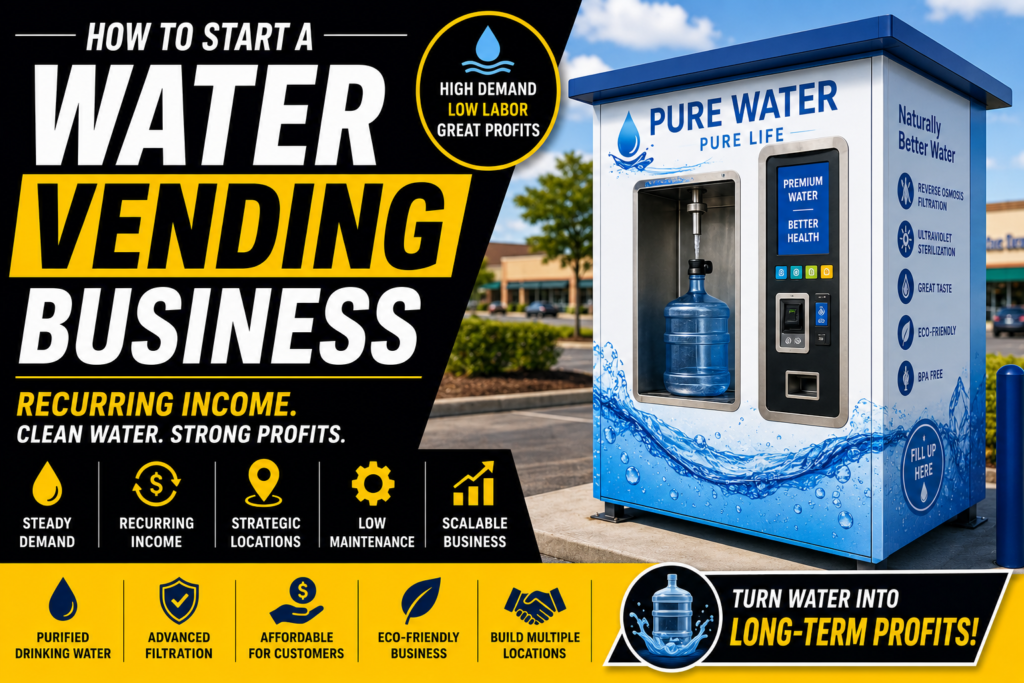
What Is a Water Vending Business?
A water vending business owns and operates automated machines that dispense purified drinking water directly to customers. Most systems use advanced filtration methods such as reverse osmosis, carbon filtration, and ultraviolet sterilization to provide clean, great-tasting water.
Customers typically pay by the gallon, making water vending an affordable alternative to purchasing bottled water while reducing plastic waste.
Common installation locations include:
- Shopping centers
- Grocery store parking lots
- Convenience stores
- Apartment complexes
- Mobile home parks
- Campgrounds
- RV parks
- Gas stations
- Commercial plazas
- Residential neighborhoods
- Farm supply stores
- Community centers
Why Start a Water Vending Business?
Water is an essential product that people purchase year-round. Combined with automated equipment, this creates a business model capable of generating recurring revenue with relatively low daily labor.
Some of the biggest advantages include:
- Steady year-round demand
- Recurring income
- 24/7 automated operation
- Low labor requirements
- Environmentally friendly business model
- Scalable with multiple machines
- Minimal inventory management
- Flexible work schedule
Many operators eventually expand into multiple locations, creating profitable service routes that can be managed by one person or a small team.
How Does a Water Vending Business Make Money?
Revenue is generated each time customers purchase purified water. Since operating costs are relatively low after installation, profitable locations can provide dependable recurring income.
Factors that influence profitability include:
- Customer traffic
- Water pricing
- Machine reliability
- Water quality
- Location visibility
- Maintenance expenses
Locations with large residential populations or frequent travelers often experience the highest customer demand.
How Much Does It Cost to Start a Water Vending Business?
Startup costs vary depending on the machine size, filtration system, and site preparation requirements.
| Expense | Estimated Cost |
|---|---|
| Water Vending Machine | $20,000–$100,000+ |
| Site Preparation | $2,000–$15,000 |
| Plumbing & Utility Connections | $2,000–$10,000 |
| Business Registration | $100–$500 |
| Insurance | $500–$2,000 annually |
| Permits & Inspections | Varies |
Although startup costs can be significant, water vending machines are designed to provide long-term service with relatively low operating expenses.
Choosing the Right Water Vending Machine
Not all water vending systems are the same. Choosing high-quality equipment can improve reliability, reduce maintenance costs, and produce better-tasting water.
Look for machines with:
- Reverse osmosis filtration
- UV sterilization
- Carbon filtration
- Touchscreen controls
- Cashless payment options
- Remote monitoring
- Large storage capacity
- Energy-efficient operation
- Manufacturer warranty
Compare several manufacturers and review maintenance requirements before making your investment.
Finding the Best Locations
Location plays a major role in determining the profitability of a water vending machine. High-visibility locations with convenient vehicle access typically produce the highest sales.
Excellent locations include:
- Busy shopping centers
- Grocery stores
- Apartment communities
- RV parks
- Campgrounds
- Residential neighborhoods
- Farm and ranch supply stores
- Gas stations
- Commercial plazas
- Tourist destinations
Choose locations where customers can easily park, fill multiple containers, and access the machine safely throughout the day.
Understanding Water Filtration Systems
The quality of your water is the foundation of your business. Customers choose water vending machines because they expect clean, safe, and great-tasting drinking water. Investing in a high-quality filtration system helps build customer trust and encourages repeat business.
Many commercial water vending machines use several stages of filtration, including:
- Sediment filtration
- Activated carbon filtration
- Reverse osmosis (RO)
- Ultraviolet (UV) sterilization
- Mineral enhancement systems
- Ozone sanitation (on some models)
These systems remove contaminants, improve taste, and help produce high-quality drinking water that meets customer expectations.
Maintaining Your Water Vending Machine
Routine maintenance is essential for producing clean water and keeping your equipment operating efficiently. A well-maintained machine reduces downtime, extends equipment life, and protects your business reputation.
Regular maintenance should include:
- Replacing water filters on schedule
- Inspecting reverse osmosis membranes
- Sanitizing storage tanks
- Cleaning dispensing nozzles
- Checking pumps and plumbing connections
- Inspecting payment systems
- Testing water quality
- Cleaning the exterior of the machine
Many modern machines offer remote monitoring, allowing owners to receive maintenance alerts and monitor system performance from their smartphone or computer.
Health Regulations and Permits
Because your business sells drinking water, health regulations are often more extensive than those for many other vending businesses. Requirements vary by state and local jurisdiction.
You may need:
- Business registration (LLC or Corporation)
- Employer Identification Number (EIN)
- Local business license
- Health department approval
- Water quality testing
- Environmental permits (where applicable)
- Sales tax registration
Always check with your state and local agencies before opening your business to ensure you meet all applicable regulations.
Insurance for a Water Vending Business
Insurance helps protect your equipment, business assets, and financial investment from unexpected events.
Policies commonly considered include:
- General liability insurance
- Commercial property insurance
- Equipment breakdown coverage
- Commercial auto insurance (if servicing multiple locations)
- Workers’ compensation insurance (if hiring employees)
Speak with an insurance professional to determine the coverage that best fits your business model and local requirements.
Marketing Your Water Vending Business
Although a good location is your best marketing tool, promoting your business can increase customer awareness and encourage repeat visits.
Effective marketing ideas include:
- Create a professional website.
- Claim and optimize your Google Business Profile.
- Use highly visible signage.
- Advertise on local social media groups.
- Partner with nearby campgrounds and RV parks.
- Offer loyalty rewards or refill discounts.
- Encourage satisfied customers to leave online reviews.
Providing consistently clean, affordable drinking water is often the best long-term marketing strategy.
How to Grow a Water Vending Business
Once your first machine becomes profitable, expansion becomes much easier through additional locations and route optimization.
Growth strategies include:
- Install additional water vending machines.
- Expand into neighboring communities.
- Purchase existing vending locations.
- Add purified ice vending where demand exists.
- Use route management software.
- Hire technicians as your business grows.
Many successful operators eventually manage several machines that generate dependable recurring income across multiple cities.
Common Mistakes to Avoid
Many new owners make mistakes that reduce profits and increase maintenance costs.
- Choosing poor locations.
- Ignoring routine filter replacement.
- Neglecting water quality testing.
- Buying unreliable equipment.
- Overlooking local regulations.
- Underestimating maintenance costs.
- Providing poor customer service.
- Expanding too quickly.
A successful water vending business is built on reliable equipment, excellent water quality, and consistent maintenance.
Frequently Asked Questions
Is a water vending business profitable?
Yes. A well-located water vending machine can generate recurring revenue for many years. Profitability depends on customer demand, water pricing, operating costs, and routine maintenance.
How often should filters be replaced?
Filter replacement schedules vary depending on machine usage, water quality, and manufacturer recommendations. Following the recommended maintenance schedule helps maintain water quality and equipment performance.
Can I operate more than one machine?
Absolutely. Many entrepreneurs begin with a single location and gradually expand into multiple machines throughout their service area.
Do I need employees?
No. Many operators manage several machines themselves before hiring technicians or route drivers as the business grows.
Can water vending machines operate year-round?
Yes. In many regions, water vending machines generate sales throughout the year, although seasonal demand may vary depending on climate and customer needs.
Related Articles
- How to Start a Route-Based Business
- How to Start a Vending Machine Business
- How to Start an ATM Business
- How to Start an Ice Vending Business
- How to Start a Coffee Vending Business
- How to Start a Claw Machine Business
Continue Learning
Previous Article: How to Start a Coffee Vending Business
Next Article: How to Start a Claw Machine Business
Final Thoughts
A water vending business offers entrepreneurs an opportunity to build recurring income while providing customers with affordable, high-quality drinking water. By investing in reliable equipment, maintaining excellent water quality, and choosing high-traffic locations, you can build a business that generates consistent revenue with relatively low day-to-day labor.
Many successful owners begin with one machine and steadily expand into multiple locations. With proper maintenance, strong customer service, and careful reinvestment, a water vending business can become a scalable and profitable addition to your route-based business portfolio.