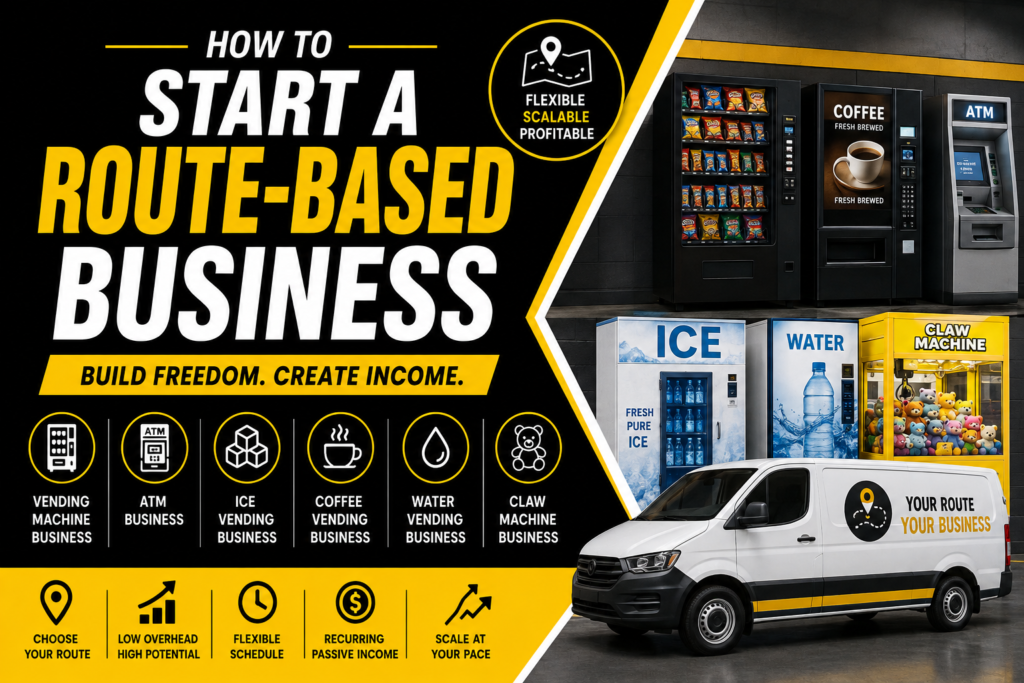
A route-based business is one of the most practical ways to build recurring income without operating a traditional storefront. Instead of waiting for customers to visit you, your business follows a planned route to service locations, restock machines, deliver products, or maintain equipment. Once your routes are established, you can generate consistent revenue while serving the same customers on a regular schedule.
Many successful entrepreneurs begin with a single route and gradually expand into multiple territories. Some route businesses require only a vehicle and basic equipment, while others involve vending machines, ATMs, or specialty equipment placed at businesses. As your customer base grows, you can hire employees, add additional vehicles, or purchase more machines to increase your income.
Whether you’re looking for a full-time career, a side hustle, or a business that can eventually become semi-passive, route-based businesses offer excellent long-term potential.
What Is a Route-Based Business?
A route-based business earns money by traveling to multiple customer locations on a scheduled basis. Instead of relying on walk-in traffic, your business follows an established route to provide products or services.
Depending on the business model, you may:
- Refill vending machines
- Collect ATM transaction revenue
- Deliver bottled water
- Refill coffee vending machines
- Service ice vending machines
- Maintain amusement machines
- Provide recurring maintenance services
Because customers often require ongoing service, route businesses frequently enjoy repeat income and predictable schedules.
Why Route-Based Businesses Are So Popular
Many entrepreneurs choose route businesses because they offer flexibility, scalability, and recurring revenue.
Some of the biggest advantages include:
- Lower startup costs than many retail businesses
- No expensive storefront required
- Flexible working hours
- Predictable weekly schedules
- Repeat customers
- Easy to expand by adding routes
- Can often be operated with one vehicle
- Opportunity to become semi-passive with employees
Unlike businesses that constantly need new customers, route businesses focus on maintaining long-term relationships with existing locations.
Best Route-Based Business Ideas
There are dozens of profitable route businesses available depending on your budget and interests. Below are some of the most popular opportunities.
Vending Machine Business
A vending machine business places snack, drink, or specialty vending machines inside offices, schools, warehouses, apartment buildings, hospitals, and other high-traffic locations. Income comes from product sales, while your primary responsibilities include restocking inventory and maintaining the machines.
Learn more: How to Start a Vending Machine Business
ATM Business
ATM businesses generate income by placing automated teller machines inside convenience stores, bars, hotels, gas stations, and shopping centers. Each withdrawal generates a surcharge fee, creating recurring revenue with relatively little daily maintenance.
Learn more: How to Start an ATM Business
Ice Vending Business
Ice vending businesses use self-service ice machines that customers can access 24 hours a day. While startup costs are higher than traditional vending, many owners enjoy significant passive income after installation.
Learn more: How to Start an Ice Vending Business
Coffee Vending Business
Coffee vending routes supply fresh coffee to offices, manufacturing facilities, hotels, schools, and public buildings. Depending on your business model, you may own the machines or provide coffee service and maintenance.
Learn more: How to Start a Coffee Vending Business
Water Vending Business
Water vending businesses provide purified drinking water through refill stations or water vending machines. Customers bring reusable containers and purchase filtered water by the gallon.
Learn more: How to Start a Water Vending Business
Claw Machine Business
Claw machines remain popular in restaurants, shopping centers, arcades, bowling alleys, and family entertainment centers. Revenue comes from customers playing the games while you periodically restock prizes and collect earnings.
Learn more: How to Start a Claw Machine Business
Characteristics of a Successful Route Business
Although every route business is different, the most successful operators share several common characteristics.
Recurring Customers
Repeat customers provide predictable revenue and reduce marketing costs.
Efficient Routes
Carefully planned routes reduce fuel expenses and increase the number of locations serviced each day.
Reliable Service
Customers expect machines to be stocked, equipment to function properly, and problems to be resolved quickly.
Good Record Keeping
Tracking expenses, inventory, maintenance, and profits helps maximize earnings while identifying opportunities for expansion.
How Much Does It Cost to Start a Route-Based Business?
Startup costs vary depending on the type of route business you choose.
| Business Type | Typical Startup Cost |
|---|---|
| Small vending route | $3,000–$15,000 |
| ATM business | $3,000–$10,000 per ATM |
| Coffee vending | $5,000–$20,000 |
| Water vending | $20,000–$100,000+ |
| Ice vending | $50,000–$250,000+ |
| Claw machine route | $500–$5,000 per machine |
Many owners begin with just one or two machines and reinvest profits to grow over time.
Equipment You’ll Need
The equipment required depends on your business, but most route operators need:
- Reliable vehicle or cargo van
- Smartphone or tablet
- GPS navigation
- Scheduling software
- Inventory management system
- Basic repair tools
- Cleaning supplies
- Business insurance
- Accounting software
- Payment processing system
Investing in dependable equipment helps reduce downtime and improves customer satisfaction.
How to Find Profitable Locations
The success of almost every route-based business depends on securing high-quality locations. A machine or service route placed in a busy location with consistent customer traffic can generate steady recurring income for years.
Before approaching a business owner, spend time researching the location. Look for places with high foot traffic, employees who spend long hours on-site, or customers who regularly wait for services.
Excellent locations include:
- Office buildings
- Manufacturing facilities
- Hotels and motels
- Apartment complexes
- Hospitals and medical offices
- Auto repair shops
- Schools and colleges
- Gyms and fitness centers
- Laundromats
- Shopping centers
- Truck stops
- Large warehouses
Always present yourself professionally when meeting property owners. Explain how your service benefits their customers or employees while requiring very little effort on their part.
Planning an Efficient Route
A profitable route isn’t simply about adding more stops—it’s about making each mile count. Poor planning wastes fuel, increases vehicle maintenance costs, and limits the number of customers you can service each day.
When building your route:
- Group nearby locations together.
- Avoid heavy traffic whenever possible.
- Schedule high-volume locations first.
- Track travel time between stops.
- Use GPS route optimization apps.
- Leave room for emergency service calls.
As your business grows, review your routes regularly. Even small improvements can save hundreds of hours each year.
Choosing the Right Vehicle
Your vehicle is one of the most important investments in a route-based business. It should be reliable, fuel-efficient, and large enough to transport inventory, tools, or equipment.
Many new owners begin with:
- Pickup trucks
- Cargo vans
- Small box trucks
- SUVs with storage space
If you’re servicing vending machines, coffee equipment, or water stations, a cargo van often provides the best combination of storage capacity and operating costs.
Licenses, Permits, and Insurance
Requirements vary by state and local government, but most route businesses should consider the following:
- Business registration (LLC or corporation)
- Employer Identification Number (EIN)
- State or local business license
- Sales tax permit (if selling taxable products)
- Commercial vehicle insurance
- General liability insurance
- Workers’ compensation insurance (if hiring employees)
Some specialized businesses, such as food, beverage, or water vending, may require additional health department approvals depending on your state.
Managing Inventory
Inventory management directly affects profitability. Overstocking ties up cash, while understocking results in lost sales and unhappy customers.
Good inventory practices include:
- Tracking sales by location
- Removing slow-selling products
- Keeping popular items in stock
- Rotating products before expiration
- Buying wholesale whenever possible
Many route owners use inventory management apps that track product levels and simplify restocking.
Marketing Your Route-Based Business
Even though many route businesses rely on recurring customers, marketing remains important for finding new locations and expanding your territory.
Some effective marketing strategies include:
- Create a professional website.
- Optimize your Google Business Profile.
- Network with local business owners.
- Join your Chamber of Commerce.
- Ask satisfied clients for referrals.
- Use LinkedIn to connect with property managers.
- Send introduction letters to businesses.
- Offer free location evaluations.
Building strong relationships often leads to referrals and multiple location opportunities from the same property owner.
How to Scale a Route-Based Business
One of the biggest advantages of route businesses is that they can be expanded gradually.
Common growth strategies include:
- Add more locations to existing routes.
- Purchase additional machines.
- Expand into neighboring cities.
- Hire route drivers.
- Purchase existing routes from retiring owners.
- Offer complementary products or services.
Many successful route operators eventually manage several routes while employees handle the day-to-day servicing.
Common Mistakes to Avoid
Many beginners make avoidable mistakes that reduce profits and slow business growth.
- Choosing poor locations
- Ignoring machine maintenance
- Buying too much equipment too soon
- Failing to track expenses
- Not optimizing routes
- Providing inconsistent service
- Neglecting customer relationships
- Failing to reinvest profits
A well-managed route business focuses on efficiency, reliability, and long-term customer satisfaction.
Frequently Asked Questions
What is the most profitable route-based business?
Profitability depends on your market, startup budget, and management skills. Popular options include vending machine routes, ATM businesses, water vending, ice vending, coffee vending, and claw machine routes because they generate recurring income from established locations.
Can I start a route-based business part-time?
Yes. Many entrepreneurs begin part-time while maintaining another job. As revenue grows and additional locations are added, the business can transition into a full-time operation.
How do route businesses make recurring income?
Most route businesses earn recurring revenue by servicing the same customer locations on a regular schedule. Each visit generates product sales, service fees, or transaction income, creating predictable cash flow.
Do I need employees?
No. Many owners operate their business alone at first. Employees are typically hired only after enough locations have been added to justify additional labor.
Can I own more than one type of route business?
Absolutely. Many entrepreneurs operate multiple revenue streams, such as vending machines, ATMs, coffee vending, and claw machines, using the same service vehicle and customer route.
Explore More Route-Based Business Guides
If you’re ready to start a specific type of route business, these in-depth guides will help you choose the right opportunity and walk you through the startup process.
- How to Start a Vending Machine Business
- How to Start an ATM Business
- How to Start an Ice Vending Business
- How to Start a Coffee Vending Business
- How to Start a Water Vending Business
- How to Start a Claw Machine Business
Final Thoughts
A route-based business offers an excellent opportunity to build predictable, recurring income without operating a traditional storefront. Whether you choose vending machines, ATMs, coffee vending, water vending, ice vending, or claw machines, success comes from selecting profitable locations, providing dependable service, and continually improving your routes.
Many successful entrepreneurs start with just one machine or one small route before expanding into multiple territories. By focusing on customer relationships, efficient operations, and steady reinvestment, you can build a business that generates long-term income and grows year after year.