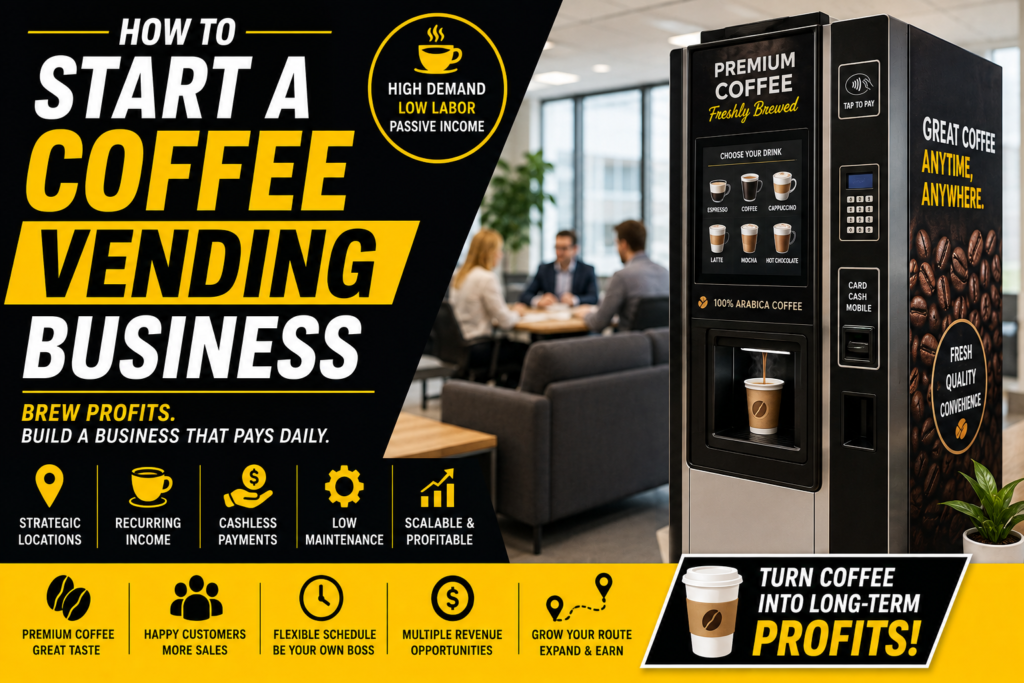
A coffee vending business is an excellent way to generate recurring income by providing freshly brewed coffee through self-service vending machines. Businesses, schools, hospitals, hotels, factories, and office buildings all rely on convenient coffee options for employees, customers, and visitors. By placing coffee vending machines in busy locations, entrepreneurs can create a business that generates revenue throughout the day with relatively little daily labor.
Many owners begin with one or two machines before expanding into multiple locations and building profitable service routes. Since coffee is one of the world’s most consumed beverages, demand remains steady throughout the year, making this an attractive route-based business for entrepreneurs seeking recurring revenue.
This guide explains everything you need to know about starting a coffee vending business, including startup costs, selecting machines, finding profitable locations, maintaining equipment, and growing a successful operation.
What Is a Coffee Vending Business?
A coffee vending business owns and operates automated coffee machines that prepare hot beverages on demand. Customers simply select their preferred drink, make a payment, and receive freshly brewed coffee, cappuccino, espresso, hot chocolate, or other specialty beverages within minutes.
Most machines use coffee beans or fresh ingredients to produce café-quality drinks without requiring a full-service coffee shop.
Popular installation locations include:
- Office buildings
- Hospitals
- Hotels
- Manufacturing plants
- Warehouses
- Schools and colleges
- Car dealerships
- Auto repair shops
- Government buildings
- Airports
- Shopping centers
- Fitness centers
Why Start a Coffee Vending Business?
Coffee vending combines automation with one of the world’s most popular beverages. Customers purchase coffee throughout the day, creating multiple opportunities for recurring sales.
Advantages include:
- Strong year-round demand
- Recurring income
- No retail storefront required
- Flexible work schedule
- Scalable business model
- High customer convenience
- Can operate with minimal employees
- Easy to expand into multiple locations
Many operators eventually build routes consisting of dozens of coffee vending machines that can be serviced on a regular schedule.
How Does a Coffee Vending Business Make Money?
Revenue comes from selling individual cups of coffee and specialty beverages. Depending on the machine, you may also sell hot chocolate, tea, espresso, cappuccino, latte, or flavored coffee drinks.
Profitability depends on several factors:
- Daily customer traffic
- Drink pricing
- Ingredient costs
- Machine reliability
- Location quality
- Routine maintenance
Busy office buildings and manufacturing facilities often generate consistent weekday sales because employees purchase coffee throughout the workday.
How Much Does It Cost to Start a Coffee Vending Business?
Your startup investment depends on the type of vending machine you purchase and the number of locations you plan to operate.
| Expense | Estimated Cost |
|---|---|
| Coffee Vending Machine | $3,000–$12,000 |
| Initial Coffee & Supplies | $500–$2,000 |
| Business Registration | $100–$500 |
| Insurance | $300–$1,500 annually |
| Payment System Setup | $100–$500 |
| Vehicle & Fuel | Varies |
Many entrepreneurs start with one machine before reinvesting profits into additional locations.
Choosing the Right Coffee Vending Machine
Selecting the right machine is one of the most important decisions you’ll make. Higher-quality equipment generally produces better beverages, experiences fewer breakdowns, and requires less maintenance.
Features to consider include:
- Fresh bean brewing system
- Touchscreen controls
- Cashless payment options
- Remote monitoring
- Large ingredient capacity
- Energy-efficient operation
- Multiple drink selections
- Easy maintenance access
- Manufacturer warranty
Compare several commercial coffee vending machines before making your investment.
Finding Profitable Locations
Location determines how often your machine is used. Businesses with large numbers of employees or visitors generally produce the highest sales volume.
Excellent locations include:
- Office complexes
- Factories
- Hospitals
- Hotels
- Universities
- Distribution centers
- Government offices
- Transportation terminals
- Call centers
- Auto dealerships
Look for locations where people spend several hours each day and want quick access to quality coffee without leaving the building.
Maintaining Your Coffee Vending Machines
Routine maintenance is essential for keeping your coffee vending machines operating reliably and serving high-quality beverages. A machine that is clean, well-stocked, and functioning properly encourages repeat customers and reduces costly downtime.
Regular maintenance tasks include:
- Cleaning brewing components
- Refilling coffee beans and ingredients
- Restocking cups, lids, and stirrers
- Inspecting payment systems
- Checking water filters
- Cleaning drip trays
- Testing drink quality
- Updating machine software when available
Many modern machines include remote monitoring systems that alert owners when supplies are running low or when maintenance is required.
Managing Inventory
Keeping the right products in stock is one of the keys to maximizing sales and customer satisfaction. Running out of coffee, cups, or ingredients can quickly reduce revenue and damage your reputation.
Monitor inventory levels regularly, including:
- Coffee beans
- Ground coffee
- Milk powder or creamer
- Sugar and sweeteners
- Hot chocolate mix
- Tea products
- Cups and lids
- Stirrers and napkins
Purchasing supplies in bulk from wholesale distributors can reduce your operating costs and improve profit margins.
Cleaning and Sanitation
Because coffee vending machines dispense food products, cleanliness should always be a priority. A clean machine produces better-tasting beverages and helps extend the life of your equipment.
Develop a cleaning schedule that includes:
- Daily wipe-down of exterior surfaces
- Cleaning nozzles and dispensing areas
- Sanitizing brewing components
- Replacing water filters as recommended
- Removing coffee residue and buildup
- Inspecting ingredient containers
Following the manufacturer’s maintenance guidelines helps ensure your machines continue producing consistent, high-quality drinks.
Licenses and Business Requirements
Licensing requirements vary depending on your state and local government. Before launching your coffee vending business, make sure you’ve completed the necessary registrations.
- Business registration (LLC or Corporation)
- Employer Identification Number (EIN)
- Local business license
- Sales tax permit (where applicable)
- Food service permits if required
- Health department approval when applicable
Check with your local government agencies to determine the requirements for your specific location.
Insurance for a Coffee Vending Business
Insurance helps protect your equipment, business assets, and financial investment from unexpected events.
Policies to consider include:
- General liability insurance
- Commercial property insurance
- Equipment breakdown coverage
- Commercial auto insurance
- Workers’ compensation insurance (if hiring employees)
Review your policy carefully to ensure your vending machines and business operations are adequately covered.
Marketing Your Coffee Vending Business
Although customers use your machines directly, your primary marketing efforts are aimed at business owners, property managers, and facility managers who decide whether to allow your machines in their buildings.
Effective marketing strategies include:
- Create a professional website.
- Optimize your Google Business Profile.
- Visit local businesses in person.
- Network with commercial property managers.
- Offer free machine consultations.
- Provide excellent customer service.
- Request referrals from satisfied clients.
- Highlight cashless payment options and premium coffee quality.
Building long-term relationships with property owners often leads to multiple machine placements and referral opportunities.
How to Grow a Coffee Vending Business
Once your first locations become profitable, expansion becomes much easier. Many operators steadily grow by reinvesting profits into additional machines.
Growth strategies include:
- Add more machines to existing customers.
- Expand into neighboring cities.
- Offer premium specialty beverages.
- Purchase existing vending routes.
- Hire route service technicians.
- Use remote monitoring to manage multiple locations efficiently.
As your route expands, consistent scheduling and preventative maintenance become increasingly important.
Common Mistakes to Avoid
Many new vending operators make mistakes that reduce profits and increase maintenance costs.
- Choosing poor locations.
- Buying low-quality machines.
- Ignoring regular cleaning.
- Allowing ingredients to run out.
- Not monitoring machine performance.
- Failing to build relationships with location owners.
- Underpricing beverages.
- Expanding too quickly.
A successful coffee vending business focuses on reliability, beverage quality, and excellent customer service.
Frequently Asked Questions
Is a coffee vending business profitable?
Yes. Well-placed coffee vending machines in offices, hospitals, hotels, factories, and other busy locations can generate recurring income with relatively low operating costs.
How often do coffee vending machines need servicing?
Service frequency depends on customer usage. Busy machines may require multiple visits each week for cleaning, ingredient refills, and routine maintenance.
Can coffee vending machines accept credit cards?
Yes. Most modern commercial coffee vending machines accept credit cards, debit cards, mobile wallets, and contactless payments in addition to cash.
Do I need employees?
No. Many owners operate several coffee vending machines themselves before hiring route technicians as the business expands.
Can I own multiple coffee vending routes?
Absolutely. Many successful entrepreneurs build routes with dozens of machines across multiple cities, creating reliable recurring revenue.
Related Articles
- How to Start a Route-Based Business
- How to Start a Vending Machine Business
- How to Start an ATM Business
- How to Start an Ice Vending Business
- How to Start a Water Vending Business
- How to Start a Claw Machine Business
Continue Learning
Previous Article: How to Start an Ice Vending Business
Next Article: How to Start a Water Vending Business
Final Thoughts
A coffee vending business can provide dependable recurring income while meeting the constant demand for convenient, high-quality coffee. By placing reliable machines in busy locations, maintaining excellent beverage quality, and providing outstanding service, you can build long-term relationships with businesses and create a profitable route-based operation.
Many successful entrepreneurs start with one machine and gradually expand into dozens of locations. With careful planning, consistent maintenance, and a focus on customer satisfaction, a coffee vending business can become a scalable and rewarding investment that continues generating revenue year after year.