Custom T-shirts are one of the most profitable products in the small manufacturing industry. Businesses use them to promote their brands, schools order them for clubs and sports teams, nonprofits sell them to raise money, and families create matching shirts for reunions and special events. Because there is year-round demand, a T-shirt printing business can start as a part-time venture and grow into a full-time operation.
The key to success isn’t simply printing shirts—it’s solving customer problems. A local business may need employee uniforms within a week. A youth baseball team may need affordable jerseys before opening day. A nonprofit organization may need shirts for a fundraising walk. By providing quality products, fast turnaround, and excellent customer service, you can build a business that earns repeat customers and referrals.
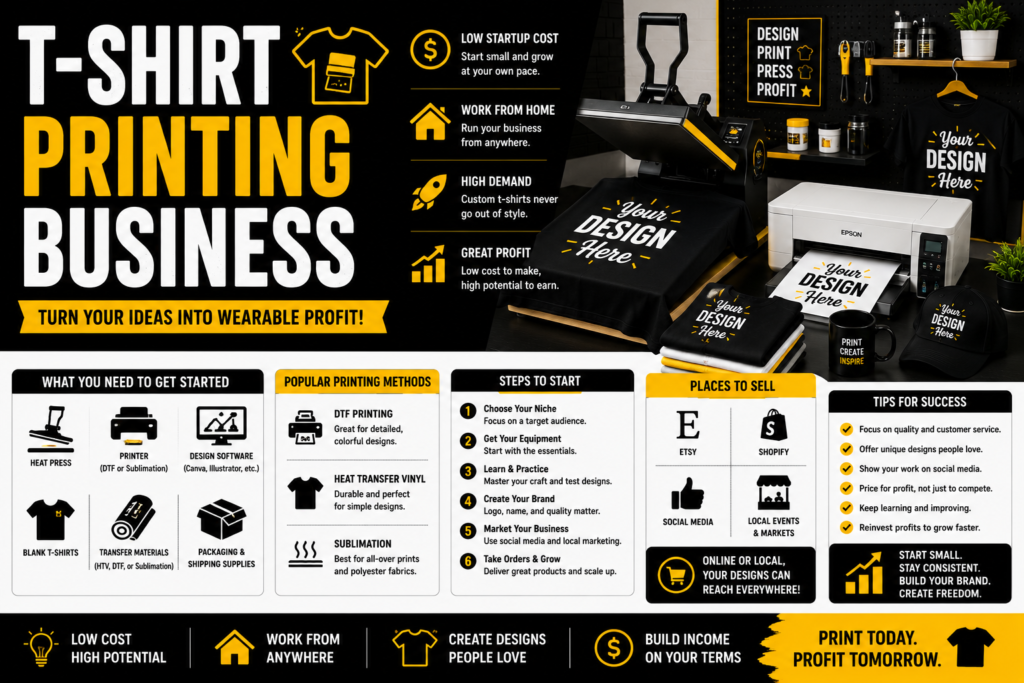
What Is a T-Shirt Printing Business?
A T-shirt printing business designs and customizes apparel for individuals, businesses, schools, sports teams, churches, organizations, and special events. Depending on your equipment and production methods, you can print one shirt or thousands.
Many entrepreneurs begin from a home workshop before expanding into a commercial location as demand grows.
Common products include:
- T-shirts
- Hoodies
- Sweatshirts
- Polo shirts
- Tank tops
- Long-sleeve shirts
- Safety shirts
- Performance apparel
- Team uniforms
- Company uniforms
Many successful businesses eventually expand into hats, bags, promotional products, and embroidery.
What Problem Does a T-Shirt Printing Business Solve?
Customers need custom apparel for many reasons, including branding, marketing, team spirit, employee identification, fundraising, and special events.
A T-shirt printing business solves problems for:
- Small businesses needing employee uniforms
- Schools ordering spirit wear
- Sports teams purchasing uniforms
- Churches promoting events
- Nonprofit organizations raising money
- Contractors wanting professional company apparel
- Families celebrating reunions
- Event organizers creating memorable merchandise
Instead of ordering large quantities from national suppliers, many customers prefer a local business that offers personalized service and faster delivery.
Why Customers Pay for Custom T-Shirts
Customers value custom apparel because it helps them:
- Promote their business
- Build brand recognition
- Create team unity
- Celebrate important events
- Raise money
- Recognize employees
- Strengthen community involvement
Many customers are willing to pay more for quality products, dependable service, and quick turnaround times.
Is a T-Shirt Printing Business Profitable?
Yes. T-shirt printing offers excellent profit potential because blank apparel is relatively inexpensive, while customized products can command much higher prices.
Profitability depends on:
- Production efficiency
- Material costs
- Pricing strategy
- Customer service
- Repeat business
- Marketing
Businesses that focus on commercial clients often enjoy recurring orders throughout the year.
How Much Does It Cost to Start?
Startup costs vary depending on the printing method you choose.
| Item | Estimated Cost |
|---|---|
| Heat Press | $300–$1,000 |
| Vinyl Cutter | $250–$700 |
| Computer | $600–$1,500 |
| Design Software | $0–$300 |
| Blank Apparel | $300–$1,000 |
| Heat Transfer Vinyl or Transfers | $300–$800 |
| Packaging Supplies | $100–$300 |
| Business Registration | Varies |
Most beginners can start with an investment between $2,000 and $8,000.
Popular T-Shirt Printing Methods
Several printing methods are available, each with advantages.
Heat Transfer Vinyl (HTV)
Ideal for beginners and small custom orders.
Pros
- Affordable equipment
- Easy to learn
- Great for names and numbers
Cons
- Slower for large orders
Direct-to-Film (DTF)
A growing option that produces vibrant, full-color designs.
Pros
- Full-color printing
- Excellent detail
- Works on many fabrics
Cons
- Higher equipment costs
Direct-to-Garment (DTG)
Perfect for detailed artwork and smaller production runs.
Pros
- High-quality prints
- Unlimited colors
Cons
- More expensive equipment
Screen Printing
Best for large production runs.
Pros
- Low cost per shirt on large orders
- Durable prints
Cons
- Longer setup time
- Not ideal for one-off orders
Equipment You’ll Need
Basic equipment includes:
- Heat press
- Vinyl cutter
- Computer
- Graphic design software
- Printer (depending on your printing method)
- Blank shirts
- Heat transfer vinyl or transfer film
- Teflon sheets
- Cutting tools
- Measuring tools
- Packaging supplies
- Shipping scale
- Work table
- Storage shelving
Purchase reliable equipment that fits your current production needs rather than buying the most expensive equipment available.
Skills You’ll Need
Successful T-shirt business owners often have skills in:
- Graphic design
- Customer service
- Time management
- Organization
- Marketing
- Sales
- Quality control
- Basic computer skills
You don’t need professional experience before getting started. Many owners learn through online tutorials, practice, and manufacturer training.
How to Start a T-Shirt Printing Business
1. Choose Your Niche
Focus on a specific market, such as schools, contractors, sports teams, restaurants, nonprofits, or local businesses.
2. Select Your Printing Method
Choose the production method that fits your budget and expected order sizes.
3. Register Your Business
Register your business, obtain any required licenses, and open a business bank account.
4. Purchase Equipment
Invest in dependable equipment that produces consistent results.
5. Create Sample Products
Build a portfolio showcasing your work for potential customers.
6. Set Your Prices
Include materials, labor, overhead, packaging, and profit when calculating prices.
7. Build Your Website
Create a professional website featuring your products, pricing information, customer testimonials, and contact information.
8. Find Your First Customers
Promote your business through networking, referrals, local events, social media, and partnerships with businesses and organizations.
9. Deliver Outstanding Service
Quality products and excellent communication encourage repeat customers and referrals.
10. Expand Your Services
As your business grows, consider adding hoodies, hats, embroidery, promotional products, and online ordering.
Common Mistakes to Avoid
Avoid these common mistakes:
- Buying expensive equipment too early
- Underpricing your work
- Ignoring production costs
- Using low-quality apparel
- Missing deadlines
- Poor communication
- Offering too many products initially
- Failing to ask satisfied customers for reviews
How Much Money Can You Make?
Your earnings depend on your pricing, production capacity, and customer base.
Many business owners begin part-time while building experience. As repeat customers increase, many expand into full-time operations serving businesses, schools, and organizations throughout their region.
Commercial accounts that place recurring orders often become the foundation of long-term profitability.
How to Grow Your Business
Once your business is established, you can increase revenue by:
- Adding hoodies and sweatshirts
- Offering embroidery
- Selling promotional products
- Creating online stores for schools and teams
- Offering graphic design services
- Providing rush-order services
- Selling nationwide through your website
- Hiring employees as production increases
Diversifying your products helps reduce seasonal fluctuations and increases average order value.
Related Articles
- How to Start a Small Manufacturing Business
- How to Start a Vinyl Decal Business
- How to Start a Custom Sticker Business
- How to Start a Laser Engraving Business
- How to Start an Embroidery Business
- Best Heat Press Machines for Small Businesses
Frequently Asked Questions
Can I start a T-shirt printing business from home?
Yes. Many successful businesses begin in a garage, basement, or spare room, provided local zoning laws allow home-based businesses.
What is the best printing method for beginners?
Heat Transfer Vinyl (HTV) is often the easiest and most affordable option because it requires relatively inexpensive equipment and works well for small custom orders.
How much does it cost to start?
Most beginners can launch a T-shirt printing business for $2,000 to $8,000, depending on the equipment they purchase.
Who are the best customers?
Small businesses, schools, sports teams, churches, nonprofit organizations, contractors, and community groups often become loyal, repeat customers.
Can I make money selling custom T-shirts?
Yes. A profitable business focuses on quality products, reliable service, competitive pricing, and building long-term relationships with repeat customers.
What other products can I sell?
Many T-shirt printing businesses expand into hoodies, hats, embroidered apparel, vinyl decals, custom stickers, promotional products, and personalized gifts.
Final Thoughts
A T-shirt printing business is one of the most accessible small manufacturing businesses for aspiring entrepreneurs. With moderate startup costs, flexible production options, and year-round demand, it offers an excellent opportunity to build a profitable business while helping customers promote their brands, celebrate important events, and create lasting memories.
Success comes from more than printing shirts. It comes from understanding your customers’ needs, delivering quality products on time, and providing outstanding service that keeps them coming back. Focus on solving real problems, and you’ll build a business with long-term growth potential.