
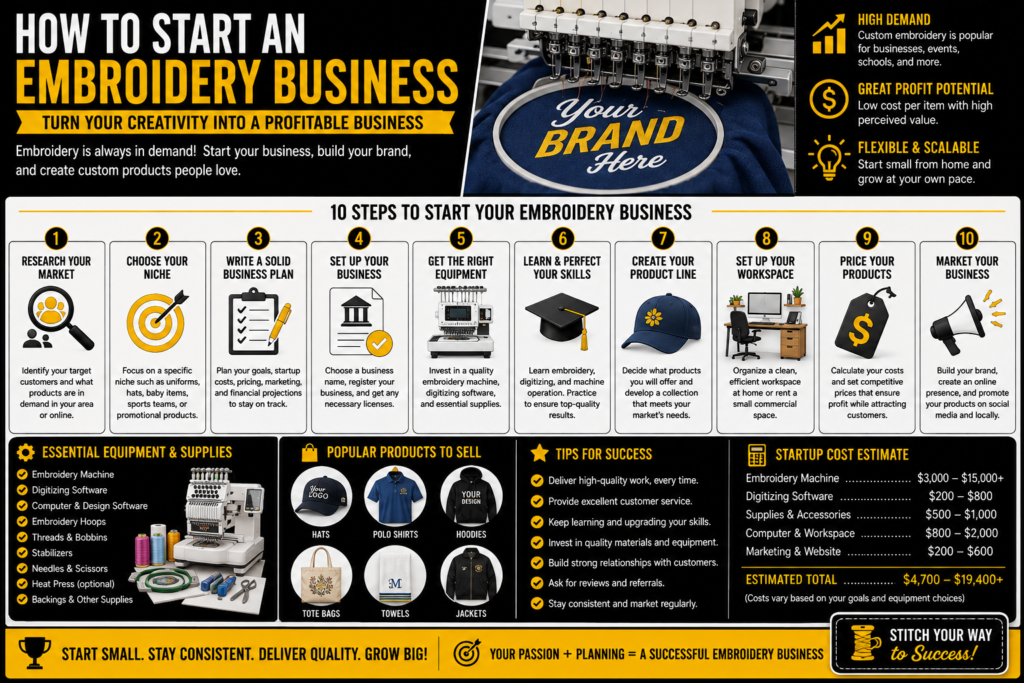
 Embroidery is one of the most respected and profitable businesses in the custom apparel industry. Unlike printed designs, embroidered logos and lettering create a premium, professional appearance that businesses, schools, sports teams, and organizations are willing to pay more for. From embroidered polo shirts and hats to jackets, uniforms, backpacks, and promotional items, there is consistent demand throughout the year.
One of the biggest advantages of starting an embroidery business is that you can begin on a relatively small scale. Many successful embroidery businesses operate from a home office or workshop before expanding into commercial space. As your customer base grows, you can add additional embroidery machines, hire employees, and expand into other custom apparel services.
At StartBusinessHub,COM we believe every successful business begins by solving a real problem. Customers aren’t simply looking for embroidered apparel—they’re looking for professional uniforms, branded merchandise, team apparel, and personalized products that represent their business or organization. When you provide quality craftsmanship and dependable service, you’ll build long-term customer relationships.
What Is an Embroidery Business?
An embroidery business uses computerized embroidery machines to stitch logos, names, artwork, and lettering onto clothing and other fabric products.
Popular embroidered products include:
- Polo shirts
- Hats and caps
- Jackets
- Hoodies
- Work uniforms
- Medical scrubs
- Backpacks
- Tote bags
- Towels
- Blankets
- Aprons
- Promotional apparel
Many embroidery businesses also offer screen printing, T-shirt printing, vinyl decals, and promotional products to increase revenue.
What Problem Does an Embroidery Business Solve?
Businesses and organizations need durable, professional-looking apparel that promotes their brand and creates a consistent appearance.
An embroidery business solves problems for:
- Businesses needing employee uniforms
- Schools ordering staff apparel
- Sports teams purchasing embroidered jackets
- Restaurants creating branded uniforms
- Medical offices ordering scrubs
- Churches buying ministry apparel
- Contractors promoting their companies
- Event organizers needing premium apparel
Unlike printed graphics, embroidery creates a high-end appearance that lasts for years.
Why Customers Choose Embroidery
Customers choose embroidered apparel because it offers:
- A professional appearance
- Long-lasting durability
- Premium branding
- High-quality stitching
- Excellent wash resistance
- Greater perceived value
- A polished corporate image
Businesses often prefer embroidery for employee uniforms because it withstands repeated washing and daily wear.
Is an Embroidery Business Profitable?
Yes. Embroidery businesses can generate excellent profits because customers are often willing to pay premium prices for customized apparel.
Profitability depends on:
- Production efficiency
- Machine utilization
- Quality control
- Customer service
- Commercial accounts
- Pricing strategy
Repeat orders from businesses and organizations often become the foundation of long-term success.
How Much Does It Cost to Start?
Startup costs depend on the type of embroidery machine you purchase.
| Item | Estimated Cost |
|---|---|
| Embroidery Machine | $3,500–$12,000 |
| Computer | $600–$1,500 |
| Embroidery Software | $0–$1,500 |
| Hoops & Accessories | $300–$800 |
| Thread Inventory | $300–$700 |
| Blank Apparel | $500–$1,500 |
| Packaging Supplies | $100–$300 |
| Business Registration | Varies |
Most entrepreneurs invest between $5,000 and $15,000 to launch an embroidery business.
Equipment You’ll Need
Basic equipment includes:
- Commercial embroidery machine
- Computer
- Embroidery software
- Hoops
- Needles
- Thread
- Stabilizers
- Bobbins
- Scissors
- Blank apparel
- Packaging supplies
- Shipping scale
Purchasing dependable equipment reduces downtime and improves stitch quality.
Skills You’ll Need
Helpful skills include:
- Attention to detail
- Basic computer skills
- Customer service
- Time management
- Organization
- Color coordination
- Marketing
- Sales
Most embroidery techniques can be learned through practice and manufacturer training.
How to Start an Embroidery Business
1. Choose Your Target Market
Focus on customers such as:
- Small businesses
- Schools
- Sports teams
- Medical offices
- Restaurants
- Contractors
- Churches
- Nonprofit organizations
Commercial customers often provide recurring orders.
2. Purchase Your Equipment
Choose an embroidery machine that fits both your budget and production goals.
3. Register Your Business
Register your business and obtain any required licenses before accepting customer orders.
4. Build Sample Products
Create embroidered apparel that showcases your craftsmanship.
5. Set Your Prices
Calculate thread costs, apparel costs, machine time, labor, overhead, and profit.
6. Build Your Website
Display your portfolio, customer reviews, pricing information, and contact details.
7. Find Your First Customers
Market your business through:
- Google Business Profile
- Local networking
- Chamber of Commerce events
- Business referrals
- Community organizations
8. Deliver Outstanding Service
Reliable communication, quality embroidery, and on-time delivery encourage repeat business.
Common Mistakes to Avoid
Avoid these common mistakes:
- Buying more machine than you need
- Underpricing embroidery
- Using poor-quality thread
- Skipping sample stitching
- Ignoring machine maintenance
- Accepting unrealistic deadlines
- Failing to digitize designs properly
How Much Money Can You Make?
Income depends on your pricing, production capacity, and customer base.
Many successful embroidery businesses grow by developing long-term relationships with businesses, schools, medical offices, and organizations that regularly reorder uniforms and branded apparel.
How to Grow Your Business
As your business grows, consider adding:
- T-shirt printing
- Vinyl decals
- Custom stickers
- Promotional products
- Personalized gifts
- Company stores
- Online ordering
- Screen printing
- Laser engraving
Offering multiple decorating services makes your business more valuable to customers and increases average order value.
Frequently Asked Questions
Can I start an embroidery business from home?
Yes. Many embroidery businesses operate successfully from a home office or workshop before expanding into commercial space.
How much does it cost to start?
Most entrepreneurs invest between $5,000 and $15,000, depending on the embroidery machine and equipment they purchase.
Do I need embroidery experience?
No. Many business owners begin with little or no experience and learn through online courses, manufacturer training, and practice.
Who are the best customers?
Businesses, schools, sports teams, medical offices, contractors, restaurants, churches, and nonprofit organizations often become repeat customers.
Is embroidery more profitable than T-shirt printing?
It depends on your market, but embroidery often commands higher prices because customers view it as a premium product.
Can I expand into other products?
Absolutely. Many embroidery businesses add T-shirt printing, laser engraving, vinyl decals, promotional products, and custom stickers to serve more customers.
Final Thoughts
An embroidery business combines creativity, craftsmanship, and consistent demand to create an excellent opportunity for aspiring entrepreneurs. By producing high-quality embroidered apparel and providing exceptional customer service, you can build long-term relationships with businesses and organizations that continue ordering year after year.
Whether you begin with one embroidery machine or eventually operate a full commercial shop, your success will depend on solving customer problems, delivering quality products, and building a reputation for reliability.
Read More:
- How to Start a Small Manufacturing Business
- How to Start a T-Shirt Printing Business
- How to Start a Vinyl Decal Business
- How to Start a Custom Sticker Business
- How to Start a Laser Engraving Business
Continue Your Manufacturing Journey
If you’re still exploring manufacturing opportunities, start with our complete guide to How to Start a Small Manufacturing Business to see how embroidery fits into the larger manufacturing industry and compare it with other profitable business ideas.