
Landscaping is one of the most rewarding property service businesses you can start. A well-designed landscape improves curb appeal, increases property value, and creates outdoor spaces homeowners enjoy year-round. From planting shrubs and installing flower beds to laying decorative rock and refreshing mulch, landscaping services are in demand in nearly every community.
Many homeowners want beautiful yards but don’t have the time, equipment, or knowledge to complete landscaping projects themselves. Businesses, property managers, and homeowners associations also rely on dependable landscaping contractors to keep their properties looking attractive. That creates an excellent opportunity for anyone interested in building a profitable outdoor service business with room to grow.
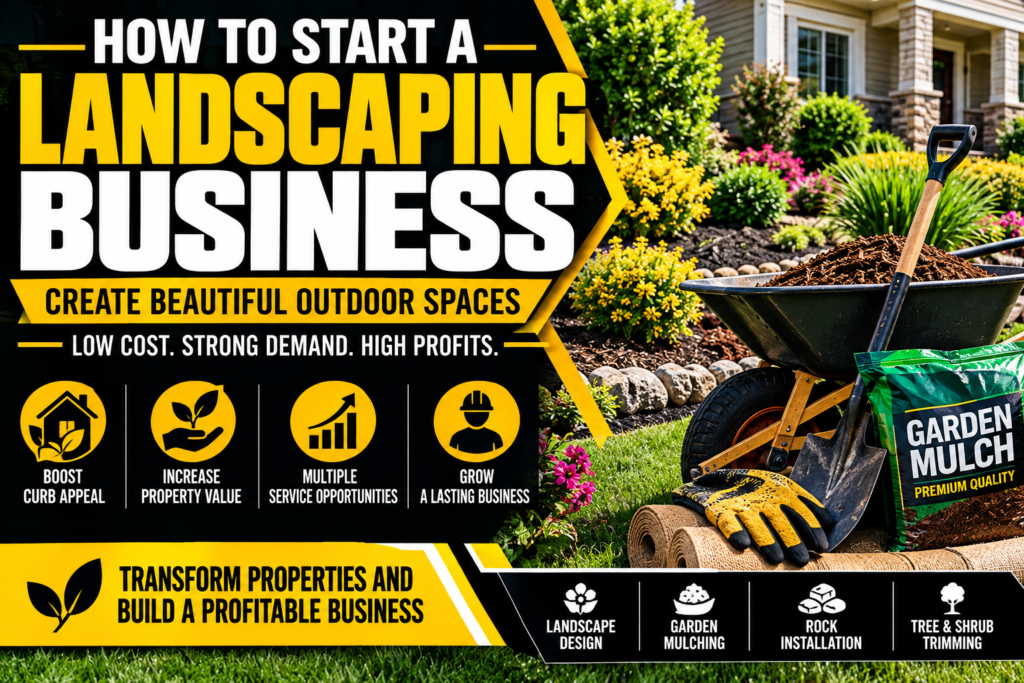
Why Start a Landscaping Business?
Landscaping offers a wide variety of services, allowing you to start small and expand as your experience and customer base grow. Many successful landscaping companies begin by offering basic services before adding larger installation and maintenance projects.
Some advantages of starting a landscaping business include:
- Strong demand throughout much of the year
- Relatively low startup costs
- Can be started part-time
- High earning potential
- Opportunities for repeat customers
- Easy to expand into additional services
- Scalable from solo operation to large company
Many landscaping businesses also provide recurring maintenance, creating dependable monthly income in addition to larger installation projects.
What Does a Landscaping Business Do?
A landscaping business improves the appearance, function, and health of residential and commercial outdoor spaces. Some jobs involve simple landscape improvements, while others include complete property makeovers.
Typical services include:
- Landscape design
- Flower bed installation
- Shrub and bush planting
- Decorative rock installation
- Garden mulching
- Tree and shrub trimming
- Landscape edging
- Plant replacement
- Weed removal
- Seasonal landscape cleanup
- Drainage improvements
- Lawn renovations
Many contractors also offer Lawn Care, Garden Mulching, Landscaping Rock Installation, Weed Removal, and Small Tree Trimming. Offering multiple landscaping services increases revenue while helping customers work with a single contractor.
Skills You’ll Need
You don’t need a degree in landscape design to start this business, but understanding plants, outdoor construction, and customer service will help you succeed.
Helpful skills include:
- Basic landscaping knowledge
- Plant identification
- Landscape design principles
- Safe equipment operation
- Customer service
- Job estimating
- Time management
- Physical stamina
- Attention to detail
Many successful landscapers learn these skills through experience while expanding the services they offer over time.
Equipment You’ll Need
Your equipment needs depend on the services you provide, but most landscaping businesses begin with common outdoor tools.
Basic equipment includes:
- Shovels
- Garden rakes
- Steel landscape rake
- Wheelbarrow
- Leaf rake
- Spade
- Mattock
- Pruning shears
- Loppers
- String trimmer
- Leaf blower
- Wheelbarrow
- Garden hose
- Tape measure
- Work gloves
- Safety glasses
- Hearing protection
As your business grows, you may invest in:
- Utility trailer
- Mini skid steer
- Dump trailer
- Commercial mower
- Plate compactor
- Power auger
- Chainsaw
- Power hedge trimmer
Purchasing equipment gradually helps you keep startup costs low while expanding the services you can offer.
Startup Costs
Landscaping businesses can be started with relatively little money, especially if you already own a pickup truck and basic tools.
| Item | Estimated Cost |
|---|---|
| Hand Tools | $500–$1,000 |
| Power Equipment | $1,000–$3,000 |
| Safety Equipment | $150–$300 |
| Trailer (optional) | $1,500–$5,000 |
| Marketing Materials | $200–$500 |
| Business Insurance | Varies |
Many landscaping businesses can be started for $3,000–$8,000, depending on the equipment you already own.
How Much Can You Make?
Landscaping projects vary greatly in size and complexity, allowing you to earn income from both small residential jobs and larger commercial contracts.
Typical pricing includes:
- Small landscaping project: $300–$800
- Flower bed installation: $500–$2,000
- Landscape renovation: $2,000–$10,000+
- Seasonal cleanup: $200–$800
- Commercial landscaping: Custom estimates
Adding recurring maintenance services can provide steady monthly income while larger installation projects increase overall profitability.
Finding Your First Customers
You don’t need a large advertising budget to start finding landscaping customers. Most homeowners and businesses hire landscapers based on reputation, online reviews, referrals, and the quality of work they see in their own neighborhood.
Drive Local Neighborhoods
Look for homes with overgrown flower beds, worn mulch, bare landscape areas, dead shrubs, or outdated landscaping. These homeowners are often already thinking about improving their property.
Google Business Profile
Create a free Google Business Profile so local customers can find your landscaping business when searching for landscaping services, landscape installation, or yard improvements.
Partner With Realtors
Real estate agents frequently recommend landscaping improvements before listing a home. Improving curb appeal can increase a property’s value and help it sell more quickly.
Property Managers
Apartment complexes, office buildings, retail centers, and rental properties often need dependable landscaping contractors for seasonal improvements and ongoing maintenance.
Offer Related Services
Many landscaping customers also need Lawn Care, Garden Mulching, Landscaping Rock Installation, Weed Removal, Small Tree Trimming, and Leaf Removal. Offering multiple services allows you to increase the value of every customer relationship.
Pricing Your Services
Every landscaping project is different, so it’s important to inspect the property before providing an estimate. A detailed quote helps customers understand what is included while ensuring you charge enough to cover labor, materials, and profit.
Consider:
- Property size
- Plants and materials required
- Decorative rock or mulch installation
- Labor time
- Equipment needed
- Delivery charges
- Cleanup and debris removal
- Travel distance
Professional estimates help build customer confidence and reduce misunderstandings later.
Safety Comes First
Landscaping involves lifting heavy materials, operating power equipment, and working outdoors in changing weather conditions. Following safe work practices helps prevent injuries while protecting your customers’ property.
Always:
- Wear safety glasses when operating power equipment.
- Use hearing protection with loud tools.
- Lift heavy materials properly to prevent back injuries.
- Wear work gloves while handling rocks, plants, and tools.
- Stay hydrated during hot weather.
- Inspect equipment before every job.
- Call utility locating services before digging.
Customers appreciate contractors who work safely and leave the property clean after completing each project.
Common Mistakes to Avoid
Many new landscaping businesses lose money because they underestimate projects or try to grow too quickly. Avoiding these common mistakes will help you build a profitable business.
Underestimating Material Costs
Always calculate the cost of mulch, rock, plants, edging, soil, and delivery before providing a quote.
Ignoring Drainage Problems
Beautiful landscaping won’t last if water drainage problems aren’t addressed. Consider grading and runoff before installing new landscape features.
Buying Too Much Equipment Too Soon
Purchase equipment only when demand justifies it. Renting specialty equipment can save thousands of dollars during your first year.
Skipping Maintenance Opportunities
Many landscaping businesses focus only on installations. Offering recurring maintenance creates steady monthly income and long-term customer relationships.
Leaving the Property Dirty
Always remove debris, sweep sidewalks, and leave the landscape looking finished. A clean job site often leads to referrals and positive online reviews.
Growing Your Business
Landscaping naturally expands into many other property service businesses. Customers who hire you for one landscaping project often need additional outdoor services throughout the year.
As your business grows, consider adding:
- Lawn Care
- Garden Mulching
- Landscaping Rock Installation
- Weed Removal
- Small Tree Trimming
- Gutter Cleaning
- Leaf Removal
- Driveway Sealing
- Fence Painting
- Fence Repair
- Curb Number Painting
As your business expands, you may also decide to:
- Hire your first employee.
- Purchase a dump trailer.
- Invest in a skid steer.
- Add irrigation installation.
- Offer landscape design services.
- Bid on commercial landscaping contracts.
Is a Landscaping Business Right for You?
If you enjoy working outdoors, being creative, and transforming ordinary properties into beautiful outdoor spaces, a landscaping business can be an excellent opportunity. The work is varied, every project is different, and customers appreciate the immediate improvement landscaping brings to their homes.
With dependable service, quality workmanship, and a willingness to expand your skills, you can build a landscaping company that grows through referrals, repeat customers, and long-term maintenance contracts.
Final Thoughts
A landscaping business offers excellent earning potential while allowing you to build a company that can grow for many years. Startup costs are manageable, demand remains strong, and there are countless opportunities to expand into additional property services.
Whether you begin with flower bed installations, decorative rock, mulch, or complete landscape renovations, delivering quality work and outstanding customer service will help your business stand out from the competition.
If you’re looking for a business that combines creativity, physical work, and long-term growth potential, landscaping is one of the best property service businesses you can start.
Frequently Asked Questions
Do I need landscaping experience?
No. Many successful landscapers start with basic projects and gradually expand their knowledge and services through experience.
Can I start a landscaping business part-time?
Yes. Many landscaping businesses begin on evenings and weekends before growing into full-time operations.
Do I need a truck?
A pickup truck is extremely helpful for transporting tools, plants, mulch, and landscaping materials, although some people begin by renting equipment when needed.
Can landscaping become a year-round business?
Yes. Many landscaping companies offer snow removal, leaf removal, gutter cleaning, holiday lighting, and other seasonal services to generate income throughout the year.
What businesses pair well with landscaping?
Landscaping works well with lawn care, garden mulching, landscaping rock installation, weed removal, gutter cleaning, leaf removal, driveway sealing, fence painting, fence repair, and curb number painting.
Read More
If you’re exploring practical businesses with low startup costs, begin with our complete guide:
How to Start a Property Service Business
Related Articles
- How to Start a Lawn Care Business
- How to Start a Garden Mulching Business
- How to Start a Landscaping Rock Installation Business
- How to Start a Weed Removal Business
- How to Start a Small Tree Trimming Business
- How to Start a Gutter Cleaning Business
- How to Start a Leaf Removal Business
- How to Start a Driveway Sealing Business
- How to Start a Fence Painting Business
- How to Start a Fence Repair Business
- How to Start a Curb Number Painting Business
Previous Article:
How to Start a Lawn Care Business
Next Article:
How to Start a Gutter Cleaning Business