
Maintaining lawns may not sound exciting, but it remains one of the easiest and most affordable businesses to start. Every neighborhood has homeowners, landlords, and businesses that need their grass cut regularly, creating steady demand throughout the growing season. Unlike many businesses that require years of training or expensive equipment, a lawn care business can often be started with basic tools and a willingness to work hard.
Whether you’re looking for a full-time career, extra income after work, or a retirement business, lawn care offers a practical way to build recurring customers and predictable revenue. Many successful landscaping companies began with one mower, one customer, and a pickup truck.
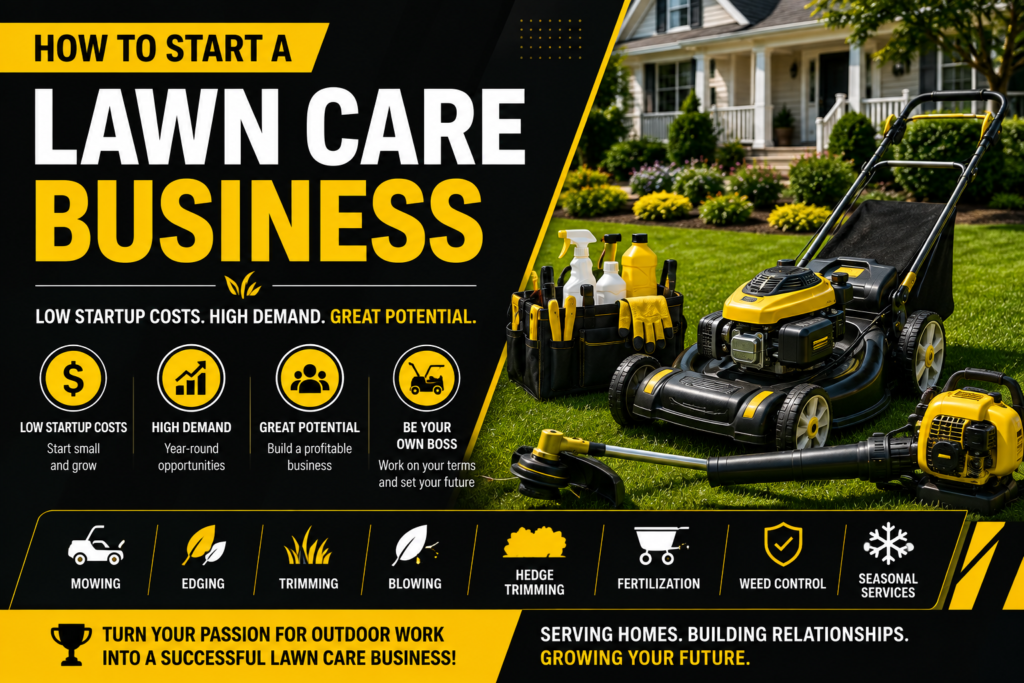
Why Start a Lawn Care Business?
Lawn care is one of the most beginner-friendly service businesses because the demand is easy to understand. Grass continues to grow whether the economy is strong or weak. Many homeowners simply don’t have the time, equipment, or physical ability to maintain their yards.
Some advantages include:
- Low startup costs
- No college degree required
- Flexible schedule
- Opportunity for recurring weekly customers
- Easy to expand with additional services
- Can start part-time while keeping another job
As your customer base grows, you can eventually hire employees and add equipment to serve more properties.
What Does a Lawn Care Business Do?
At its core, a lawn care business cuts grass and keeps properties looking neat. Most customers expect more than just mowing, however. Basic lawn care services often include:
- Mowing grass
- String trimming around fences and landscaping
- Edging sidewalks and driveways
- Blowing grass clippings from sidewalks and driveways
- Seasonal cleanup
- Bagging and removing yard waste when requested
Many businesses eventually add higher-paying services such as mulch installation, shrub trimming, aeration, fertilization, leaf removal, and gutter cleaning.
Skills You’ll Need
You don’t need years of experience to start a lawn care business, but certain skills will make you more successful.
These include:
- Safe equipment operation
- Basic small engine maintenance
- Time management
- Customer service
- Dependability
- Attention to detail
Showing up on time and doing consistent work often matters more than being the cheapest company in town.
Equipment You’ll Need
You don’t need commercial equipment on day one. Many people start with tools they already own and upgrade as profits increase.
Typical equipment includes:
- Lawn mower
- String trimmer
- Leaf blower
- Fuel container
- Safety glasses
- Hearing protection
- Work gloves
- Rake
- Hand tools
- Trailer or pickup truck (helpful but not always necessary)
Buying used equipment can dramatically reduce startup costs while you build your customer base.
Startup Costs
One reason lawn care is so popular is the relatively low investment required.
Typical startup expenses include:
| Item | Estimated Cost |
|---|---|
| Push mower | $300–$700 |
| String trimmer | $100–$300 |
| Leaf blower | $100–$300 |
| Fuel and supplies | $100–$200 |
| Business cards and flyers | $50–$150 |
| Insurance | Varies |
Many people can begin for $1,000 to $2,500, especially if they already own some equipment.
How Much Can You Make?
Income depends on your location, pricing, efficiency, and number of recurring customers.
Many lawn care businesses charge:
- Small yard: $35–$50
- Medium yard: $50–$75
- Large yard: $75–$150+
Completing six average lawns per day at $55 each can generate approximately $330 per day before expenses. As efficiency improves and additional crews are added, annual revenue can grow significantly.
The biggest advantage is recurring income. Weekly customers provide predictable work throughout the season.
How to Find Your First Customers
Finding customers is often easier than people expect because lawn care is a local business.
Some of the best marketing methods include:
Door Hangers
Choose neighborhoods where lawns are already well maintained. Homeowners who care about curb appeal are often willing to hire help.
Yard Signs
Ask satisfied customers if you can place a sign in their yard for a few days after completing the work.
Google Business Profile
A free business profile helps local customers find you when searching for lawn care services online.
Facebook Community Groups
Many neighborhoods have local groups where residents ask for service recommendations.
Referrals
Happy customers are your best advertising. Ask every satisfied client if they know someone else who needs lawn service.
Pricing Your Services
Avoid competing only on price.
Instead, focus on providing reliable service and clear communication.
When pricing jobs, consider:
- Lawn size
- Grass height
- Obstacles
- Travel distance
- Disposal requirements
- Time required
Charging too little may win customers initially but often leads to burnout and difficulty growing your business.
Common Mistakes to Avoid
Many new lawn care businesses fail because of simple mistakes that can easily be avoided.
These include:
- Underpricing jobs
- Skipping insurance
- Poor scheduling
- Not answering customer calls
- Neglecting equipment maintenance
- Taking on more work than you can handle
Building a reputation for reliability is often more valuable than offering the lowest price.
Growing Your Lawn Care Business
Once you have steady mowing customers, you can increase your income by offering related services, including:
- Mulching
- Leaf removal
- Gutter cleaning
- Weed removal
- Shrub trimming
- Small tree trimming
- Driveway sealing
- Fence repair
- Fence painting
Adding services allows you to earn more from existing customers instead of constantly searching for new ones.
Is a Lawn Care Business Right for You?
A lawn care business is ideal for people who enjoy working outdoors, staying active, and earning money based on effort rather than formal education. While the work can be physically demanding, it offers an opportunity to build a reliable business with relatively low startup costs.
If you’re dependable, willing to learn, and committed to providing quality service, lawn care can become a steady source of income and the foundation for a larger property services company.
Final Thoughts
A lawn care business proves that you don’t need a large investment or years of specialized training to become a business owner. Many successful entrepreneurs started with a single mower and a handful of customers, gradually expanding through hard work and word-of-mouth referrals.
By focusing on reliability, quality service, and fair pricing, you can build a business that generates recurring income and opens the door to additional property service opportunities. Start small, reinvest your profits, and grow at a pace you can manage.
Frequently Asked Questions
Do I need a business license to start a lawn care business?
Requirements vary by state and city. Check with your local government to determine whether you need a business license, insurance, or permits before offering services.
Can I start with residential customers only?
Yes. Most lawn care businesses begin by serving homeowners. Residential customers are often easier to find and can provide recurring weekly income.
How much should I charge to mow a lawn?
Pricing depends on yard size, terrain, location, and the amount of work involved. Many businesses charge between $35 and $75 for an average residential lawn.
Can I start without a truck?
Yes. Many people begin using a car with a small utility trailer or equipment they already own before investing in a pickup truck.
What is the busiest time of year?
Spring and summer are typically the busiest seasons for mowing, while fall often brings opportunities for leaf removal and winter may offer snow removal services in colder climates.
Read More
If you’re exploring more ways to build a practical service business, continue with our Property Services category. You’ll find step-by-step guides on starting businesses such as Gutter Cleaning, Leaf Removal, Driveway Sealing, Fence Repair, Garden Mulching, and more—all designed for beginners looking to start with a modest budget and grow over time.
Next Article: How to Start a Gutter Cleaning Business (Complete Beginner’s Guide)